The Edinburgh Fringe Full Monty (nearly) – Day 1, 5th August 2022

I’ve been looking forward to this! Our first visit to the Edinburgh Fringe, when we tentatively put our toes in to see how it felt, was a long weekend in August 2014. We loved it. So we went for a week in 2015. And in 2016. And 17. And 18. And 19. And… then Covid happened. No Fringe in 2020, and no Fringe (for us) in 2021. But this is the Brave New World of 2022. If we get through the entire month Covid-free it will be a miracle, but here goes.

Instead of my previous practice of writing a pre-blog for each show we see, this time I’m going to write just one blog a day, previewing the show’s we will see the next day, and then following up with updates as to how good each show was. I’ll update just once a day, at the end of the evening – or maybe the following morning, depending on how knackered we are. It’s gotta be worth a shot – let’s start here!

Here’s the schedule for 5th August:

10.40 – Head Girl, The Space on North Bridge. From the Edinburgh Fringe website:

“A coming-of-age story about falling in and out of love with yourself. Head Girl navigates the 21st century and girl boss mentality, whilst still practising self-care seven days a week. Becca is running in the campaign for head girl at school and running herself into the ground, all with a smile on her face. But who is she doing all this work for? A platonic love story that will be full of adoration and careful ambition. ‘Fringe Theatre at its best’ (NorthEastTheatreGuide.co.uk). ‘In awe’ (BBC Radio).”

Performed by the group “Girl Next Door”, this is either going to be a funny and charming introduction to our Fringe Odyssey or a bit of a weak start. I’ll tell you later.

UPDATE: A great start to the day with a very funny and beautifully performed play about 17 year old Becca’s quest to become head girl, even if it means making unacceptable sacrifices to get there. There’s definitely a lesson to be learned here – not to work too hard and to remember the things that are important. Very nice characterisations, I loved the gawky super-enthusiastic Becca and the contrast with her more sophisticated pal and teacher. Great family entertainment which should appeal to anyone who’s ever tried to juggle with a burning ambition! ⭐️⭐️⭐️⭐️

12.45 – Colossal, Underbelly Cowgate.

“’Ferociously funny’ ***** (Scotsman). Following his sold-out, five-star debut show, The Man, Patrick McPherson returns to Edinburgh with Colossal: a one-man comedy play that dives into love stories, morality, and the dance between the two. Colossal weaves sketch comedy, gig theatre and spoken word to tell the comedic and candid story of a man called Dan, his affinity for owls, and his messy recent past. An hour of dynamic theatre, comedy and music, that embraces the spectrum of modern romance, from the first date to the last text, from falling headfirst to falling apart.”

We’ve seen Patrick McPherson twice at the Fringe and he’s been absolutely brilliant. If this isn’t also brilliant, I’ll eat my hat.

UPDATE: I predict another massive word of mouth success for Patrick’s latest creation. Incredibly beautiful writing reminds you of the hip hop rhythms of Hamilton, whilst telling his own very individual story of love and deception. So many brilliant callbacks, so many surprises. Patrick turns his likeable persona inside out and challenges the audience to stick with him. And we sure do.

Technically brilliant too with a terrific sound and lighting plot, which also play their part. A complete winner. ⭐️⭐️⭐️⭐️⭐️

14.25 – Hannah Fairweather: Just a Normal Girl Who Enjoys Revenge, Just the Tonic at The Caves.

“Award-winning comedian Hannah Fairweather is the Taylor Swift of comedy, joking about those who have previously wronged her. Hannah was 2019 Rising Star New Act of the Year, and semi-finalist in multiple new comedian awards including: BBC New Comedian Award, So You Think You’re Funny, Leicester Square, 2Northdown, Komedia Brighton. She has been heard on Union Jack Radio, BBC Sounds and Radio 4 and has written for The Now Show and Mock The Week. ‘Hannah mixes relaxed, confident stage presence with some killer subversive gags. Absolutely one to watch’ (Joe Lycett).”

I know nothing about Hannah Fairweather but I like the title of the show – so this is hopefully a lucky punt.

UPDATE: Hannah explains why the name of the show isn’t perhaps as appropriate as it could be, as she lists all the people who have done her wrong, but it’s not as straightforward as that! Very enjoyable material with great use of callback – I have the toilet roll messages to prove it (you had to be there). Very likeable and engaging; I missed out on some of her gems because she delivered them so quickly, but that’s probably my ears playing up. ⭐️⭐️⭐️

16.15 – Badgers Can’t Be Friends, Greenside @ Nicolson Square.

“Runner-up for Best Comedy at Standing Ovation Awards 2021. ‘Mrs Kirkham comes up to my classroom at lunch and sees… And sees us… Having a ninja battle’. When Mr. Dennis, a super-teacher, hits back at the education system, he finds himself becoming a not-so-super hero. Who is he fighting for? Will he triumph? And can he find that weird smell in his kitchen? After Southwark Playhouse and King’s Head Theatre, this phenomenon finally lands at Edinburgh. An offbeat comedy with a serious edge. ‘A riveting play with relentless energy… very, very funny’ ***** (LondonPubTheatres.com).”

Another one that’s either a sure-fire hit or disappointing dud, but I’ve got a good feeling about this one – I think there’s more to it than just a quirky title.

UPDATE: The central premise of the play creates a very interesting topic – a man who destroys his life by acting before thinking and makes himself look like a laughing stock. However, the three very hard-working actors can’t disguise that the play itself is rather stodgy, with almost too many ideas in it, and in the end it becomes rather hard work for the audience too. There are some rather surreal sequences that weren’t to my taste. There’s a good play lurking beneath the surface but it didn’t really do it for us. ⭐️⭐️

19.00 – Lew Fitz: Soft Lad, Gilded Balloon Teviot

“Amused Moose New Comic winner and BBC New Comedy Award-nominated northerner Lew had a breakdown and ran away from home, forever. With explosive comedic energy and a rare vulnerability, he attempts to reconcile his past and face his present. With sell-out previews, catch this rising star whilst you can. As seen on BBC3, heard on BBC Radio 4 and voted Top 5 Jokes of the Fringe (Guardian, Dave TV, Telegraph). ‘As a newcomer he’s ticking lots of boxes’ (Chortle.co.uk). ‘An engaging comic with smart and freshly funny material’ (Kate Copstick, Scotsman).”

Lew Fitz is new to us, but he comes highly recommended, so this is another punt that I’m hopeful will be a good’un.

UPDATE: Lew was keen to point out this was a preview show so no reviews, but I’ve no reason not to write about his very enjoyable hour which includes quite a bit of audience participation – he got me involved writing down his best bon mots as he spoke them – where he takes us on a journey from his childhood in Moss Side, through a sports scholarship in North Carolina, to grown up life in beautiful Croydon. On the way, we investigate greatest fears and an impossibly inappropriate nursery rhyme. He’s a quirky, very likeable guy who puts us all at our ease, and it’s a very funny show! ⭐️⭐️⭐️⭐️

21.25 – Ben Clover: Best Newcomer, C Arts C Venues C Piccolo.

“Veteran stand-up comic Ben Clover returns with his seventh show: Best Newcomer. Ben has many successful Fringe runs under his belt, but this is his first in 2022. This year the award-winning comedian tackles the big themes as well as sweating the small stuff. ‘A delight… Inventive and savvy’ (Chortle.co.uk). ‘Comedy gold’ (Bruce Dessau, Evening Standard). ‘A magnificent performance’ (NottsComedyReview.wordpress.com).”

We saw Ben Clover at the Fringe in 2018 and really enjoyed his show so I have high expectations that this will also be a winner!

UPDATE: And the evening ended with a great show from Ben Clover, who included anti-vaxxers, Prince Andrew and Boris Johnson in his material and it all landed perfectly. The show contained an early contender for best line of the Fringe; I won’t spoil it for you but we’re still chuckling back at the apartment. He delivers his routine with apparently effortless ease, although I’m sure most of it scrupulously hand-crafted. A fantastic show, highly recommended. ⭐️⭐️⭐️⭐️⭐️

Tomorrow’s schedule is already out there on another blog post. But today was a great start!

The Agatha Christie Challenge – Poirot’s Early Cases (1974)

STOP PRESS: The Agatha Christie Challenge is now available as a book in two revised volumes – details at the end of this blog post!

In which Christie takes us back in time and gives us eighteen early cases solved by Hercule Poirot, in many of which he is helped or hindered by his old pal Hastings. All the stories had been previously published in the UK in journals and magazines between 1923 and 1935; and in the US, they were all published between 1924 and 1961 in book collections. Poirot’s Early Cases was first published in the UK by Collins Crime Club in September 1974, and this collection was first published in the US by Dodd, Mead and Company later in 1974 under the slightly different title Hercule Poirot’s Early Cases. There’s no additional scene-setting or framework, so I’ll take them all individually, and, as always, I promise not to reveal whodunit!

The Affair at the Victory Ball

This first story was originally published in the 7th March 1923 issue of the Sketch Magazine in the UK, and in the book The Underdog and other Stories in 1951 in the US. It was Agatha Christie’s first published short story. At the Victory Ball, a party of six wear the costumes of the Commedia dell’Arte. But a double tragedy ensues when Harlequin is found murdered, and, back at her flat, Columbine dies of an overdose of cocaine.

A simple structure to this story, Poirot and Hastings are idling their time when Inspector Japp arrives with a request for help. We had already met Japp in The Mysterious Affair at Styles, and he will return in three of the other short stories in this collection. He would also go on to feature in six more Christie novels, and the short story Murder in the Mews. As he would do on a few occasions, Poirot solves the puzzle without needing to visit the scene of the crime.

You can see that Christie is still introducing her audience to Poirot, going back to the basics of the man; his egg-shaped head and what Hastings calls his “harmless vanity”; the account of his time in the Belgian police force and how he solved the mystery at Styles. At this stage of his time in England, Poirot still shows some shakiness in his command of the English language: “his dossier […] I should say his bioscope – no, how do you call it – biograph?” He also asks what would always become a vital question in any Christie murder “Who benefits by his death?” and he expressly asks Japp if he will be able to “play out the denouement my own way” – again, another of Poirot’s trademarks. Of Hastings we learn little, except that he is a faithful acolyte, of whom Poirot grieves he has “no method.”

Other aspects that come up in this story: cocaine use plays an important role in this story, which no only would have interested Christie the pharmacist/poison expert, but also points to a very contemporary feel, as that was definitely the drug de choix of the day. The use of the Harlequin character may point to an interest that was to develop into Christie’s short-lived detective Harley Quin. The Colossus Hall, where the Victory Ball took place, appears to be one of Christie’s early inventions.

Christie gives us an honest and massive clue, which certainly led me to guess who the perpetrator was – although I didn’t guess any of the details as to How It Was Done. And that denouement, that Poirot was so keen to keep for himself, is certainly a very theatrical affair and thoroughly entertaining to read.

An enjoyable, clear, and undemanding start to the book.

The Adventure of the Clapham Cook

A preposterous and highly contrived little story, originally published in the 14th November 1923 issue of the Sketch Magazine in the UK and in the book The Underdog and other Stories in 1951 in the US. Mrs Todd arrives unannounced and demands that Poirot investigate the disappearance of her cook; such cases are not normally his purview, but it isn’t long until he proves the connection with the disappearance with a crime reported in that day’s Daily Blare.

The story is of interest as it is one of the rare occasions that Poirot concerns himself with solving a “lower class” crime. At first, he is not inclined to assist, telling Mrs Todd that he “does not touch this particular kind of business”, which infuriates his visitor with his snobbishness. When he changes his mind, his patronising attitude is still unpleasant to read: “This case will be a novelty. Never yet have I hunted a missing domestic.”

However, another of Poirot’s traits comes to the fore in this story; the fact that, once his interest is piqued, nothing will stop him from discovering the truth. He ignores the fact that Mr Todd sends him a guinea for his trouble when he is dismissed from the case. He simply carries on. As Hastings notes, “his eagerness over this uninteresting matter of a defaulting cook was extraordinary, but I realised that he considered it a point of honour to persevere until he finally succeeded.”

Mrs Todd gives us an interesting insight into the world of an upper middle-class woman trying to keep servants in her employ. “It’s all this wicked dole […] putting ideas into servants’ heads, wanting to be typists and what nots. Stop the dole, that’s what I say.”

Christie still reports Poirot’s power of English as uncertain; “if I mistake not, there is on my new grey suit the spot of grease – only the unique spot, but it is sufficient to trouble me. Then there is my winter overcoat – I must lay him aside in the powder of Keatings.” Keating’s Powder, by the way, was a treatment for killing bugs, fleas, beetles and moths in clothing.

Apart from Poirot’s flat, there’s one location mentioned in the story – 88 Prince Albert Road, Clapham, the Todd residence. There are a couple of Prince Albert Roads in London, but neither is in Clapham.

There are a few financial sums mentioned in this story; an income of £300 per year, which today would be worth about £12,500; and the guinea, that the Todds thought would be enough to pay off Poirot for dropping the investigation would be worth about £45 today. No wonder he was insulted. The £50,000 that the newspaper says the bank clerk has taken, would be the equivalent of about £2.1 million today. Now that’s not a bad haul.

I didn’t care for this story; the solution is extremely unlikely and Poirot solves it with a level of vanity that is rather unattractive.

The Cornish Mystery

This enjoyable and surprising little story was originally published in the 28th November 1923 issue of the Sketch Magazine, and in the book The Underdog and other Stories in 1951 in the US. Poirot and Hastings travel to Cornwall to investigate Mrs Pengelley’s suggestion that her husband has been poisoning her. Poirot arrives too late to avert a tragedy but isn’t convinced that the husband is guilty.

It’s Poirot’s idea that he should travel to Cornwall pretending to be Hastings’ “eccentric foreign friend”, playing up his image of eccentricity and unpredictability. He doesn’t hold back when he discovers that he has arrived too late to save Mrs Pengelley: “An imbecile, a criminal imbecile, that is what I have been, Hastings. I have boasted of my little grey cells, and now I have lost a human life, a life that came to me to be saved.” He takes his responsibilities very seriously, but also doesn’t like to show any imperfection or misjudgement. Everything must be perfect in Poirot’s world, including the impeccability of his record at solving cases.

The solution to the case allows Poirot and/or Christie, depending on how you read it, to be judge and jury with the murderer, bluffing them into confession and atonement whilst concealing the fact that he has no proof. Consequently it feels like a very moral ending.

The story moves from Poirot’s London flat to the Cornish village of Polgarwith, where the Pengelleys live. It’s a convincingly sounding Cornish name, but it doesn’t exist. Christie utilises her interest in poison, with the news that a large amount of arsenic was discovered in the corpse. There’s another of those unintentionally funny moments when Christie’s turn of phrase hasn’t kept up with semantic change: ““God bless my soul!” he ejaculated.”

Freda is reported to live on £50 per year, which today would be somewhere in the region of is only a little over £2,100. It’s not a lot.

Concise and diverting.

The Adventure of Johnnie Waverly

This neat and believable short story was originally published in the 10th October 1923 issue of the Sketch Magazine, under the title The Kidnapping of Johnnie Waverly, and in the book Three Blind Mice and Other Stories in the US in 1950. Three-year-old Johnnie Waverly has been kidnapped from his home; his father had received a number of warnings that it would happen but didn’t take them seriously. His parents have sought advice from Poirot, who agrees to take on the case. Waverly Court is home to a priests hole, and Poirot finds unusual footprints inside it; and works forward from that clue to identify what has happened to Johnnie and how he can be safely returned.

Poirot continues to reveal little aspects of his personality; he betrays his rather fiddly prissiness when he complains to Hastings about, of all things, his tie pin. “If you must wear a tie pin, Hastings, at least let it be in the exact centre of your tie. At present it is at least a sixteenth of an inch too much to the right.”

One aspect of this story reveals a great difference between society in the 1920s and today, a hundred years later. The story contains a description of a man and a small boy in a car together, driving through villages. “The man was an ardent motorist, fond of children, who had picked up a small child playing in the streets of Edenswell […] and was kindly giving him a ride.” Kindly giving him a ride? There is no way this would happen today; any man who did that would face instant accusations of being a paedophile; at the very least he would be considered to have abducted the child and would have broken the law. Times change!

The only address other than Waverly Court in the story is the home of Johnnie’s nurse, 149 Netherall Road Hammersmith. Whilst there are a number of Netherall Roads in the country, there are none in London.

The sum demanded for the return of Johnnie was originally £25,000 and then rose to £50,000. The equivalent today would be just over £1 million, rising to just over £2 million. Quite some sum. At the other end of the scale, the ten shillings that were paid to the tramp who delivered the note and parcel to Waverly Court would today just be £20. Not bad payment for a simple courier job!

The Double Clue

This short, slight and rather easily solved story was originally published in the 5th December 1923 issue of the Sketch Magazine, and in the book Double Sin and Other Stories in the US in 1961. Society antiques collector Marcus Hardman consults Poirot over the theft of valuable jewels from his safe during a tea party when only four people who were present could be the thief. A little investigation from Poirot and Hastings and the culprit is very quickly discovered.

This story is of primary interest because it is the first time Poirot (and we, the readers) meet the Countess Vera Rossakoff, the extravagant and alluring Russian refugee, with whom Poirot becomes pretty much instantly entranced. At the end of the story Poirot believes he will meet her again somehow, sometime; and indeed we do. We meet her again in The Big Four, and in The Capture of Cerberus, the final story of The Labours of Hercules. Otherwise, the plot is slight and, once you understand the relevance of the Russian Dictionary consulted by Poirot, very easy to solve. It contains a big clue identical to one of those that litter Murder on the Orient Express.

There’s a suggestion in the story that you can inherit kleptomania from your parents; a theme that recurred a few times in Christie’s work is the idea that mental illness can be passed down between the generations. I always feel that rather dates her work, as I’m not sure it holds any scientific value today. Unless you know different?

The South African millionaire Mr Johnston lives on Park Lane, in London, which is obviously real. Hardman’s assistant and rather dubious friend Parker lives on Bury Street, which is just around the corner, in St James’s – so unusually, Christie chooses to use two real-life locations. If Johnston was a genuine millionaire, £1 million in 1923 equates to over £42 million today, so he really is a rich so-and-so.

Not one of her best works; mildly amusing but nothing to dwell on.

The King of Clubs

This relatively simple and slightly infuriating little tale was originally published in the 21st March 1923 issue of the Sketch Magazine – her second published short story – under the full title The Adventure of the King of Clubs,  and in the book The Underdog and Other Stories in the US in 1951. Poirot is called in by Prince Paul of Maurania to solve the case of the murder of a theatrical impresario, Henry Reedburn. The prince’s fiancée, dancer Valerie Saintclair, had burst into the impresario’s neighbours’ house, belonging to the Oglander family, with blood on her dress, shouted “Murder!”, and then collapsed. Meanwhile Reedburn’s body was discovered in his own house. But did she do it? The Prince and Valerie had earlier consulted a clairvoyant who had turned over the King of Clubs card and said it was a warning. Had Valerie interpreted Reedburn as being the King of Clubs? And what is the significance of the fact that the King of Clubs is missing from the pack of cards with which the Oglanders were playing bridge?

The story is significant for two reasons. One is that the resolution is one of those rare occasions were Poirot does not press for the guilty party to be charged, even when murder has been committed. The other is that it is marred by a very hard-to-swallow coincidence involving the card the King of Clubs. I can’t say more, lest I give the game away.

Hastings says of Poirot: “That is the worst of Poirot. Order and Method are his gods. He goes so far as to attribute all his success to them.” Poirot loathes the way that Hastings just casts his read newspaper on the floor, unlike Poirot, who “folded it anew symmetrically.” That little observation goes a long way to illustrate the difference between the two characters.

The story is set in Streatham, which of course exists; Prince Paul is from Maurania, which doesn’t. The name could be a mixture of Mauretania and Ruritania. No other references need explaining!

The Lemesurier Inheritance

This entertaining but slightly dubious short story was originally published in the 18th December 1923 issue of the Sketch Magazine, and in The Under Dog and other Stories in the US in 1951. Years earlier, Poirot and Hastings had met three members of the same family over dinner: Vincent, Hugo and Roger Lemesurier. There was a curse, that the first born of each generation dies, handing over the inheritance to the second born. The next day, Vincent is killed falling off a train. Several years later, Mrs Hugo Lemesurier tracks Poirot down to tell him that their eldest son has had a number of unusual near-death accidents; she feels sure there can be no such thing as the family curse, but Hugo is convinced it is true. So Poirot and Hastings head up to Northumberland to the Lemesurier estate to make some sense of it all. Is there a curse? Or is there a more old-fashioned murderer? An exciting little denouement reveals all!

This is a good early example of a Christie story where supernatural fears and superstitions actually conceal a simple crime. Take away the deliberately misleading framework and you have quite a straightforward crime – or series of crimes. It’s of additional interest as the opening passage is set during the First World War, and is just about the most historical that we get to see Poirot and Hastings together. Mind you, it was very early on in Christie’s career (and indeed Poirot’s and Hastings’) for the latter to describe this crime as an “extraordinary series of events which held our interest over a period of many years, and which culminated in the ultimate problem brought to Poirot to solve.” Big claim, indeed.

Christie the poison expert is in full swing with this story, with mentions being made of ptomaine, atropine and formic acid poisoning. It must have tickled her to be able to distil so much expert information into so short a story.

Christie is sometimes criticised for not making some of her supplementary characters more interesting, and for not giving them their own characterisation to inhabit. She’s certainly guilty of that in this story, where she has Hastings describe the children’s governess, Miss Saunders, as “a nondescript female”. Really, neither Hastings not Christie bothered to try to make her interesting!

Not a bad story, but perhaps a little easy. Christie doesn’t really examine the origins of the Lemesurier curse, but only how it affects the current generations. There again, it is only ten pages or so!

The Lost Mine

This nostalgic little memoir by Poirot was originally published in the 21st November 1923 issue of the Sketch Magazine, and in the US, in the 1924 volume Poirot Investigates – it only appeared in the US edition of this book and not in the British version. Poirot reminisces on how he gained ownership of the only shares he owns – those of the Burma Mines Ltd. With Hastings as his captive audience he tells the tale of one Wu Ling, head of the family who had paperwork referring to a lost, but lucrative mine, and who travelled to London with the papers to sell them. But Wu Ling went missing after leaving his hotel, and the next day his body was found in the Thames. Misadventure or murder? Poirot wouldn’t be telling the story unless it was the latter, would he?!

Christie’s device of having Poirot tell his own story, virtually uninterrupted, is a clever way of obscuring what is, in effect, a very slight story. But it is an entertaining little tale, marred by some mock-Chinese-style language that really makes the modern reader cringe, and with a moral slant against the degradation of one’s mind and body by visits to opium dens.

Poirot teases Hastings for his admiration of ladies with auburn hair – hardly any of Christie’s books featuring Hastings omitted a mention of the latter’s penchant for auburn ladies. As for Poirot himself, his biggest feeling of outrage is when it is suggested, as part of his investigations, that he shaves off his moustache. As if the great man would ever undergo such self-sacrifice!

The story is set in real-life locations around London, with Wu Ling staying at the Russell Hotel in Russell Square (now the Kimpton Fitzroy hotel), and characters being traced to what Poirot describes as “the evil-smelling streets of Limehouse” – an area of London which is now much more gentrified than it was in Poirot’s time.

In an attempt to emphasise Poirot’s affinity with everything symmetrical, he informs us that his bank balance stands at £444, 4 shillings and 4 pence. “It must be tact on the part of your bank manager” sneers Hastings. Today that sum would be worth £18,780. Not so symmetrical, and not so impressive – you’d expect the great man to have amassed a much bigger figure than that!

Another minor piece of writing; moderately entertaining, nothing more.

The Plymouth Express

A rather complicated and contrived story, it was originally published in the 4th April 1923 issue of the Sketch Magazine, under the enhanced title The Mystery of the Plymouth Express, and in The Underdog and Other Stories in the US in 1951.  It would become the basis of Christie’s 1928 novel The Mystery of the Blue Train. When the dead body of a woman is found on the Plymouth Express train, her father asks Poirot to investigate. She was due to travel for a house party, but surprises her maid with the instruction to wait at Bristol station and she would return with a few hours. Whatever her plans were, they went seriously wrong. It’s up to Poirot and Hastings to sort the lies from the truth and discover what really happened to the late Mrs Carrington.

Although Poirot would explain it as good psychology, he has a rather pompous view towards the actions that a woman would do under certain circumstances. “Why kill her?” asks Poirot, “why not simply steal the jewels? She would not prosecute.” “Why not?” “Because she is a woman, mon ami. She once loved this man. Therefore she would suffer her loss in silence.”

The story is littered with real West Country locations: Plymouth, Bristol, Weston (super Mare), Taunton, Exeter, Newton Abbot and so on. Mrs Carrington took all her jewels on the train, which her father suggests amounted to something in the region of a hundred thousand dollars. Today the equivalent sum is around £1.35 million. Quite a lot. More interesting though is the fact that it cost Poirot 3d to make a phone call from the Ritz. That’s about 53p today, which is not dissimilar from today’s cost. And the paperboy was given a half-crown for his errand – that’s over £5 – not bad work if you can get it.

I wasn’t overly impressed with this story!

The Chocolate Box

This entertaining short story was originally published in the 23rd May 1923 issue of the Sketch Magazine under the title The Clue of the Chocolate Box, and in the US, in the 1924 volume Poirot Investigates – it only appeared in the US edition of this book and not in the British version. In response to Hastings’ suggestion that Poirot had never had a failure with one of his cases, Poirot confesses that he did have one, and then proceeds to tell him this tale of when he was a detective with the Belgian Police Force. M. Déroulard was a promising governmental minister who unexpectedly died, but family member Virginie Mesnard did not believe the death was due to natural causes. She asked Poirot to investigate. Déroulard had a sweet tooth and was never far from a box of chocolates. It was only when Poirot realised that the lid of the box of chocolates was a different colour from the box that he suspected something might not be quite right. And when poison is found in the possession of one of the suspects, surely he is guilty of the murder. But Poirot is in for another surprise before the guilty party is revealed.

Another Poirot narration but this one works much better than The Lost Mine. It’s full of references to poison: Prussic Acid, morphine, strychnine, atropine, ptomaine and trinitrine – Christie must have had a field day incorporating all those into the story. Déroulard lived on the Avenue Louise in Brussels – a real location about a mile south of the Grand Place.

Christie writes: “he had married some years earlier a young lady from Brussels who had brought him a substantial dot. Undoubtedly the money was useful to him in his career…” Dot? That’s a new word to me in this context. However, it’s an archaic term that describes a dowry from which only the interest or annual income was available to the husband. Who knew?

Hastings says he wouldn’t drink Poirot’s disgusting hot chocolate for £100. I bet he would – that’s a nifty £4,300 in today’s money.

This is another story where Poirot doesn’t act further in bringing a guilty party to book once he has identified them. Perhaps that’s part of his failure. He references this case in Peril at End House, so he clearly has a long memory about it. Nevertheless, he still has his familiar arrogance, which is shown up in an amusing brief exchange with Hastings at the end of the story.

I enjoyed this one!

The Submarine Plans

This short story was originally published in the 7th November 1923 issue of the Sketch Magazine, and in the US in the Under Dog and Other Stories in 1951. It was also the basis for the novella-length story The Incredible Theft, which was published in the 1937 volume Murder in the Mews.  Poirot is summoned late at night to meet Lord Allonby, the head of the Ministry of Defence, who reports that some secret plans for a new submarine have just been stolen from his country house Sharples. He reports seeing a mysterious shadow appearing to leave the room where the plans were on a table. Will Poirot find out who the mysterious figure is? Or was Allonby mistaken? You already know the answer.

An enjoyable short story that holds together nicely. Allonby refers to when Poirot helped him with the kidnapping of the Prime Minister during the First World War, which is a story that had been previously published in Poirot Investigates. A couple of red herrings that send you the wrong way, until you realise the solution is extremely simple. There’s a clever finish to the story when Hastings reports that an enemy of the nation came a-cropper with their submarine plans. He also insists that Poirot guessed the solution. That doesn’t seem likely to me!

The Third Floor Flat

This story was first published  in the January 1929 issue of Hutchinson’s Adventure & Mystery Story Magazine, and in the US in Three Blind Mice and Other Stories in 1950. After a night out, two men and two women arrive back at the flat of one of the women, but she can’t find the key to get inside her fourth floor flat. The two men offer to use the coal lift to get inside but they accidentally enter the third floor flat. When they eventually emerge at the right place, one of the men has blood on his hands. They go back to check, only to discover that a woman has been murdered in the third floor flat. Fortunately Poirot lives in the fifth floor flat! And it doesn’t take Poirot long to come to the correct conclusion.

Published six years later than all the other stories in the book so far, this has a very different voice and tone from the others. Hastings is not present, and doesn’t narrate the story. Christie’s third person narration is more formal, stiff and distant than when Hastings is “in charge”. You would almost think it was written by a different person. It has an extraordinarily inventive ending, and I found the whole thing totally unbelievable.

The four characters are said to have gone to the theatre to see The Brown Eyes of Caroline. Such a shame it doesn’t really exist as it is a great title.

Double Sin

This enjoyable short story was first published in the 23 September 1928 edition of the Sunday Dispatch, and in the US in Double Sin and Other Stories in 1961. Poirot and Hastings take a business/holiday trip to Devon by bus where they encounter Miss Mary Durrant, taking a set of valuable miniature paintings to a client for his approval and payment. Alas, during the journey, the miniatures are stolen. But it doesn’t take Poirot any time at all to discover what really happened to the miniatures and who is guilty of the crime!

It’s a rather charming and entertaining story, an enjoyable read. Poirot teases Hastings about his perennial fondness for girls with auburn hair; Hastings teases Poirot back for his fear of draughty windows on a bus. Bizarrely, Hastings accuses Poirot of having “Flemish thrift” when he is clearly from the French-speaking part of Belgium, and not Flemish at all. The story takes place in the fictional Devon towns of Ebermouth and Monkhampton, and the miniatures are said to be by the artist Cosway – Maria Cosway was indeed a painter of miniatures in the 18th and 19th centuries. The miniatures are said to be worth £500 – today that would be the equivalent of about £22,000. Doesn’t sound unreasonable.

Miss Penn, the antiques dealer on whose behalf Mary Durrant is taking the miniatures, has all the appearance of a certain Miss Marple, who would maker her first appearance in print a couple of years later.

The Market Basing Mystery

This entertaining short story was first published in the 17th October 1923 edition of The Sketch magazine, and in the US in The Under Dog and Other Stories in 1951. Inspector Japp invites Poirot and Hastings to the market town of Market Basing for the weekend, but there crime catches up with them, as they are called to a mansion where the owner Walter Protheroe has apparently taken his own life but the position of the pistol in his hand suggests that he couldn’t have done – so is it murder? It doesn’t take long for the three sleuths to come to the right solution – not before Japp has leapt to the wrong conclusions, of course.

It’s a very entertaining little tale, simply told, with all the clues fairly open to the reader. We learn something new about Japp, that he is a keen botanist, who knows all the Latin names to the most obscure plants. Hastings quotes an amusing piece of doggerel – “the rabbit has a pleasant face…” This seems to be a well-known but anonymous few lines of verse. Unless Christie made it up?

The story was expanded into the novella Murder in the Mews, published in 1937.

Wasps’ Nest

This rather odd short story was first published in the 20th November 1928 edition of the Daily Mail, and in the US in Double Sin and Other Stories in 1961. Poirot arrives at the house of an old friend John Harrison, saying he is investigating a murder that hasn’t yet been committed. Harrison doesn’t believe him, but then Poirot asks more about his forthcoming visit from an acquaintance who will be shortly arriving to remove the wasps nest that has grown on his property. But who is the murderer that Poirot is trying to intercept?

What is particularly odd about this story is that it feels like it has been written by someone else – not only does it not feel like an account by Hastings, it doesn’t feel like Christie either. Nevertheless, there is a poison aspect to this story – the potential use of potassium cyanide, which would have been of interest to Christie.

There is an amusing line taken out of context – and out of its time too, when Poirot explains how he can distract someone so that he can pickpocket them; unfortunately, his turn of phrase is: “I lay one hand on his shoulder, I excite myself, and he feels nothing.”

This story was also was the first Christie story to be adapted for television with a live broadcast on 18 June 1937. It was adapted by Christie herself, and broadcast in and around London, with Francis L Sullivan playing Poirot.

The Veiled Lady

This entertaining short story was first published in the 3rd October 1923 edition of The Sketch magazine, under the title The Case of the Veiled Lady, and in the US in Poirot Investigates in 1924 – it only appeared in the US edition of this book and not in the British version. Poirot and Hastings are visited by a Lady Millicent who once wrote an indiscreet letter to a soldier that she fears would end her engagement to the Duke of Southshire were it to be common knowledge – and she is being blackmailed by a Mr Lavington who has the letter in his possession. Lavington refuses to give the letter to Hastings or Poirot. So Poirot decides to break into Lavington’s house and take it. But what then? Do Lady Millicent’s troubles go away?

This excellent little tale conceals a nice surprise twist right at the end which you don’t see coming, and is one of Christie’s better early short stories. We learn of Poirot that his vanity is such that the believes the whole world is talking about him, much to Hastings’ derision.

Lavington is blackmailing Lady Millicent in the sum of £20,000, which today would be around £850,000. No wonder she’s worried. And there’s another of Christie’s accidental funny sentences, concerning use of the “E” word. ““The Dirty swine!” I ejaculated. “I beg your pardon, Lady Millicent.””

Problem at Sea

This enjoyable short story was first published in issue 542 of the Strand Magazine, in February 1936, under the title, Poirot and the Crime in Cabin 66, and in the US in The Regatta Mystery and Other Stories, in 1939. On a sea trip to Alexandria, Poirot encounters Colonel Clapperton and his difficult, cruel wife, whom Clapperton appears to love despite the way she treats him. Others on board take Clapperton to one side and try to give him an entertaining trip despite his wife’s best efforts. A murder takes place; Poirot quickly sees through the deception and solves the crime.

You can tell at once from the tone of the writing that this story was constructed by a much more mature brain than the majority of the other stories in this volume; it appeared in print at least ten years later than most of the other Early Cases. Nevertheless, the twist in the tale is very easy to guess and the reader works out the solution before Poirot.

Christie the Poison Expert comes to the fore with some detailed information about the effects of taking Digitalin; and sadly the story is marred by an instance of very unfortunate racism (it wouldn’t have been seen that way in 1936, but it is today). Hastings is noticeably absent, his final appearances in Christie’s novels (apart from in Curtain, published many years later) were in The ABC Murders and Dumb Witness, both of which would have been written about the same time.

“How Does Your Garden Grow?”

This short story was first published in issue 536 of the Strand Magazine in August 1935 and in the US in The Regatta Mystery and Other Stories in 1939. Miss Barrowby writes to Poirot asking for his help in a delicate family matter. He instructs Miss Lemon to reply, but hears nothing back. Then Miss Lemon discovers that Miss Barrowby has died, so he decides to visit her house, where she meets a Russian help, and Miss Barrowby’s remaining relatives, the Delafontaines. But did Miss Barrowby die from poison, and, if so, how come no one else in the household suffered the same fate?

Again, another slightly more recent piece of writing, still with Hastings gone (and missed too, by Poirot) and with a much more three-dimensional feel. Christie gives us some great descriptive passages about Miss Lemon, whom Poirot employs as an assistant detective, and her input helps not only him solve the crime but also helps the story along nicely too.

Again, too, there is poison involved, this time strychnine, always one of Christie’s favourites. The story takes place in Charman’s Green, Bucks, said to be about an hour from London – I wonder if that is Christie-speak for Chesham. There’s an ingenious solution to the story, and one which I was certainly nowhere near guessing.

And that concludes all eighteen stories in Poirot’s Early Cases. Many of them are not bad at all, and I’d say the good ones outweigh the bad ones considerably. It’s always difficult to put a rating on a book of short stories, but I’d definitely give it a 7/10. If you’ve been reading this book as well, I’d love to know your thoughts, please just write something in the comments box.

Next up in the Agatha Christie challenge is a book that Christie wrote some time in the 40s, when she was at her peak, designed to be the last ever book featuring Hercule Poirot, Curtain. If you’d like to read it too, we can compare notes when I give you my thoughts on it in a few weeks’ time. In the meanwhile, happy sleuthing and keep on Christie-ing!


If you enjoy my Agatha Christie Challenge, did you know it is now available as a book? In two revised volumes, it contains all my observations about Christie’s books and short stories, and also includes all her plays! The perfect birthday or Christmas gift, you can buy it from Amazon – the links are here and here!

Review – Jack Absolute Flies Again, Lyttelton Theatre, National Theatre, London, 27th July 2022

One of the greatest joys of the British theatre in the 21st century has been the rise of the playwright Richard Bean, whose One Man Two Guvnors stands out as one of the true comedy highlights of the past twenty years. Now, in collaboration with Oliver Chris, who also starred in that play, he has taken another old play and given it a modern update – this time, Sheridan’s The Rivals, which has been inventively shaken up and repositioned in Sussex in 1940, where Churchill has requisitioned Malaprop Mansion as an RAF base where our brave chaps are taking flight daily to shoot down their German enemies, or, rather, scrambling their spitfires, pressing the tit and bagging a Jerry (thanks to the helpful glossary of terminology in the programme.)

If you know The Rivals, there’s a lot of fun to be gained by comparing Sheridan’s characters with Bean & Chris’ modern equivalents. We still have the braggart Sir Anthony Absolute paying court to Mrs Malaprop. We still have Young Absolute trying to woo Lydia Languish who only has eyes for another, whom Absolute impersonates (in an amusing northern switch, Ensign Beverley becomes Dudley Scunthorpe). Julia and Faulkland are still in love, Sir Lucius O’Trigger the Irish baronet in love with Lydia is now Bikram “Tony” Khattri, a Sikh pilot, and Lydia’s maid Lucy is still up to no good. Today, Mrs Malaprop’s lexicographical mishaps have taken a turn for the worse and the fourth wall is broken more than ever, and the writers surprise us with what could be a sad ending, if only the rest of the tone of the play wasn’t so buoyant.

It’s all presented in a slightly larger-than-life style; the gardens and boudoir of Malaprop Mansion are colourfully realised in Mark Thompson’s set design and his military uniforms for the characters are crisp and convincing. The direction is fast and furious, and to say it’s played for laughs is an understatement. That’s because, deep down, apart from the surprisingly moving last five minutes, “laughs” are basically all there is. The play constantly bombards us with so much joking, wordplay, physical comedy or any combination of the three, that there is no time to take breath between them. Inevitably, some of the jokes don’t land, whereas others land beautifully. There are some brilliantly funny sequences, primarily between Mrs Malaprop and Sir Anthony Absolute, but there are also several scenes that languish (geddit) and don’t hit the spot.

Caroline Quentin is rapidly becoming one of our grandes dames of theatre, and she rises beautifully to the challenge of getting every other word wrong as Mrs Malaprop. It must be so difficult to continuously, deliberately, say the wrong word – your brain must be going nineteen to the dozen trying to correct yourself. She does some fabulous pratfalls, and even if they’ve given her way too many malapropisms (my favourites were clitoris and Mexican), it’s still a terrific comedy performance. She’s partnered with a lot of comic bluster from Peter Forbes as the pantomimish baronet Sir Anthony Absolute, channelling his Ronnie Barker Hark at Barker persona from the 1960s. Like everything else in this show, it lacks subtlety, but the characterisation is spot on!

Impossible to tell if this made a difference to the energy of the show, but for our performance we saw George Kemp as Jack Absolute, in what I suspect may have been quite a last minute change, judging from the very supportive round of applause to him from the rest of the cast and his facial expression that said phew! during curtain call. He certainly looks the part, very dapper and heroic, and gave a very good performance. Kelvin Fletcher is also excellent as the fitter Dudley Scunthorpe, all engine oil and short vowels, and it was entertaining (if not vital to the plot) to have a dance number where Mr Fletcher could exercise his Strictly credentials.

Kerry Howard provides a crowd-pleasing performance as the mischievous and wise-beyond-her-status maid Lucy, pointing out Khattri’s poetic plagiarisms, and indulging in a rather sweet game of Hide The Duck with Dudley. I was slightly put off by her vocal characterisation being straight from the Catherine Tate stable, but then Ms Tate does so many characters that sometimes similarities may be inevitable. Natalie Simpson is a delightfully gung-ho Lydia Languish, and there’s great support from Jordan Metcalfe as the wilting Roy and Helena Wilson as his innamorata Julia (who has probably the best line in the show), James Corrigan as the never-give-up Bob Acres and Tim Steed as Brian Coventry, the senior RAF officer who’s clearly holding back a secret, and whose life at base might become more interesting with the revelation that one of the new fighter pilots is “a Brian too”, nudge nudge, wink wink.

For all the effort that’s put into the show, and for all its excellent pedigrees, there is something about it that somehow, unfortunately, just doesn’t quite work. It’s the old sum of the parts not equalling the whole kind of thing.  I guess it’s possible to just try too hard to be funny; less is more, and all that. It’s the kind of show that Mrs Chrisparkle would describe as relentless, which is not a compliment, although oddly she actually enjoyed it more than me. If the National Theatre were expecting the next One Man Two Guvnors, they’ll be disappointed, but nevertheless it’s certainly full of derring-do and frequently titillates your beer-lever.

4-stars

Four They’re Jolly Good Fellows!

Review – Sing Yer Heart Out For The Lads, Minerva Theatre, Chichester, 23rd July 2022

On a truly high buzz having seen the brilliant Crazy For You that afternoon, our party of roving theatregoers turned their attention towards Roy Williams’ Sing Yer Heart Out For The Lads, on its second preview at the Minerva. Most of us are pretty partial to our football, and it wouldn’t remotely surprise me if we consulted our old diaries we would find that at least some of us were dahn the pub on Saturday 7th October 2000, the precise date on which this play is set.

I’d seen two plays by Mr Williams before – one I loved and one I pretty much loathed. I loved Soul, his play about the life (and death) of music legend Marvin Gaye. I loathed Days of Significance, his examination of the lives of young people who have been affected by a tour of military service in Iraq. Basically, I reckon I had a 50:50 chance of enjoying Sing Yer Heart Out or not.

Of course, I must emphasise that this was a Preview performance. By the time it reaches its press night all sorts of changes might have occurred – although I would think that was fairly unlikely, especially given the play was produced at Chichester last year in their garden tent – to excellent reviews, which is no doubt why it has been brought back to enjoy further life at the Minerva. I should also point out that the show had to be stopped for about twenty minutes during the first act, when an audience member fell ill. The staff at the Minerva handled the emergency brilliantly. However, it was perhaps a little more unsettling for me than for most of the rest of the audience as the lady concerned was sitting directly behind me and, whilst she was suffering, chucked the water she was presumably drinking all over me. I was drenched. And while – of course – she was in a much worse state than me, I was left a soggy mess throughout the rest of the first half (I managed to dry out in the interval). So it wasn’t the best of circumstances to enjoy the play. These things happen. I hope the lady is better now.

The play is set in a south London pub as it is being set up to watch the vital England v Germany World Cup qualifier match on television. Regulars arrive to watch it. Excitement and enthusiasm turn to disappointment after Germany score. And then go on to win. Kevin Keegan resigns. The play ends. But it’s not quite as simple as that. There are personal undercurrents between many of the characters who have come to watch the match. Racial and other tensions figure highly. Glen, the landlady’s son, tries to ingratiate himself with a couple of young black guys, Duane and Bad T, who respond by attempting to bully him. Landlady Gina’s also had a relationship with Mark, one of the guys in the pub. Another of the customers is Lee, a police officer who’s recently been assaulted, and his brother, Lawrie, is an outright racist yob. One of the older men, Alan, a devoted follower of Enoch Powell, sinisterly tries to influence the younger men to be the same – or to manipulate and outwit the black guys. When the mother of one of the youths arrives to complain that one of the drinkers has assaulted her son (that’s because they went off to find him because they’d stolen Glen’s jacket, hope you’re keeping up with this), policeman Lee takes “control”. And that’s all in the first act. In the second act, things start getting messy.

Let’s talk about the good things about this production first. The best thing is the staging. The Minerva has been converted into the George Pub with immaculate attention to detail, and when you walk in, you really do feel that you’re in a well-loved, rather downtrodden local pub. The old-fashioned circular bar at the back. The worn, taped down carpet. The pool and bar football tables. The fact that the front row seats have been replaced by bar chairs, tables, and stools. You couldn’t get more authentic. TV screens show us the match while the pub regulars are watching it. Perhaps best of all, above the bar, the scene occasionally moves to the Gents toilet, which you can see through opaque windows. It’s one of the most lifelike, convincing sets I’ve ever seen; even down to the handpump that decided to stop working during the performance with the result that Sian Reese-Williams playing Gina deftly swapped the beer to a lager from another pump. Designer Joanna Scotcher deserves every award going.

And then there are the performances – all of them excellent. For a play that has very few sympathetic characters, it’s hard to say that you “enjoyed” them all; but Richard Riddell as Lawrie is a most convincing thug, constantly teetering on a knife-edge of losing his self-control, and Michael Hodgson plays Alan with huge insidiousness; you can really see how his behaviour could needle the most balanced of people. Mark Springer is excellent as Mark, his calm exterior concealing a torrent of upset inside. Sian Reese-Williams is also very good as landlady Gina, showing all that direct assertiveness required for a woman to run an establishment like that. Alexander Cobb’s strong performance as Lee surprises us with the way his character can turn on a sixpence. But the whole cast come together as a seamless ensemble, creating a combined very believable and physical performance.

But here’s the But – and I realise I’m pretty much on my own here I really did not like the play. Not because of the bad language, the racism, or the violence; all those elements go to create a challenging play, which is something I relish. However, having set up all this aggression and racism, the play then does so little with them. It just tosses them in the air and says look at this isn’t it awful. It doesn’t make us think differently about the world we live in, it merely wallows in the despair of the worst aspects of human behaviour, offering no solutions, no hope, no light for the future. Some of these characters are violent, or racist, or both. Quelle surprise. Many of our party guessed the final plot twist, as all being sadly predictable. You know that things are going wrong when, rather than concentrating on the play, you end up watching the England v Germany game on the television and following Lawrie and Alan’s pool match – Mr Riddell is a ridiculously talented pool player! The production is visually thrilling, but this static play just left us flat and depressed. A game of two halves, one might say.

3-stars

Three-sy Does It!

Review – Crazy For You, Festival Theatre Chichester, 23rd July 2022

Just as the ecstatic applause at the end of the first act was dying down, Mrs Chrisparkle turned to me and said This is the kind of show you usually hate – and she’s totally right. I like my musicals to be meaty. To pose problems. To issue challenges. To delve deep into the heart of humanity and winkle out nuggets of truth so that you come out of the show a different person from the one you went in as. Crazy For You does absolutely none of those things. And it is, quite simply, a glorious delight from start to finish.

Director and choreographer Susan Stroman, who had worked on the original 1992 production, was already making plans for a revival of this Gershwin extravaganza way back when none of us had ever heard of Covid. Then, with all the theatres shut, and not much hope for the future on the horizon, it naturally retreated to her back-burner. That is, until the fickle hand of fate prompted Chichester Artistic Director Daniel Evans to ask her if she would bring the show back to Sussex. And, with a superbly talented cast and production team to bring it to reality, this early juke-box musical (it feels like it should be from the 1930s but it isn’t) is gracing the stage of the Festival Theatre, and sending its audiences on their merry way home with a spring in their step and pretend tap-shoes on their feet.

As I indicated at the beginning, the plot is very simple. Theatre-mad Bobby Child is sent by his bank-owning Mamma to Nevada to foreclose the mortgage on an inactive little theatre way out west. But it’s not in Bobby’s nature to ever close a theatre down, especially when it’s owned by the father of the only girl in the town, the feisty Polly, with whom Bobby instantly falls head over heels in love. The rest of the show revolves around his attempts to both woo Polly and also impersonate Bela Zangler, the impresario, in a last-ditch attempt to stage a show so that audiences can return and the theatre can become financially solvent again. But I wouldn’t worry too much about the plot. It’s really not important.

The show takes Gershwin songs from a number of their Greatest Hits, including I Got Rhythm, Someone to Watch Over Me, They Can’t Take That Away from Me, Nice Work if You can Get it, Embraceable You, and plenty of other showtoonz. Musical Director Alan Williams leads a fantastic 16-person band – which is a pretty big quantity of musicians – and you can instantly tell how full and rich the sound is. Before any action takes place, during the overture, Ken Billington’s lighting design puts the shimmering front curtain through its paces with a range of warm exciting colours, preparing you for the visual feast to follow. All these visual and audio cues really gee you up in expectation of a great show, so the audience is truly buzzing even before the performance truly gets underway.

And it’s a show of sheer enjoyment. Ken Ludwig’s book is full of fun; silly jokes that hit perfectly, rewarding routines, such as the two Zanglers mimicking each other in a mirror, cartoon effects like the tweety-bird sound when a character hits their head, and there’s an early contender for the Best Performance in a Musical by a piece of tumbleweed award, as the aforementioned stage contraption merrily makes its way across the Deadrock landscape. Each piece of comic business, each interactive musical moment, each comic characterisation goes towards making the show a thing of total bliss. And, to be fair, yes, the substance of the show is lightweight and fluffy and doesn’t make you think again about the Human Condition. However, unlike some juke-box musicals, the structure actually works, and the choice of songs does largely make sense, with many of them either forwarding the plot or giving us a further insight into the singer’s character. And there are plenty of reputable musicals that don’t achieve that.

As you would expect from Susan Stroman, the choreography throughout is dynamic, thrilling, inventive, comical, and passionate, and makes big demands on the star performers who rise to the occasion superbly. Chichester had already taken Charlie Stemp to its heart after his rise to fame and fortune in Rachel Kavanaugh’s Half a Sixpence six years ago, so it was no surprise that he received a star round of applause on his typically ebullient first entry on stage. Mr Stemp is a master (if not THE master) of song-and-dance on stage, and responds to Ms Stroman’s demands with all the brilliance you’d expect. But he is more than matched by a fantastic performance by Carly Anderson as Polly, who has a dream of a voice and wonderful comic timing, and together they are pretty much matchless.

There’s also an impressive physical comedy performance from Tom Edden (you’d expect nothing less from him) as Bela Zangler, Merryl Ansah is a delightfully tricky Irene, with a terrific surprise up her sleeve that comes later in the second act; Gay Soper is wonderful as Bobby’s frosty mother Lottie, and there’s excellent support from Mathew Craig as the grumpy Lank Hawkins, Don Gallagher as Polly’s living-in-the-past father Everett, and from Adrian Grove and Jacquie Dubois as the frightfully British Fodors, unexpectedly arrived to review Lank’s Hotel. The boys and girls of the ensemble are also fantastic,with many hilarious and endearing vignettes, as well as brilliant singing and dancing skills. Sadie-Jean Shirley, Kate Parr, Mark Akinfolarin and Joshua Nkemdilim in particular stand out, but everyone pours their hearts and souls into delivering a magnificent performance.

Like The Unfriend a few weeks ago, Chichester have come up with another tremendous triumph that is totally West End-ready. We went as part of a group of eight and every single one of us adored every minute of it. That’s got to be a good sign!

Five Alive, Let Theatre Thrive!

Review – The Southbury Child, Bridge Theatre, London, 6th July 2022

Here’s another of those plays that has spent a long time in coming to fruition, battling its way through the rigours of Covid and Lockdowns and all the other ghastly things that flesh is heir to over the last couple of years. But, as always, good things come to he who waits, and Stephen Beresford’s The Southbury Child is a fascinating, at times hilarious, at times tragic play, chock-full of trigger warnings and difficult subject matter.

The premise is very simple. Local vicar David Highland is to conduct the funeral of a child – young Tyler Southbury. Her mother’s simple wish to make the ceremony less funereal is to have the church full of balloons. Tyler loved balloons. She loved Disney. So Disney balloons would be best. David Highland is no high-and-mighty po-faced clergyman; he’s had his own share of escapades, including a drink problem and having an affair, so you might expect him to be more on the side of the experimental and flexible wing of the Church – if it’s going to make the family more able to face the awful process of a child’s funeral, what’s the harm in some balloons?

However, David has his principles – specifically where it comes to church traditions and practices – and balloons are a step too far for him. Cue a massive backlash against David and his family from the villagers. How could he be so heartless? The local bishop decides he needs to send in a new curate, Craig, as a kind of troubleshooter-cum-support mechanism but he can’t prevent things from getting truly out of hand. Will David suspend his principles just this once, for the sake of the village and the affected family? You’ll have to watch the play to find out.

Alcoholism, the death of a child, infidelity, car crashes, racial prejudice, revenge; Stephen Beresford pulls no punches where it comes to dealing with the trickier subjects. And he makes those subjects hit hard by employing a devilish sense of humour, which makes the two and a half hours of this play absolutely fly by. Mark Thompson’s domestic set has the presence of the local church looming threateningly over it as a backdrop; no matter where you go in this play you can’t escape the Church. And those principles… do they strengthen the Church, and the relationship between the church and the parishioners, or do they drive a wedge in between them, showing the Church to be anachronistic and out of touch? That’s a question for you to decide.

Nicholas Hytner has assembled a brilliant cast who really get to grips with their characters and give us moments of high drama as well as dishing out the comedy with enviable deftness. Alex Jennings is superb as David Highland; an amiable, good-humoured kindly man but one for whom the red mist descends when the tensions get high. Phoebe Nicholls is also excellent as his long-suffering but humourless wife Mary; together they paint a very credible picture of a couple who tolerate each other but could have wished for better. I really enjoyed the performance of Josh Finan as Tyler’s uncle Lee, negotiating the details of the funeral, getting strangely inspired by the vicar but then furious with his stance over the balloons; he too has his own deep regrets to overcome, and Mr Finan shows us expertly the anguish that a few misplaced lies and misjudgements can create.

Jack Greenlees is extremely good as the curate Craig, finding his way in a strange and strained environment, trying to balance his religious needs with his family life; Racheal Ofori sparkles (literally) as the party-girl, ex-actress daughter Naomi who gets a kick out of teasing anyone who’ll stand still, just to get a reaction; and Hermione Gulliford injects the character of the doctor’s wife Janet with just the right amount of snobbish dislikeablility. There’s also great support from Jo Herbert as the frustrated daughter Susannah, Holly Atkins as local police officer Joy and Sarah Twomey as the grieving mother Tina Southbury.

I hope I’m not giving the game away by revealing that the final scene of the play depicts the final preparations for Tyler’s funeral, tiny white coffin and all. Mrs Chrisparkle found this scene highly emotional. I must say that I didn’t. I thought it simply depicted an event that would have been best played out in our own minds; although it was delicately done I still feel that it lacked subtlety, and that as a result the play ends with a bit of a soggy bottom. Just my personal opinion – you may well not agree. This co-production with the Chichester Festival Theatre continues at the Bridge Theatre until 27th August.

4-starsFour They’re Jolly Good Fellows!

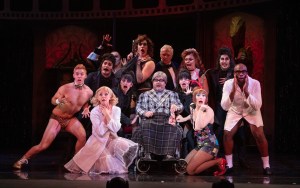
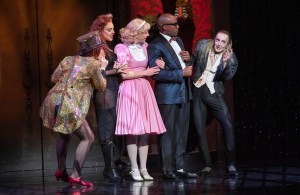
Review – The Rocky Horror Show, Royal and Derngate, Northampton, 4th July 2022

Dust off those fishnets and snap your corsets, it’s the return of those funsters from the planet Transexual in the Galaxy of Transylvania, hitting the stage again with a new production of The Rocky Horror Show, which has already been touring extensively throughout the UK and, after a pause at the end of this week, will start again later in the year. For one week only, the Royal and Derngate will be playing host to Brad and Janet’s salutary tale of what not to do when your get a flat tyre (sorry, tire) in the rain within sight of a creepy old castle. Next time, ring the AA. So much easier.

The castRichard O’Brien’s evergreen musical still has the power to delight, thrill and shock audiences. Shock? Surely everyone knows what to expect when they see this show? Apparently not, as I discovered when we took my in-laws Lord and Lady Prosecco last night only to realise they had never seen or heard anything about it. And Lady Prosecco was shocked, I tell you shocked. I remember being told that every day, someone somewhere hears Handel’s Water Music for the first time. Just because something has been around for ages, doesn’t mean to say that everyone knows it.

Dammit JanetThe last time I saw Rocky Horror was in 1999, with Jason Donovan as Frank N Furter and the late great Nicholas Parsons as the Narrator. I think things were a little more staid then than they are now, as I have no recollection of the cross-banter between audience and cast that studded last night’s show. And from what I can gather, we were a relatively reserved bunch. Heaven only knows what happens on a Saturday night.

Columbia, Magenta, Janet, Brad, RiffThis is a very simple show to critique because it’s simply excellent all the way through, with no exceptions. Staging – tick. Lighting – tick. Costumes – tick (fab). Band – tick (outstanding). Performances – tick (brilliant throughout). As for the show itself, I haven’t changed my opinion that I formed when I first saw it at the King’s Road theatre in Chelsea back in the 70s. Yes, I am that old. It’s an outstanding show – until about three-quarters of the way through when it simply loses its way. You completely believe the outrageous story and group of characters – it’s lifted from those old movies or comic books – you only have to suspend disbelief a tiny bit; until the science fiction part truly kicks in, and then we don’t believe in it anymore. It also suffers – and that is the right word I think – from having nearly all the best songs in the first half; Touch-a Touch-a Touch-a Touch Me being the obvious exception.Frank It does feel odd to have everyone on their feet doing the Time Warp barely twenty minutes into the show; then you all have to sit down again for the show to resume and there’s an obvious drop in energy. Of course, The Time Warp comes back at the end, but that’s encore, innit.

Nevertheless, it’s still a wonderful show and I can’t imagine a better production. Proving that his Strictly experience was no fluke, Ore Oduba is fantastic as Brad, with all that stuffy innocence that the role requires, and Haley Flaherty a perfect Janet, sweetly giving into sexual pleasure in her very sensible bra. Stephen Webb uses his sensational voice to great effect as Frank N Furter, and Philip Franks is superbly mischievous as the Narrator, bringing in cutting references to modern life, battering down any misplaced interventions from the audience, and having better NarratorPrince Andrew and Boris Johnson material than most stand-up comedians. Rocky regular Kristian Lavercombe gives us a Riff Raff full of physical comedy, and Lauren Ingram’s voice is perfect for Columbia’s vocal show-offs. But everyone in the cast fits their roles absolutely perfectly and turn in first-class performances all round.

A fabulous fun night at the theatre. Let your hair down, don’t chuck anything on stage, and do wear your best inappropriate lingerie.


Production photos by David Freeman

Five Alive Let Theatre Thrive!

Review – The Comedy Crate, Five Edinburgh Previews, The Charles Bradlaugh, Northampton, 3rd July 2022

Five Edinburgh Previews for a fiver each? Yes please! It was a full day at the Charles Bradlaugh pub on Sunday to watch these five (well, six really) eager young artists perfecting their comic offerings for our delectation and the future enjoyment of those lucky enough to go to the Fringe in August – including us! Two of these acts are previous winners of Chrisparkle Awards so you already know they’re going to be great. Bear in mind, of course, that all these shows are Work-in-Progress, so it’s unlikely that they’d be comedy perfection yet. One was, indeed, absolutely Edinburgh-ready; two were very close to getting there, and two still needed a fair bit of work, but that’s absolutely The Name of the Game, as Abba would have it. So let’s take them one by one…

Norris and Parker: Sirens (Monkey Barrel Comedy, 21:15, 3-28 August except 17th)

“Let Piscean comedy duo Norris and Parker lure you into their fever dream for a surreal hour of wild, nautical madness. Debauched sketch comedy for lovers of the strange, the sordid, the musical and the dark.” That’s what it says on the Edinburgh Fringe website.

New to us, Norris and Parker are a chirpy couple who clearly have comedy coursing through their veins, and Sirens is a varied show with many highlights but also a few bits that need some refining. The opening number is great, with smart and witty lyrics, and I really loved their ITV drama sequence Deep Sh*t which beautifully assembled all those midweek 9pm northern drama clichés and took the mickey out of them. The interplay between the two performers works very well, hinting comically at all sorts of rivalries with their friendship, and there is lots to enjoy. Maybe the two Lighthouse sequences, where they’re performing Norris’ play, need some tightening up. But I’m sure this will be a great show on the Fringe.

Edinburgh tickets available here!

Markus Birdman – The Bearable Heaviness of Nearly Not Being (PBH’s Free Fringe @  Banshee Labyrinth, 17:10, 6-28 August except 9th, 16th and 23rd)

“The award-winning comedian returns with his 15th solo show. Fresh from supporting Jason Manford on tour, including two nights at The Palladium. It’s about life. It’s about death. It’s about getting knocked down, and getting up again. It’s about laughing in the face of it all. It’s about an hour.” That’s according to the Edinburgh Fringe website.

Winner, not only of the Chrisparkle Award for the Best Screaming Blue Murder Stand-up for 2013, but also the Best Screaming Blue Murder Stand-up for the Decade in my 2020 Honours List, I’m already hooked when it comes to Mr Birdman – he only has to speak a few words and I’m in hysterics. This new show is absolutely ready for Edinburgh, and is a comic account (it could be nothing else) of his recent health journey (yes, the J word), having suffered a second stroke last year which has severely affected his sight. Its very personal nature gives it an unquestionable authority, and although we can’t fail to be moved by his plight, there’s no sense of self-indulgence or begging for sympathy; every observation is as razor-sharp and pinpoint accurate as usual, and the hour is literally crammed with fantastic and consistently top-grade material. Absolutely loved it, it’s going to be a Big Fringe Hit.

Edinburgh details here!

Mark Simmons: Quip Off the Mark (PBH’s Free Fringe @ Liquid Room Annexe/Warehouse, 13:45, 6-27 August, every day)

“The Mock The Week panellist and master of one-liners returns with another show jam-packed with cleverly crafted jokes and improvised gags.” Taken from the Edinburgh Fringe website, with the spelling mistake corrected.

A regular Comedy Crate favourite, we’ve only recently seen Mark at the Albion Brewery in Northampton, and there aren’t many who think faster on their feet than him. The simple basis for this show is that he’s been emptying the loft at his mum’s house and found a box full of comedy memories from when he started stand-up. So he’ll tell a few jokes from his old joke book, share a few pieces of advice that he received from other established comedians, and link a few of these memories to some paintings that were also brought down from the attic. It’s fascinating to see Mark do a work-in-progress because he is so critical of his own material – if it doesn’t get the instant reaction he’s seeking, then it’s out; even though it’s still (in my eyes at least) a really good joke. There’s a wonderful callback saved right to the end which has been looming in plain sight all along but you don’t see it. When he’s decided which bits to keep and which to ditch, this show is going to be amazing. Mr S at his best – you don’t stop laughing all the way through.

Edinburgh details here!

Paul Sinha: One Sinha Lifetime (The Stand’s New Town Theatre, 16:40, 4-28 August except 16th)

“In January 2020, Paul embarked on a national tour, his most ambitious show combining stand-up, music, hula-hooping and tales of romantic validation and neurological degeneration. As it turned out 2020 proved to be the wrong year to embark on a national tour. For everyone. Undeterred, Paul returns, with the difficult second post-diagnosis album. Expect jokes and surprises. Paul has a story to tell. And an absolute banger of a title.” Yes, you guessed it, that’s what the Edinburgh Fringe website says.

Winner of the Chrisparkle Awards for Best Screaming Blue Murder Stand-up for both 2010 and 2012, and of course best known for being a Chaser on TV, Paul Sinha has an incredible gift for comedy and I’ve never seen him not deliver an absolute blinder of a routine. That said, as he himself pointed out, this was only the second Work-in-Progress show he’s scheduled for One Sinha Lifetime (agreed, great title) and there are about another fourteen to come – so he apologised in advance for the rough and readiness of his hour. And it’s true, there is a lot of work ahead of him to get this material – an account of his rise to the delicate balance of health and comedy he enjoys today – to come together. But it will, I have no doubt.

Edinburgh tickets available here!

Abandoman aka Rob Broderick: Discography (Underbelly, George Square, 21:25, 3-28 August except 15th and 22nd)

“Using his innate ability to craft songs on the spot, Rob creates a full discography for a fictional artist created by you, the audience. Using a sample pad necklace to trigger high-production beats, Rob creates the kind of exhilarating live experience that has won him a string of awards, and the highest of international critical acclaim. He continues to sell out his Fringe runs in Edinburgh and Australia each year, wowing audiences wherever he plays.” It will come as no surprise that that’s a direct quote from the Edinburgh Fringe website.

I’d heard great things about Abandoman but never actually seen him before, so I was really looking forward to his set. Full of attack, interacting not only with the audience but with tech in a way you rarely see, he elicits nuggets of information from audience members and then turns them into song. It’s an act that requires not only incredible creativity but also one helluva memory. He even managed to get me up on stage to confess to something naughty I’d done when I was about nine (I’m not proud of it, but I had to be honest) which got converted to the medium of music. I sense he is using new tech for this show, which occasionally let him down and introduced pauses into the procedure that I guess are normally missing. Once he’s mastered the tech, this will be another big hit for him I am sure.

Edinburgh tickets available here!

An absolutely superb night of comedy – and there are still more Edinburgh Previews on their way, keep an eye open on the Comedy Crate website for details.

Review – Richard III, RSC at the Royal Shakespeare Theatre, Stratford-upon-Avon, 1st July 2022

The Royal Shakespeare Company continues its trawl through the annals of the House of Plantagenet, specifically following on from the recent productions of Rebellion and Wars of the Roses, with this strikingly designed new production of Richard III, and a satisfying continuity of casting in many of the leading roles, including the welcome return of Arthur Hughes as King Richard, the first time a disabled actor has taken this part in the history of the Company.

Arthur HughesEdward IV reigns as King of England, but Richard, Duke of Gloucester has other ideas. First, eliminate his kindly brother George, Duke of Clarence. Then marry Lady Anne, who had been previously married to Henry VI’s son Edward of Westminster, who died at the Battle of Tewkesbury. Edward IV dies naturally, but Richard can’t tolerate his son, the twelve year old Edward V, being king. He enlists the Duke of Buckingham to engineer his path to the throne, but when Buckingham refuses to kill Edward, he gets professional assassin Tyrell to do the deed instead. The young prince is murdered in the tower along with his brother. But it’s still not enough; and when Henry Tudor, Earl of Richmond, arrives with an army to claim the throne, it results in the Battle of Bosworth Field and we all know what happened there. (You don’t? You’ll have to see this play then.)

Nicholas ArmfieldShakespeare didn’t hold back from presenting Richard as the architect of a lot of blood and violence, and Gregory Doran’s production rings the changes by portraying these deaths in a wide range of styles, from the literally gory to the subtly suggested. It is perhaps curious that Shakespeare does not let us see the actual death of King Richard in battle: “Alarums. Enter King Richard and Richmond; and exeunt fighting. Retreat and flourish. Re-enter Richmond, Stanley bearing the crown, with divers other Lords, and Forces.” This gives a director carte blanche to finish Richard III off in whatever manner they wish, and Mr Doran has chosen to make it rather elegant and ethereal. Matt Daw’s inventive lighting design is used extensively to convey death, with maybe a quick flash of red light to depict one dispatch, or the visceral descent of vivid red seeping down the one feature of the set, a cenotaph-style tower, to suggest others. Death’s never far away in this play.

Matthew Duckett and Arthur HughesI know this isn’t a football match, but this production really is a game of two halves. Even with some judicious cutting, this is a long play, and the first Act takes us all the way from Shakespeare’s beginning to Act Four Scene One. The second Act begins with Richard’s coronation, Act Four Scene Two. As a result, we have more or less two hours before the interval, but then little more than an hour afterwards. Although there are obviously some highlights – the wannabe king’s pretence that he doesn’t seek the crown and is much happier with his virtuous Bible study is a sheer delight –  the first Act has more than its fair share of longueurs. The second Act, however, is stuffed with theatrical magic and flies by. The exquisite grandeur of the Coronation. The knife-edge debate between Richard and Elizabeth regarding his plan to marry her daughter. The superb staging of the Ghosts that taunt Richard the night before Bosworth Field, and how they merge to become his ghostly horse for which he’d give his kingdom.

Minnie Gale as MargaretHowever, the overall vibe of the production is distinctly uneven. It veers from bloodthirsty tragedy to deep dark farce, and you can never quite pin down exactly what it is that Doran wants us to take away from it. On the one hand, for example, you have a very traditional presentation of the bereft Queen Margaret, Henry VI’s widow, with Minnie Gale giving a very accomplished portrayal of someone so destroyed by grief that they have lost all their senses. On the other hand, the two murderers almost descend to vaudeville with their interchanges and re-appear very tongue-in-cheek as the two godly clerics either side of Richard when’s he allegedly resisting being made king. Stephen Brimson Lewis’ set suggests the staging is purely of its actual era – the music, the costumes etc are all truly fifteenth century; but then you have a couple of anachronistic piece to camera moments from Richard and his rival Richmond just before the battle as if we were watching CNN.

Eloise Secker and Mical BalfourFortunately the production is blessed with some terrific performances, none more than Arthur Hughes as Richard. Because Mr Hughes genuinely has a physical disability, that frees him up from the arduousness of adopting a stoop or mimicking a hunchback, so visually it’s a much more convincing presentation than you’ve ever seen the character before. With ambition written through him like a stick of rock, he fair darts about the stage in his quest to Get Kingship Done, as the phrase might be today. He doesn’t care if we like him or not; he sees other people as either useful tools or mere obstructions and has no compunction about dismissively eliminating them – even his own wife. Mr Hughes is completely riveting throughout the play, his eyes calculating risks, his gestures mocking all those around him, his vocal delivery conveying that spoilt petulance of a man who can see no other outcome than his own preferment. It’s a wonderful performance.

Claire BenedictKirsty Bushell is also superb as Queen Elizabeth Woodville, controlling her own grief and behaviour with quiet suppression, as a perfect contrast to the brashness of the King, or the loud lamentation of Margaret. Claire Benedict has fantastic stage presence and natural authority as the Duchess of York, and Rosie Sheehy cuts exactly the right amount of fury and suffering as Lady Anne. Jamie Wilkes’ Buckingham is delightfully conspiratorial, punching the air with a very un-Shakespearean Yes! when Richard manipulates his way to the throne. Micah Balfour is excellent as the good-humoured, trusting Hastings, Nicholas Armfield is a suitably noble Earl of Richmond (he also has a terrific moment as the Bishop of Ely when King Richard commends his strawberries), and there’s great support from Matthew Duckett as Catesby and Simon Coates as Stanley.

Joeravar Sangha and Conor GleanIn addition, Ben Hall absolutely captures Clarence’s innocence and shock at being fatally lied to, and Conor Glean and Joeravar Sangha are simply brilliant as the Murderers. And huge appreciation for our Boy Treble, whose vocal purity cut through the villainy like a sword of light; for our performance on Friday night, we think he was Lysander Newton, but I am sure all four taking the role are terrific.

Jamie WilkesPart gruesome drama, part black comedy; at times slow and cumbersome, at others jam-packed with incident. A bit like life, really. But it’s the many highlights that you remember and that you appreciate, and this production is certainly a convincing and memorable end to the Plantagenets. It continues at the Royal Shakespeare Theatre all the way through till 6th August when it is joined with the new production of All’s Well That Ends Well, and then both continue until 8th October.


Production photos by Ellie Kurttz

4-starsFour They’re Jolly Good Fellows!

Review – Rock, Paper, Scissors, Crucible, Studio and Lyceum Theatres, Sheffield, 28th & 29th June 2022

It’s always fun when a playwright thinks outside the box for new ways of presenting a story. The challenge that writer Chris Bush and Artistic Director Robert Hastie set themselves was to create three pieces that would use the three locations of the Sheffield Theatres all at the same time, dovetailing into each other and making one complete whole in the process. There’s been some precedent for this, but nothing quite on this scale. Alan Ayckbourn tells the same story three times in the Norman Conquests, from different locations within the house and garden. Michael Frayn’s Noises Off gives us the first act of the generic sex farce Nothing On from three different perspectives; in rehearsal, backstage and in performance.In both these plays you can piece together a fuller account of what’s going on simply by a hilarious mixture of repetition and relocation. In Rosencrantz and Guildenstern are Dead Tom Stoppard shows what happens when characters who are not involved in the main story live out their own lives until the main play catches up with them. Here you get a sense of other lives carrying on outside of, and irrelevant to, the main plot; thus the backstage becomes the forestage (and then back again.)

Bush’s immensely inventive and hugely enjoyable triple threat of Rock, Paper and Scissors, at all three of the Sheffield Theatres simultaneously, provides another of these riveting feasts where different perspectives cast different lights on the same story all at the same time. To say it’s a technical achievement would be the epitome of underestimation; and if the unexpected happens – and this is live theatre, so it does – causing a problem or a delay in one theatre, it has a knock-on effect in the other venues, as happened when we saw them, more of which later…!

The basis for the plot is simple. Sheffield scissor makers Spenser and Son has been in business for decades. Eddie, the most recent owner, has died, and his two remaining relatives – Susie, his sister and Faye, his adopted daughter – both have plans to make something of the extraordinary building that remains.  Rock chick Susie envisages a funky nightclub, whereas Faye and her partner Mel feel a residential conversion would work. But Susie and Faye haven’t spoken for years; nor did either of them realise that Omar, the manager, still had a team of four apprentices making scissors in the workshop. Too soon, then, to adapt the building for other purposes? No matter what, there are three sets of plans and practices that completely conflict with the others!

The blurb maintains that each of the three plays can stand alone; or audiences could choose to see any combination of two plays or indeed all three. In my opinion, if you were only to see one, it should be Paper as that (I reckon at least) is the only truly standalone play; if you were only to see two you should combine it with Scissors; and if you see all three, see them in the traditional order of Rock, Paper, and Scissors, as we did. Although each play is written by Chris Bush, each has a different director, a different designer, a different lighting director, and so on. So each has a very different vibe and character.

All three plays take the same central themes, although with varying degrees of emphasis. There’s the struggle between hanging on to the past versus making way for the future. Traditional values and skills set against modern cost-cutting methods. Opportunities through hard work are compared with opportunities through privilege. Bar work is offered instead of skilled apprenticeships. Hard truths and difficult problems are balanced against credible lies and living within your comfort zone. Perhaps most of all, the take-home element of these plays is what happens when you make assumptions about people, their motivations, characteristics and private lives; people have a remarkable ability to keep secrets, and then reveal them when you least expect.

Rock is dominated by the character of Susie Spencer, the opinionated, ambitious sister who wants to create a nightclub out of the old factory space, beautifully realised on the Crucible stage by Ben Stones’ wonderful design. To kickstart the project, she plans to hold a photoshoot with a top photographer and a real band to promote the new venue. Susie tends to ride roughshod and be unnecessarily critical of others, which makes her an unsympathetic character, but Denise Black’s excellent performance invests her with all the brass neck and charisma to fill out a truly credible portrayal. She gets as good as she gives from a brilliant performance by Lucie Shorthouse, who was fantastic as Pritti in Everybody’s Talking About Jamie four years ago, as Omar’s daughter Zara,plus there’s excellent support from Andrew Macbean as her long-suffering wannabe beau Leo, and a superb comic turn from Leo Wan’s Xander (who is even funnier in Scissors) as the nervous corporate design consultant. But for me, this particular play suffers from its structure and script. It expends a lot of time and energy in a comedy of mistaken identity which is amusing at first but quickly palls as you realise that a simple conversation establishing who everyone is would put an end to the confusion. It’s too obvious a comic construct and I found these elements both unfunny and tedious. There are also passages of enjoyable but irrelevant singing, and it feels like there’s a lot of padding here.

Things get so much better in Paper, which is written with much smarter tightness and purpose. The play looks closer into the relationship between Faye and Mel, their plans and their attempts to track down missing and vital paperwork to prove ownership and Eddie’s will. Samantha Power’s Faye faces the uphill task to find the will from amongst the reams of paper stuffed into his ramshackle old office. She is uncertain as to the right way to progress, unlike the much more practical and determined Mel, who divides the office into quadrants so that they can search methodically, and who takes charge of Xander’s professional visit when Faye starts to wobble. Primarily the play is a beautiful examination of the relationship between the two; the problems that lurk beneath the surface – issues of trust, respect and faithfulness, that lead on to serious mental health worries. Natalie Casey’s amazing performance as Mel had me choking back the tears as she sits on the floor desperately trying to her explain her feelings.

This emotional space is also invaded by the comically horrendous Coco and Molly – Chanel Waddock and Daisy May on excellent form – as the squabbling, pretentious, self-serving band Co-codamol. It was during one of their sparky arguments that the stage manager had to come on stage and inform everyone that due to a problem in one of the other theatres, they would have to pause the performance; Ms Waddock and Ms May looked as stunned as the rest of us felt as they were ushered off the stage. We later discovered there had been a little fire on the stage of the Studio during Scissors – much to everyone’s gasp of horror – and they were just waiting for that to “settle down”. It was a tough moment for Coco and Molly but they resumed their argument perfectly when it all re-started. Presumably other actors in the other theatres faced the same problem!

Partly due to its modest setting in the round in the Studio, Scissors feels like a much more intimate play. Here we observe the apprentices actually doing the real work, for less than minimum wage; their relationship, their arguments, their commitment (or lack thereof) and their fears for the future. They reveal so much about themselves, and the importance of their jobs to their lives and their prospects. The whole factory is their domain, so when voices are heard in other parts of the building, they immediately assume industrial espionage or burglary, they distrust everyone who isn’t part of their group, and act as though everyone else is out to get them. That’s all except Trent perhaps, who is calmness and kindness itself when dealing with others. But they all have their secrets, which will astonish, entertain, and move you to tears. Jabez Sykes is terrific as the unpredictable and defensive Mason, and Joe Usher turns in a superb professional debut as the eloquent Trent. Maia Tamrakar is a powerhouse of energy as Liv and Dumile Sibanda shows fantastic maturity way beyond her years as the earnest Ava. All four create an incredible ensemble in this play and should have wonderful careers ahead of them. It’s up to Guy Rhys’ wounded, heavy-hearted Omar to break the news of their future to them – and it’s a complex, sad but truly beautiful ending. You may take away a different interpretation of the conclusion of the plays if you only see Scissors; you’ll have a very solid understanding of the outcome if you only see Paper. I’ll say no more!

Obviously, the very nature of this production must call for a certain degree of compromise and technical jiggery-pokery in the writing and construction. Just as the Porter scene in Shakespeare’s Macbeth allows for Macbeth and Lady M to wash off Duncan’s blood and change into their nightgowns before returning to the stage to deny all wrongdoing, Chris Bush has had to include tricks and passages to build in time to enable characters to leave one theatre and enter another. This may have some detrimental effect on the artistic integrity of the plays as a whole. I’m also unsure as to the necessity of having each character appear in each play; Mason’s appearance in Paper, for example, is totally irrelevant. I realise I am being super-critical for raising this, especially as it is the very challenge of staging three plays at the same time that is the most fascinating aspect of the entire production – more so than the actual subject matter of the plays. But the performances, the vision and the technical ability to stage this trio trump all criticisms. Really glad I caught this production – they only play until 2nd July and you won’t want to miss them.

Five Alive, let Theatre Thrive!