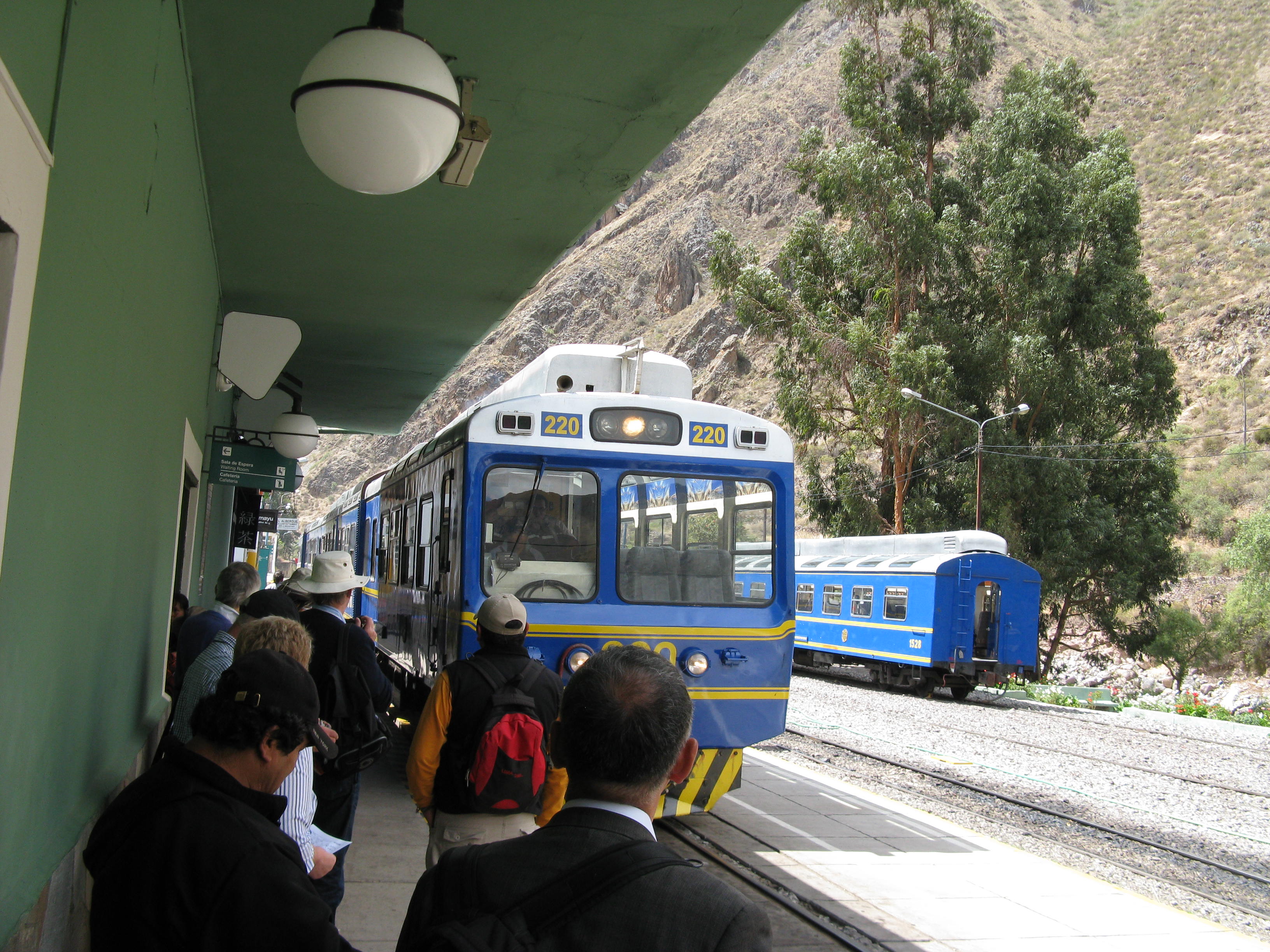
I hope you’re keeping up with our tales of adventure from South America. I’ve already told you about our day in Lima, and how we travelled through the Sacred Valley to Urubamba in preparation for our trip to Machu Picchu. To get to this amazing place, first you must reach the little town of Aguas Calientes nestling at its foothills, and you do that by taking a train, either from Cuzco, or as we did, from Ollantaytambo.
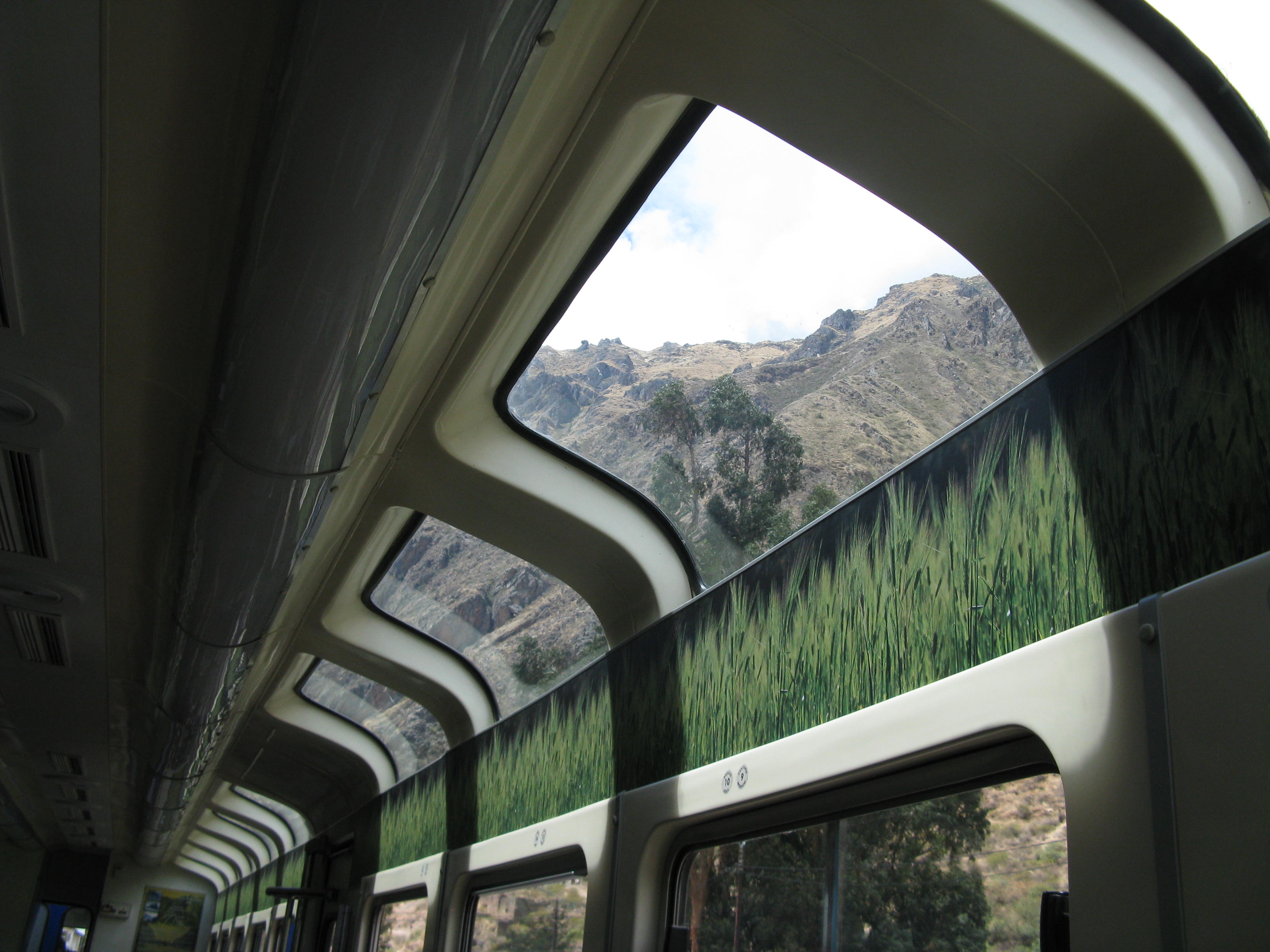
 The Vistadome train is a rather splendid affair. It has big picture windows so you can see Peru flying past, and also some windows in the ceiling so you can appreciate the splendour of the peaks. It’s exceptionally comfortable too. Lovely big upholstered seats, similar to travelling first class in a jumbo jet (or so I would presume).
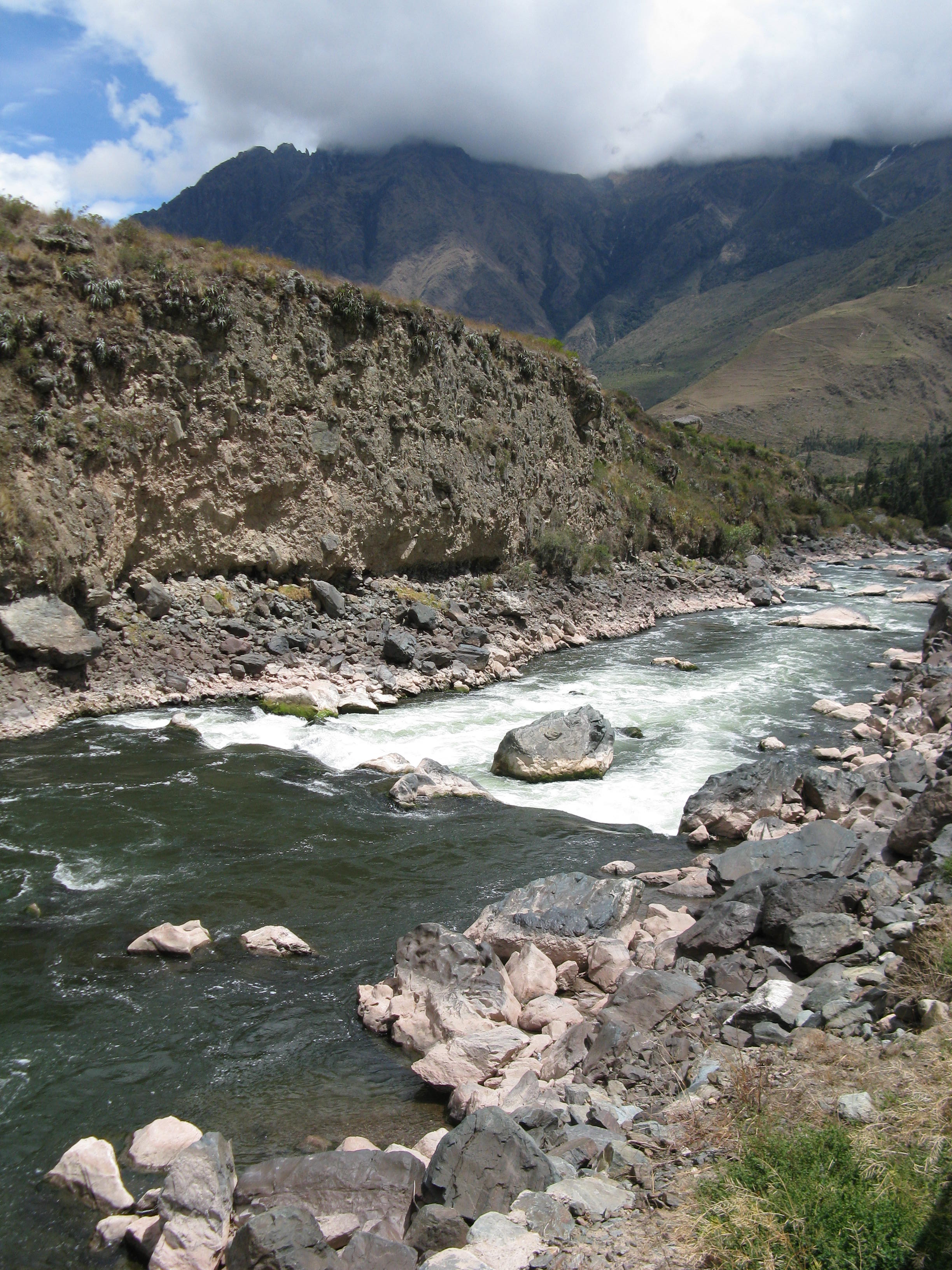
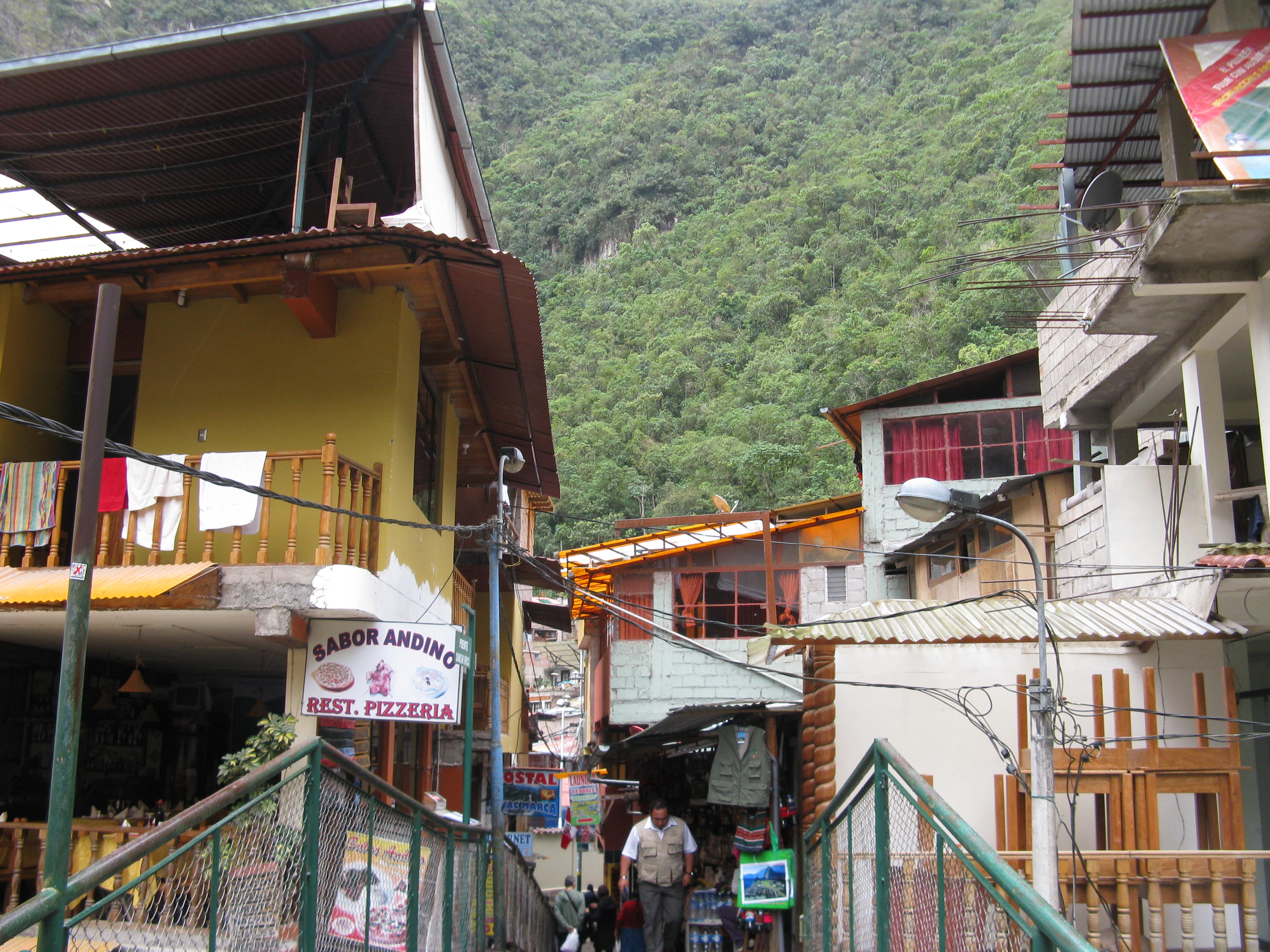
  The train track largely follows the course of the river, and amongst the sights are little villages, farming communities, old Inca terraces, waterfalls, and the like; most notable though is the general progression from arid infertile land to lush jungle. By the time you get to Aguas Calientes, everything is very green and dewy.
 It was lunchtime when we got off the train, and although Mrs Chrisparkle and I were itching to get up that mountain, first we had to break for lunch. I can’t remember the name of the restaurant but it was well located, with a nice looking garden and obviously set up for large groups of tourists. Once again we had Causa and Lomo Saltado, working on the theory that we generally liked it and that it should be gluten-free. It was very pleasant, but with a rather slow service so that when lunch was over, I was completely desperate for my Machu Picchu experience!
The next stage of the journey is to get one of the myriads of buses that weave their way up and down the mountain making their way to the entrance. This can take some time if you have to queue at the bus stop, but our group had already played our “Don’t You Know Who We Are?” card and a bus had been specially reserved for us. Eventually we reached the entrance turnstiles. Just so that you know, you have to show your passport to get in. Bizarre, as it’s still in Peru. Still, it does mean you can flash a souvenir Machu Picchu stamp in your passport on future travels.
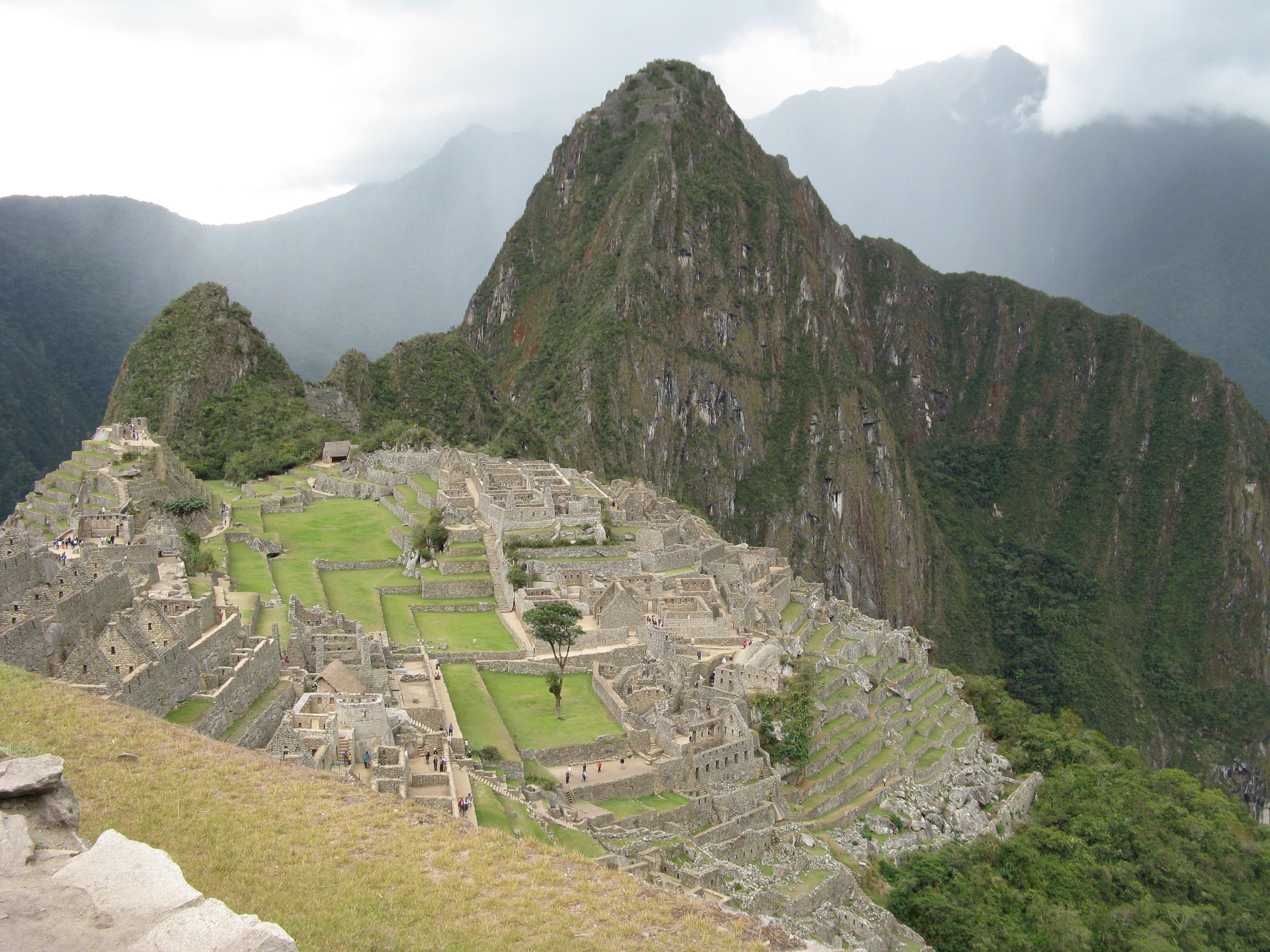
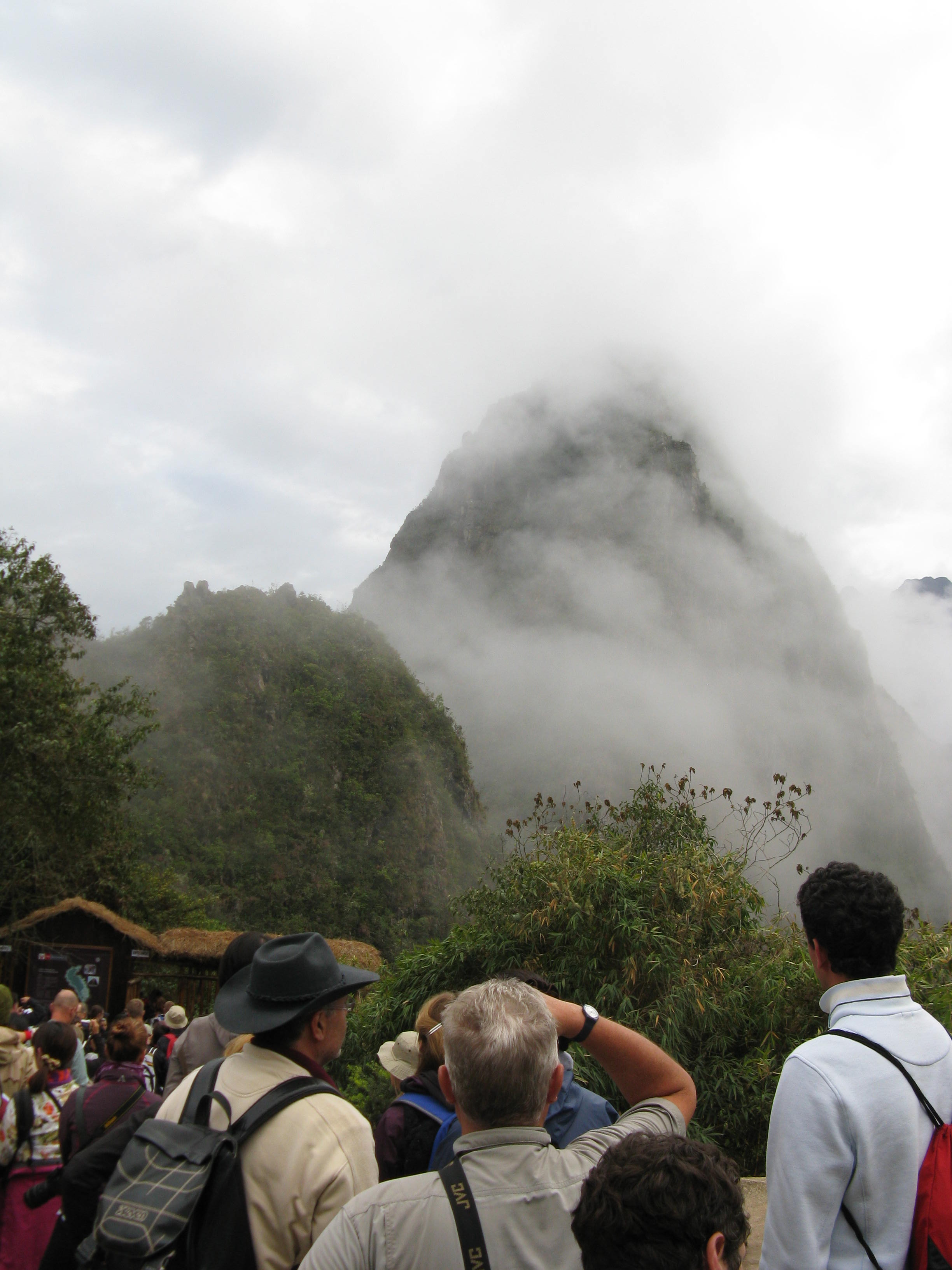
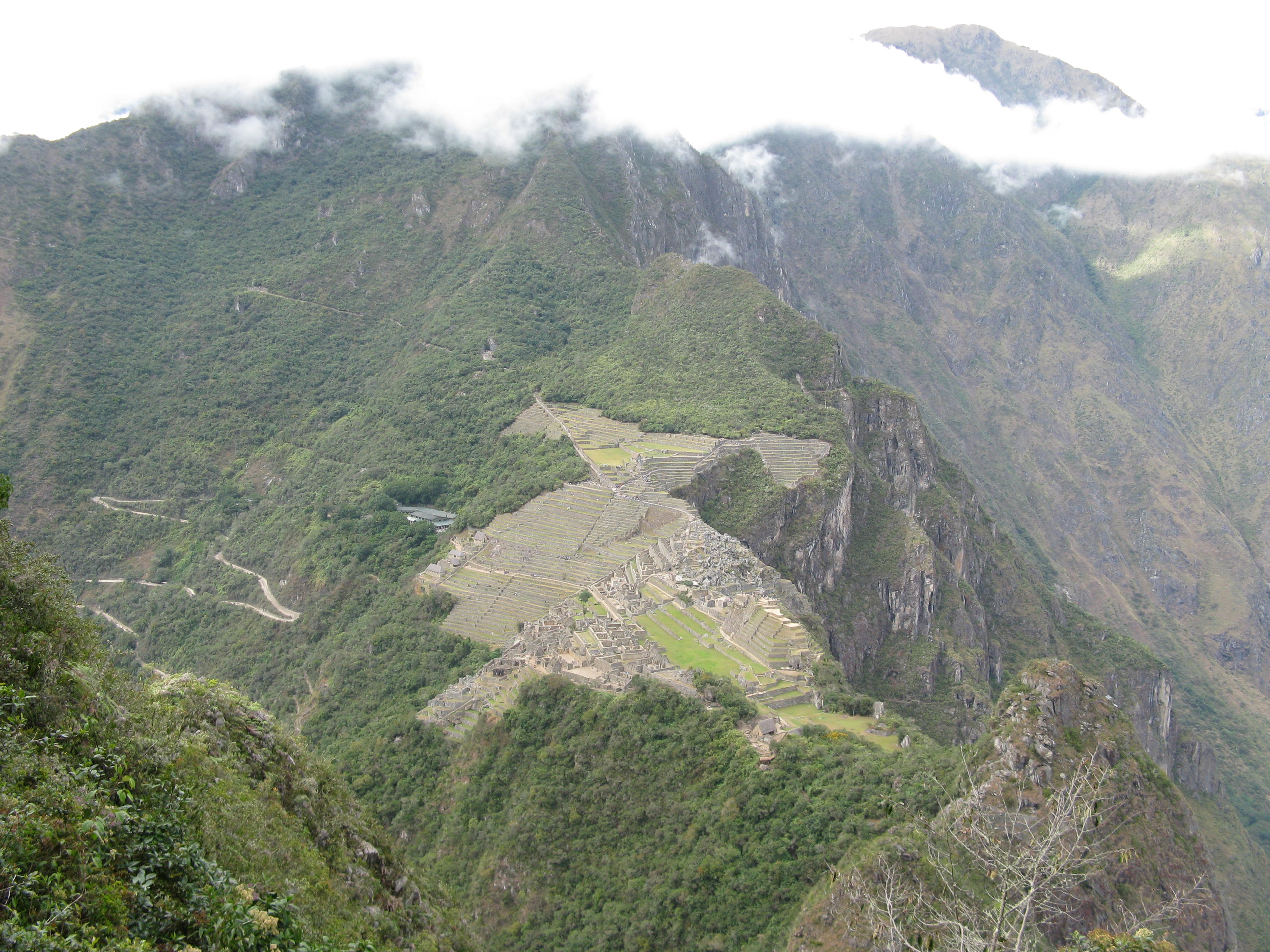
 You go through the entrance, along a little path, till you come to a fork. You can go straight on for instant access to the ruins, or take the left path up the hill to get the Classic View, which of course we did. And even though you’ve seen that picture hundreds of times before, nothing quite prepares you for the moment when you gaze down upon Machu Picchu itself. Absolutely fabulous, as the saying goes. The terraces appear to perch on the side of the hill, and you are amazed at how green the whole place is. And as a backdrop, you have the dramatic sight of Waynu Picchu mountain, which we had pre-booked to climb the following morning. You stand there, drinking it all in slowly. Of course, you’re not alone. There are dozens of people all jostling for that same iconic piccy. But you can ignore them.
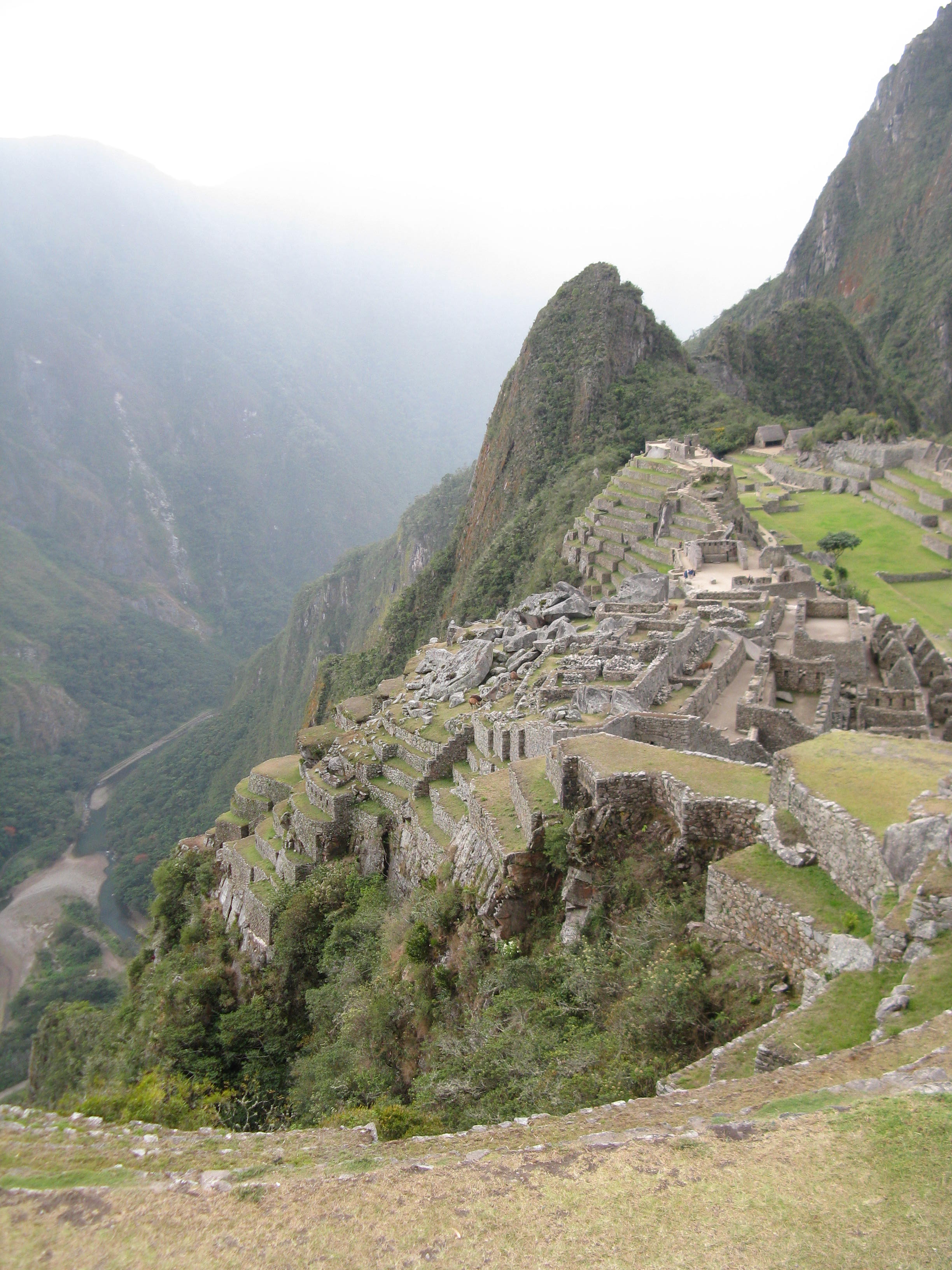
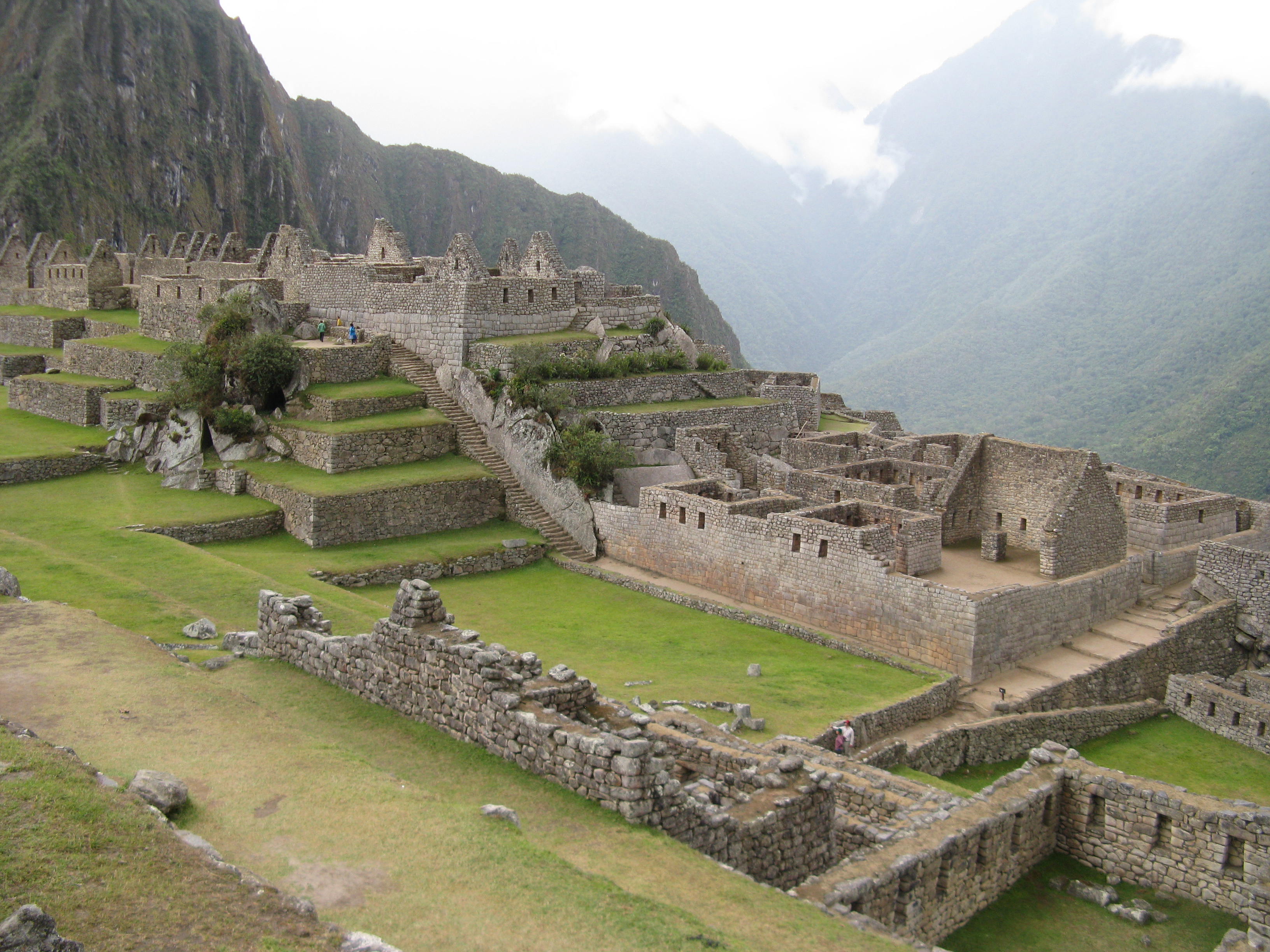
 The path continues upwards and does a nice little circular track, with stunning views of the mountains and valleys. From there you can go on to the Sun Gate (Intipunko), which we didn’t have time to do. Or you can continue down and back into the ruins (which we did.) You can just generally wander around at your own pace, dodging the llamas who act like they own the place, and try to imagine what the original buildings might have looked like; or you can listen intently to your guide and become very learned on the whole Inca history thing.
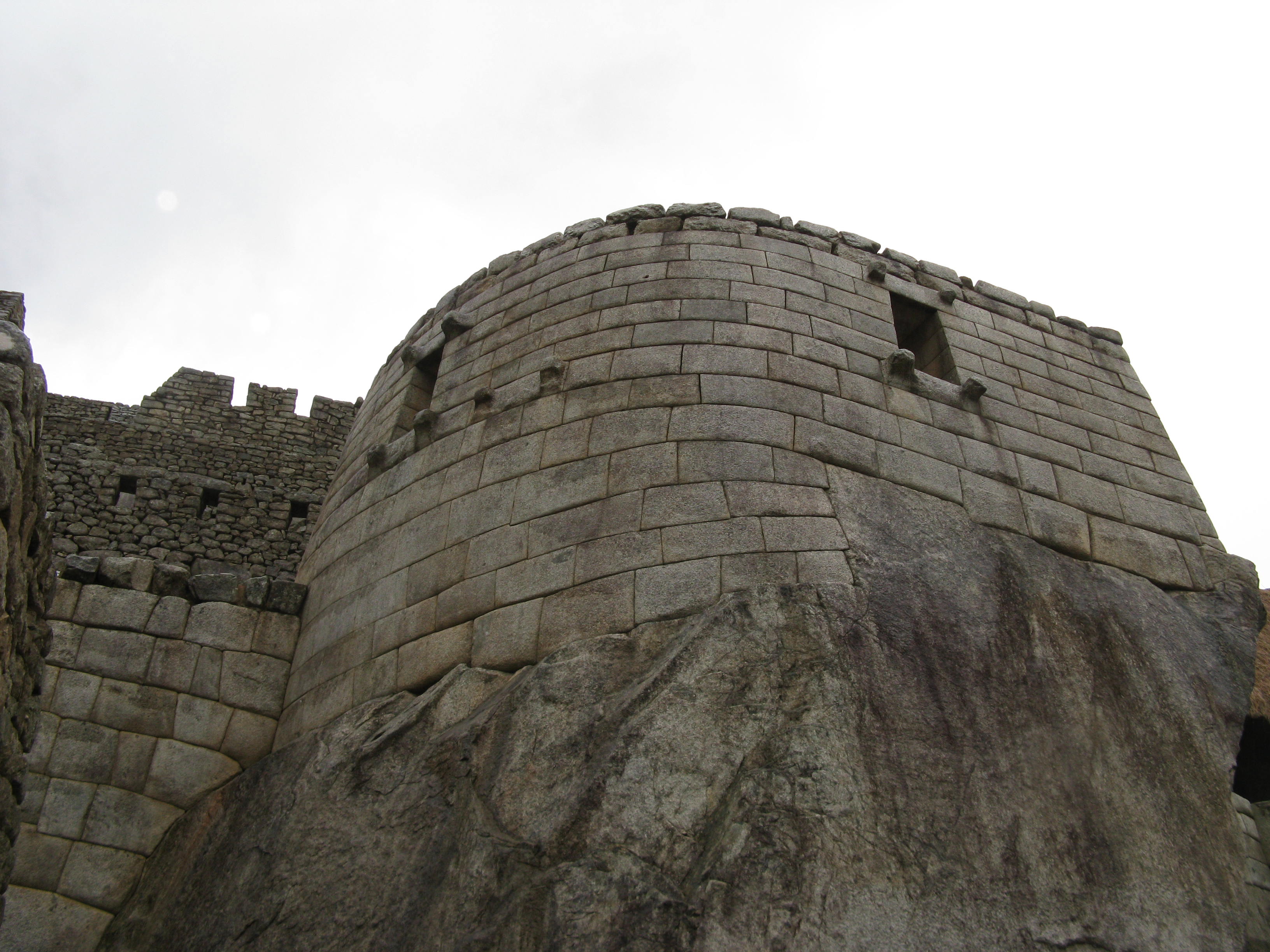
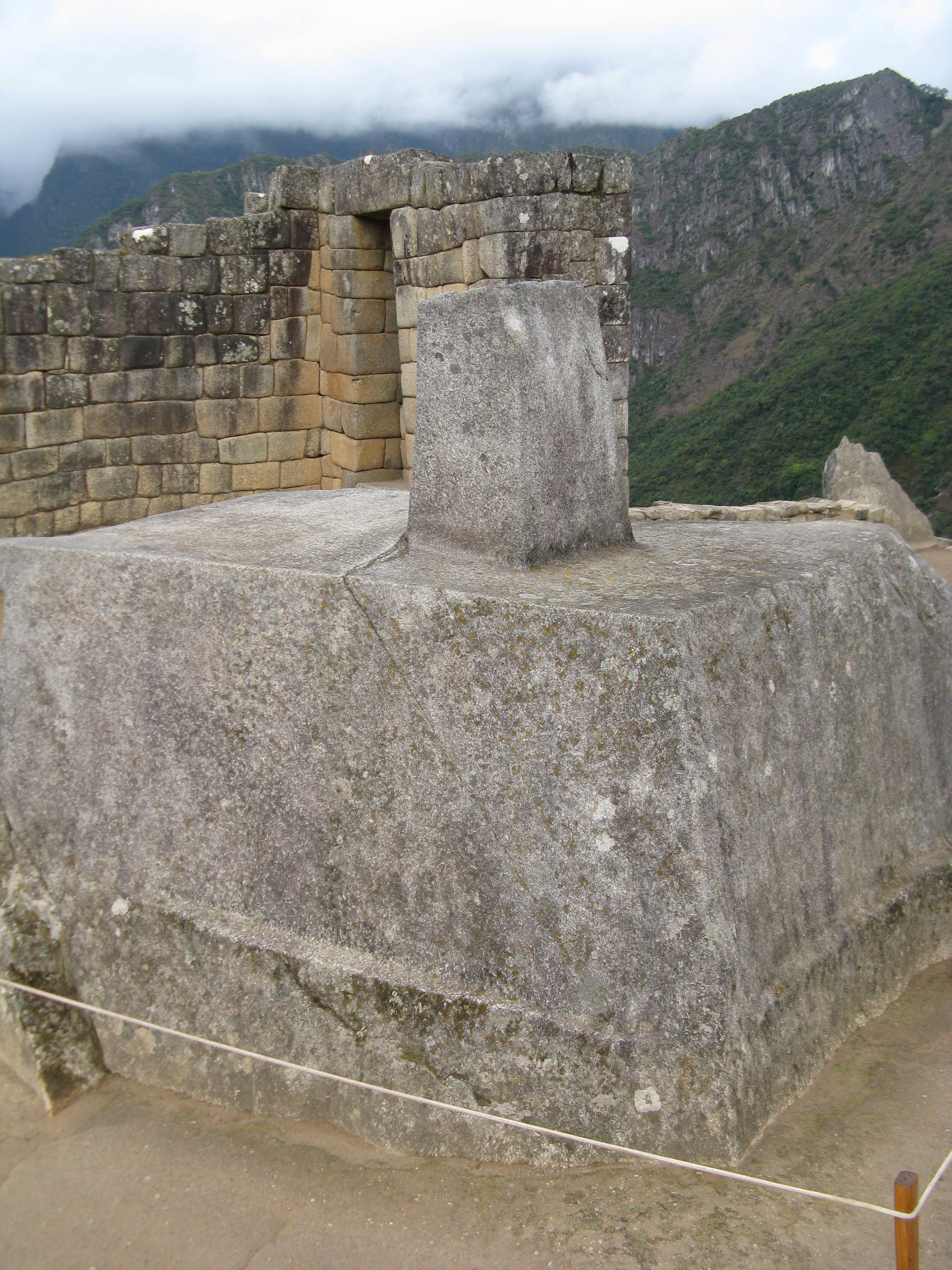
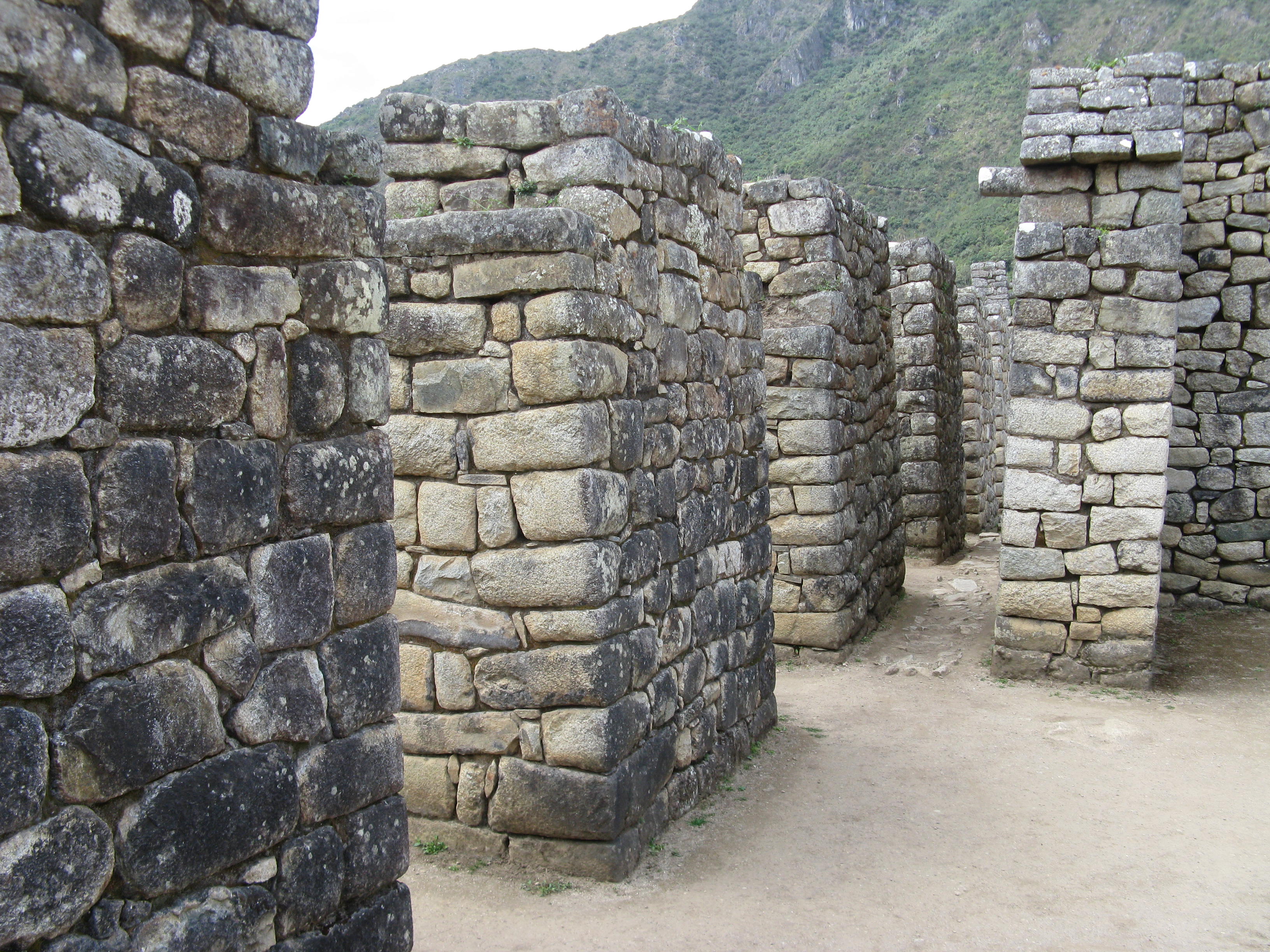
  I attempted to do the latter, but sometimes one’s concentration lapses. Anyway, we definitely saw the Temple of the Sun, the only round building on the site, and the Intihuatana, the stone used to show the position of the sun during solstices; the Temple of the Condor, the Temple of the Three Windows, and many other fascinating ruins. The overwhelming feelings are of grandeur, history and the total privilege to be able to see it.
 I would imagine no two days visiting Machu Picchu are ever the same. The weather changes rapidly and frequently. Some of the time you are in sunshine, then cloud, then rain, then wind. There’s no point wishing that the weather might be better – in fact by seeing it in all conditions you get a more comprehensive experience. By the time our tour was nearing its end it was almost 6pm, which is well past chucking-out time. The fact that so few people were about gave it an additionally eerie atmosphere; the ghosts of the city were virtually palpable.
 Clutching our little certificates that proved we had visited the site in its centenary year – Hiram Bingham rediscovered Machu Picchu in 1911 – it was back down the mountain and on to our hotel for the night, the Sumaq Machu Picchu. What a splendid place this is. Elegant common areas, massive and well equipped rooms, a charming dining room, and even a little museum display of the Machu Picchu area over the years. We broke our no-alcohol rule with just the teensiest Pisco Sour and it was well worth it. The set dinner was exquisite; nouvelle cuisine flavours with vieille cuisine portions.
Four of us had agreed to get up really early so that we could see the sunrise over Machu Picchu – Mrs C and I, and our intrepid co-travellers, John and Vicky. A really valuable service that the hotel provides is that they will arrange for one of the buses going up the mountain to stop at the hotel and let you on without having to trudge up the road and stake your place in the bus queue. We thought that we’d believe it when we saw it; but no, the bus arrived almost to the appointed second and it was completely full apart from the four seats reserved for us. “How the hell did you manage that?” asked a young Aussie backpacker.  “We couldn’t believe it when the bus left with four seats not taken – you should have seen the queues back there.” One day many years into the future, young man, when you are staying in luxury hotels and not backpacking, you will find out.
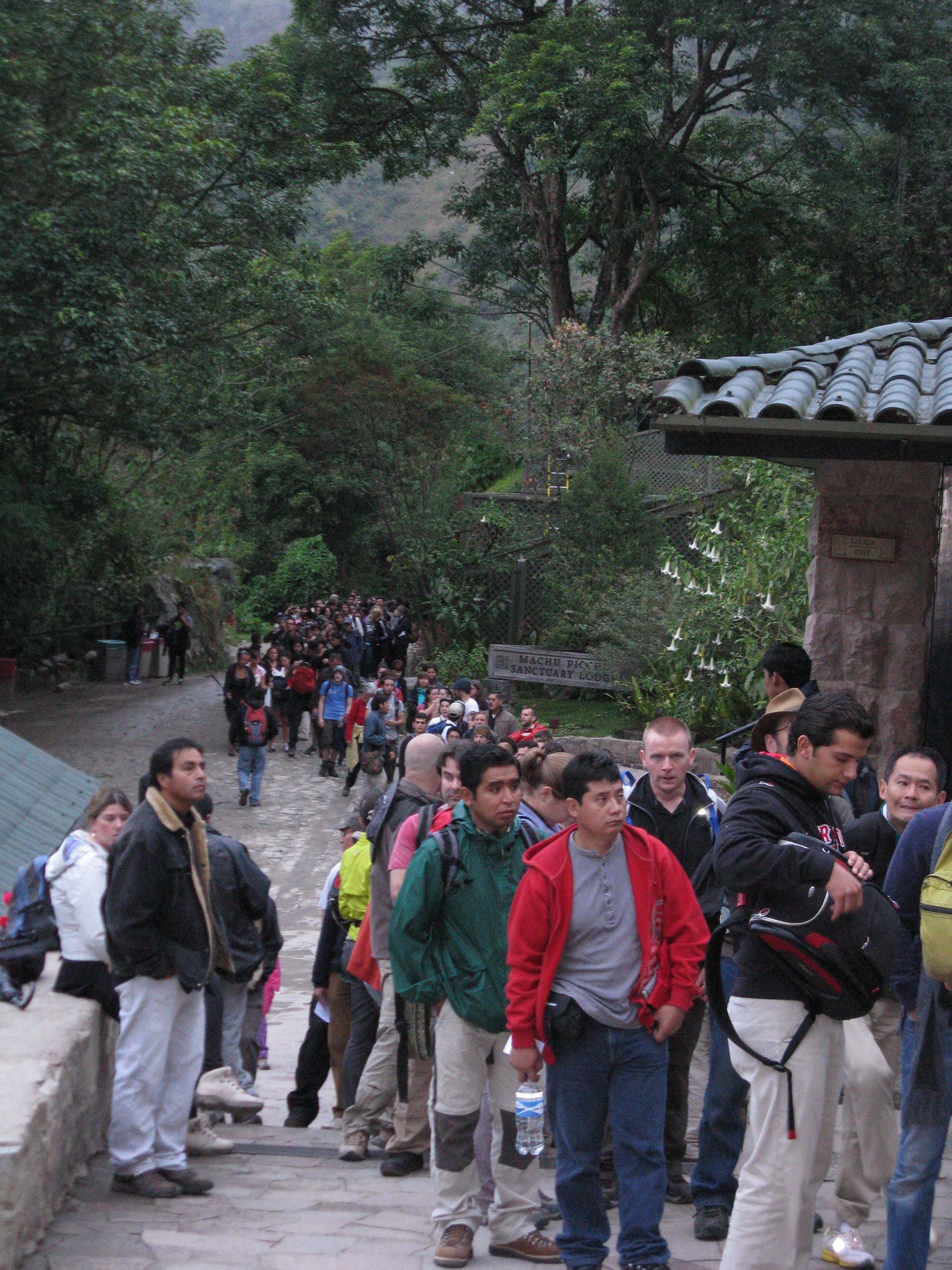
Still, even at 5.50am, the queues actually to get into the site are pretty enormous. It doesn’t open till 6, and then it’s a bit of a free-for-all. Suffice it to say that by about 6.45 we’d managed to stake our place at the top path near the Iconic Viewpoint, to see the sunrise.
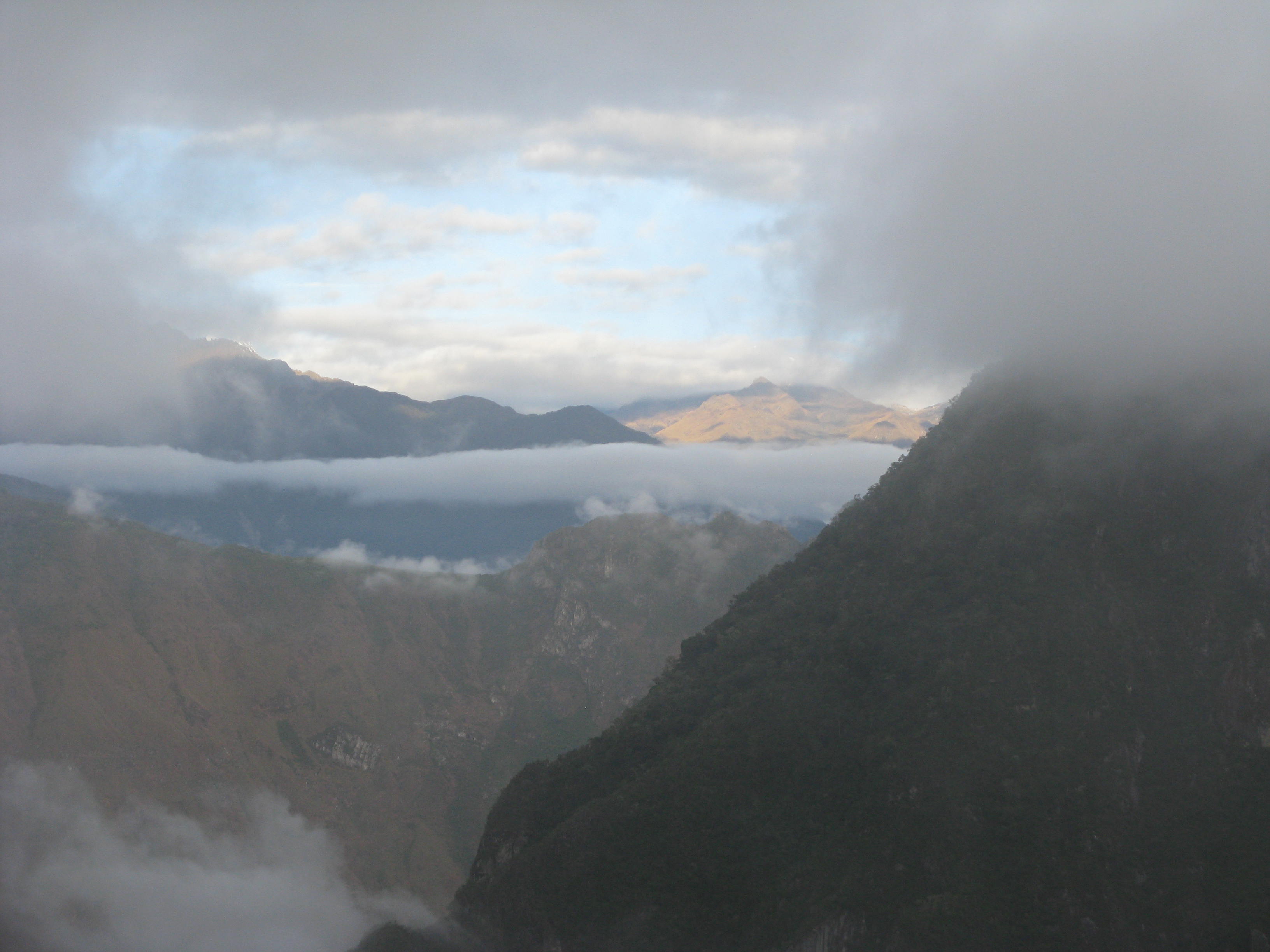
 But it was completely cloudy. You could barely see the ruins, yet alone a celestial body 93 million miles away. Fighting disappointment, we clung on to the hope that it would clear. And then something magical happened. Around 7am little bits of sun suddenly started to streak over the horizon. Almost every fifteen seconds, the light and cloud changed to give a different perspective of the emerging sunrise. It was stunningly beautiful, but not how you imagine a classic sunrise to look. It was more mysterious, more subtle – well worth the getting up early to witness.
 It was with some trepidation that we headed towards Waynu Picchu for our pre-booked ascent. We’d read so many scare stories online about how perilous it is; people were saying “if it wasn’t for the ropes and handrails, I’d be dead” and “it was the most challenging thing I’ve ever done in my life”. We very nearly decided against it – but then thought, sod it, we’ve come all this way, we’ve got to give it a try; as indeed had two hundred other people in front of us in the queue. We eventually got to the check-in booth at about 7.55am. We had no water with us (doh!) so it was with some relief that I saw they had bottles for sale. But I only had a large denomination note, and they refused to accept it. Would they take dollars? “Yes, sure”. OK, how many dollars for these two 2-sol bottles? (About 46p each). “Three”. I gave them three dollars. “No – four”. Four, ok, I gave them one more. We were walking away in preparation for our ascent, when one of the guys came running up to me. “One more dollar”. I almost suggested I should shove the dollar where the Incas don’t worship, but I thought I might need all the help I can get, so politely offered the additional note.
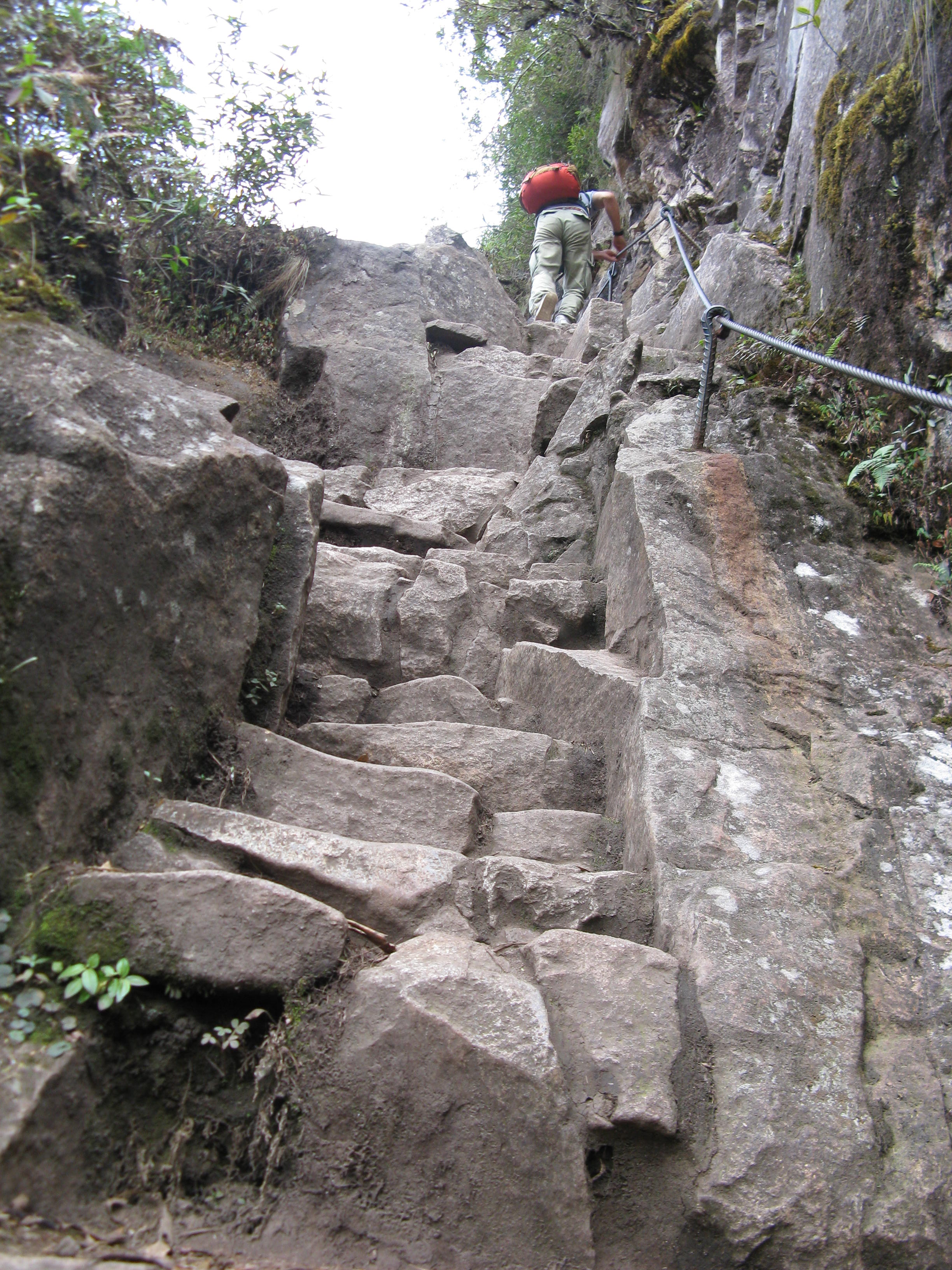
 The hike up Waynu Picchu is sensational. At times a bit scary, whether it be through height or unevenness of the steps or the narrowness of the rock formations you have to squeeze through, but always exhilarating and with views to die for, especially when you look back on Machu Picchu behind you and get the reverse version of the Classic View.
  Naturally, there are plenty of places for great photo opportunities; and the chance to create an environment of oneness with your fellow mountaineer. We met a very nice Swiss gentleman, well into his retirement, who took our photo several times, and with whom we gave and received mutual encouragement on the way up and down. There were also some rather gorgeous French ladies, who coped with all the rigours of the summit whilst still appearing fresh as a daisy like Chanel models.
  All in all it took us two hours ten minutes to go up and down, and my recommendation is that if you think you’re fit enough to give the climb a go, then definitely you should do it. There were plenty of older and less fit-looking people making plucky attempts. Don’t be put off. Yes, maybe if it weren’t for the ropes and handrails, you’d die, but the fact is, there ARE ropes and handrails, so you DON’T die.
 Back down among the ruins, we had about an hour free time to cavort about and play at being Incas. It’s great just to wander around by yourself and do the place at your own pace. By the time we left, we felt we had thoroughly “done” Machu Picchu, and considered it one of the most stimulating places we’ve ever seen.
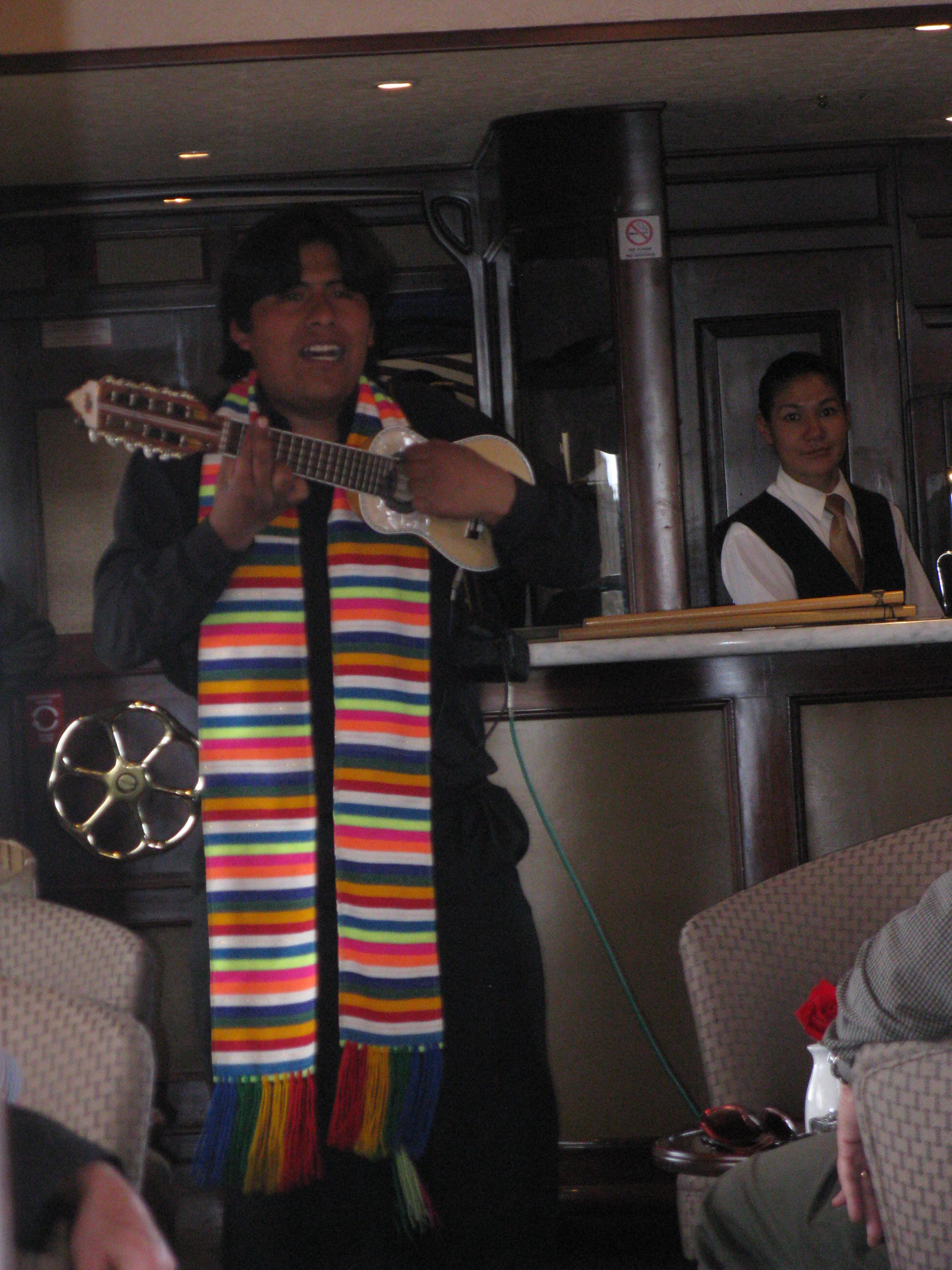
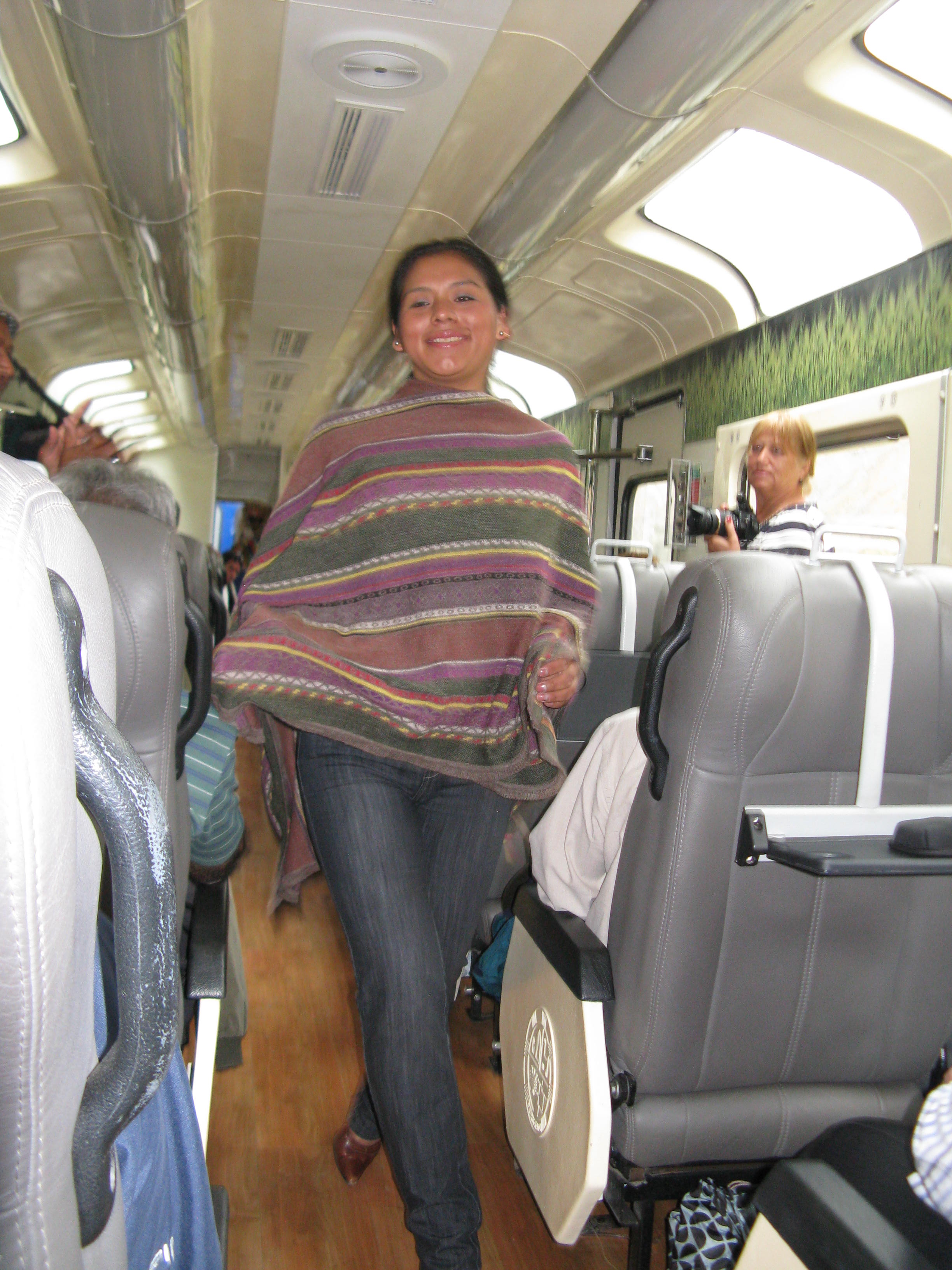
 Then it was back to Aguas Calientes and the return train to Cuzco; a train full of satisfied adventurers, sturdy of heart and snap-happy of camera. One odd thing – and this wasn’t the only time we’d experience this in Peru – they seem to enjoy holding fashion shows on board trains. Halfway through the journey, the good looking young steward and stewardess nipped out to the toilets and came back wearing an assortment of llama and alpaca jumpers, ponchos, jackets and coats that you could (of course) buy if you wish. It was all very good natured and entertaining – but a thoroughly odd experience nonetheless.
 But more of that shortly. Our week started off in the capital Lima, a thriving and attractive place, full of striking architecture.
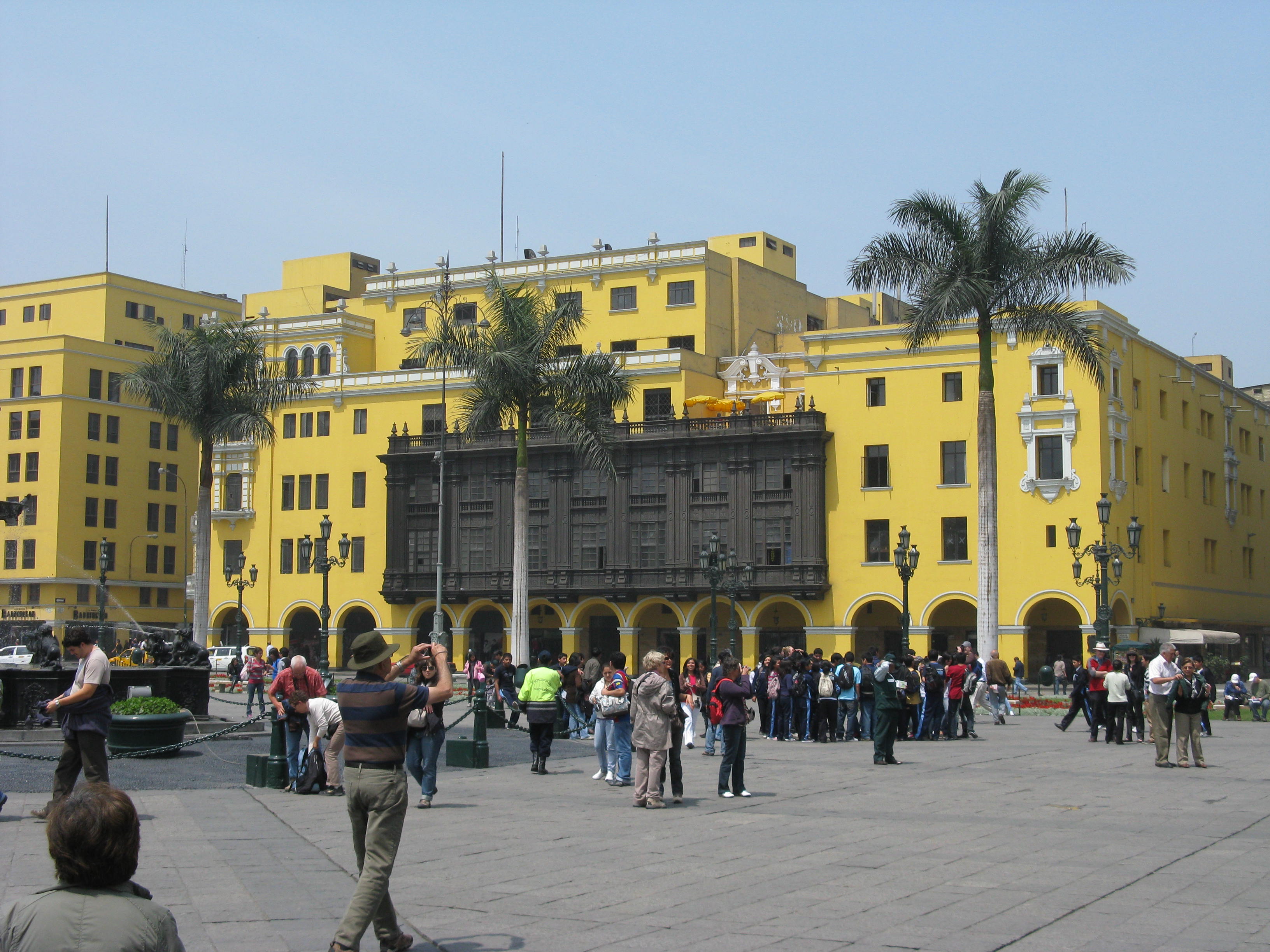
 You see that yellow and black combination all round the Plaza Mayor and the city centre. The ornate enclosed balconies can be breathtakingly beautiful.
 And the Plaza Mayor is definitely the centre of attention.
 But there’s also a bustling market

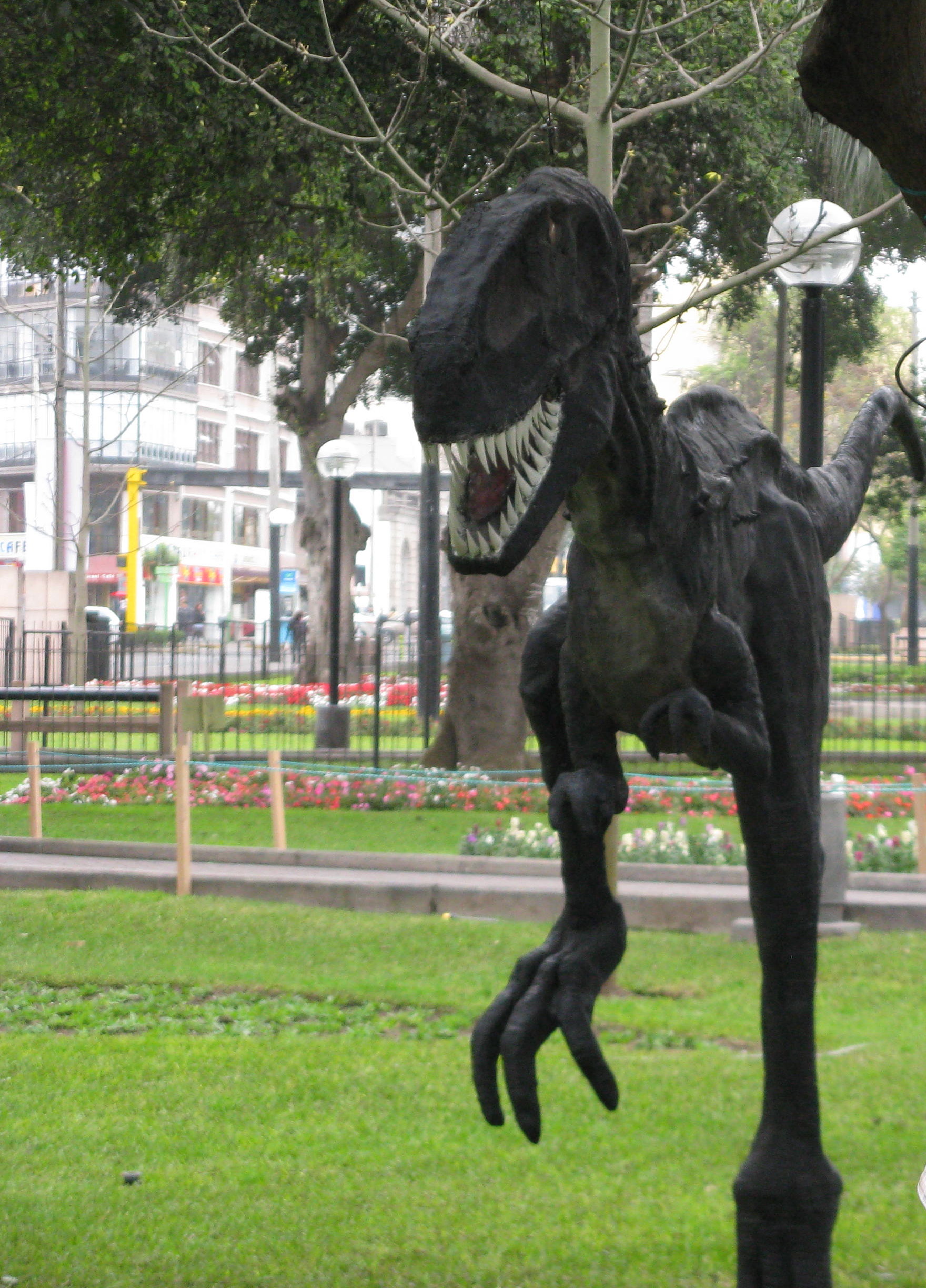
 In the Miraflores district, you can meet dinosaurs at Kennedy Park
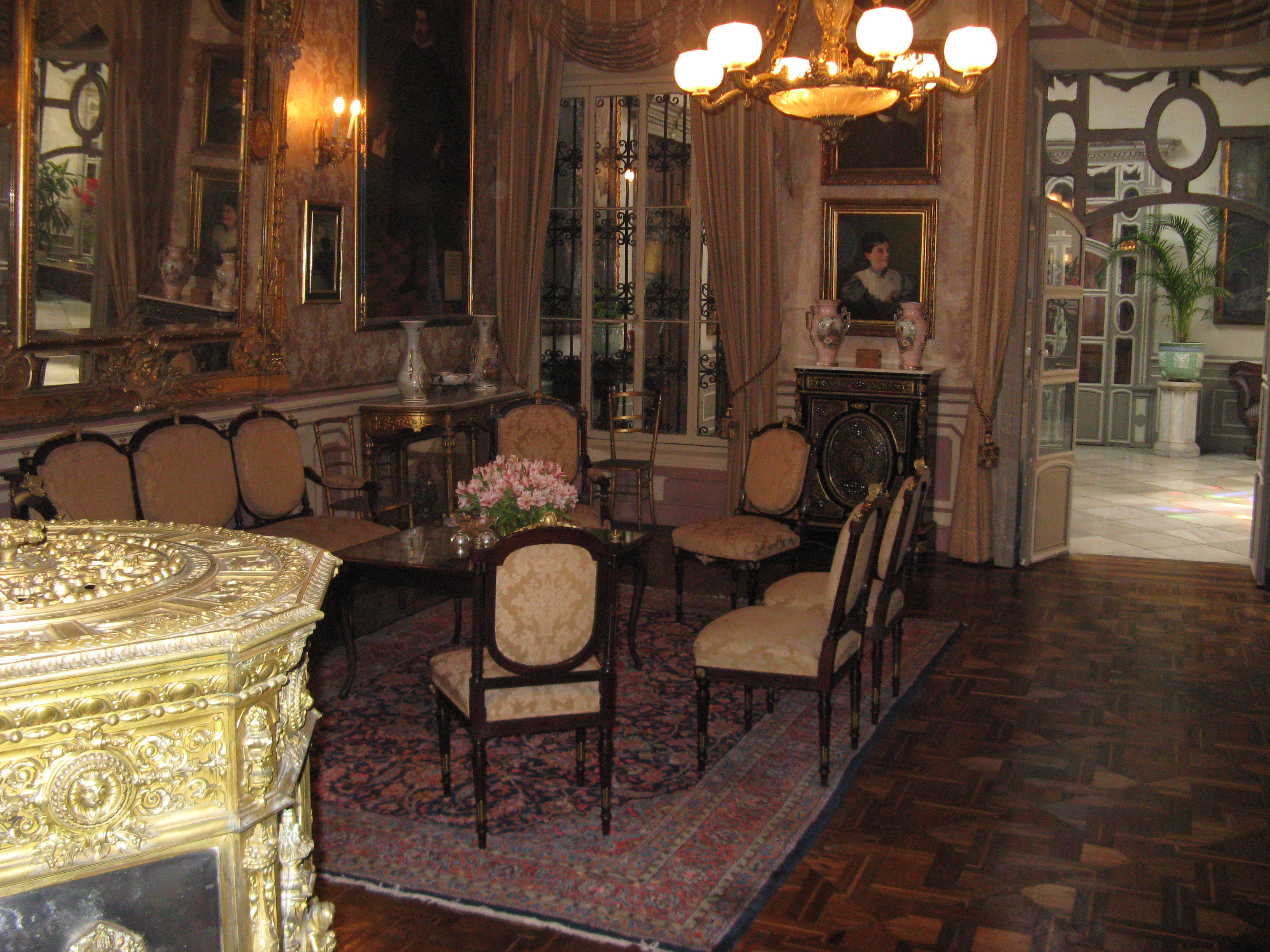
 We also visited the charming Casa de Aliaga, the city’s oldest colonial mansion
 Went here
 For two of these
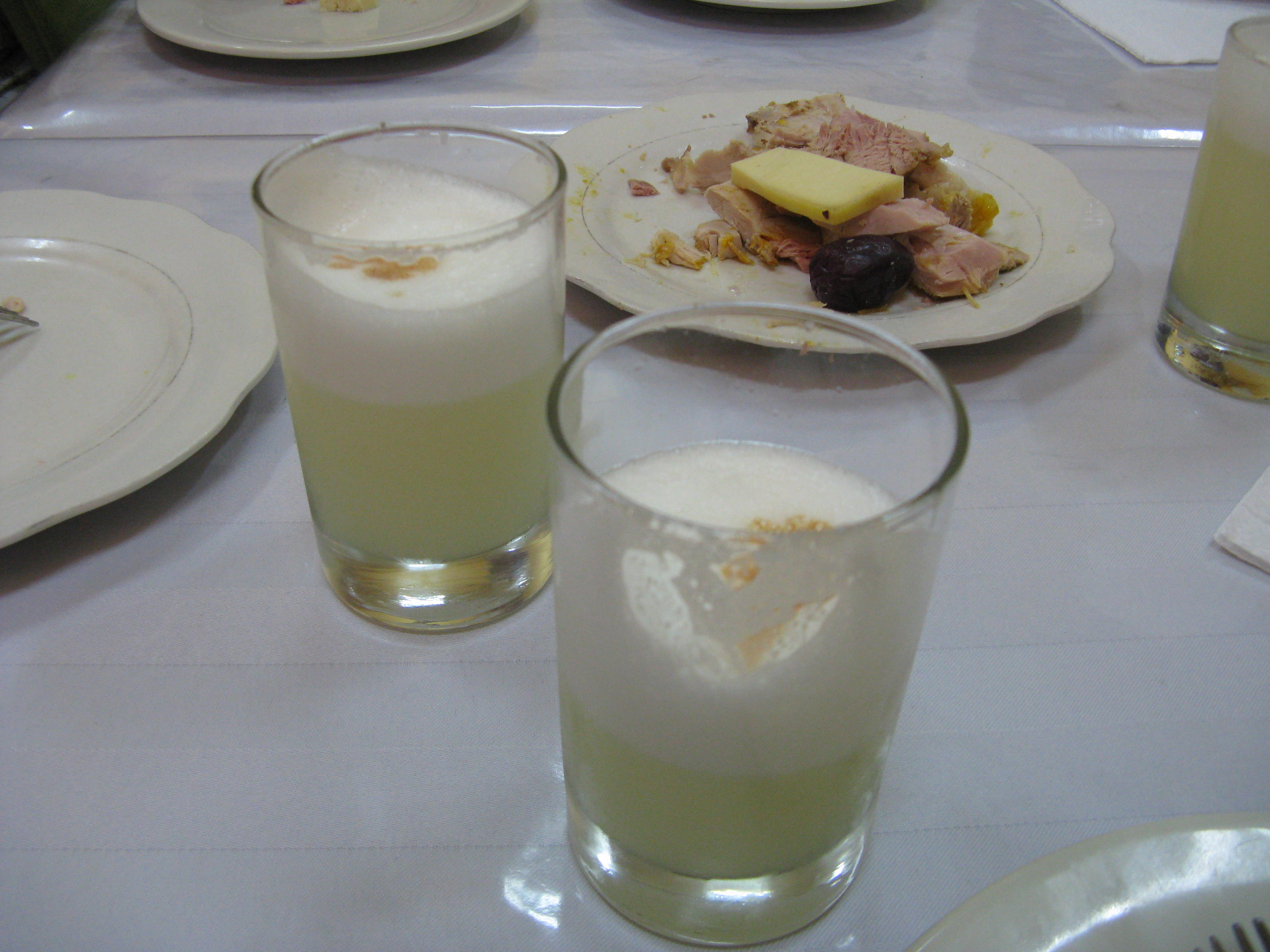
 The Pisco Sour. It tastes much nicer than it sounds. We kept out of the way of this lot:
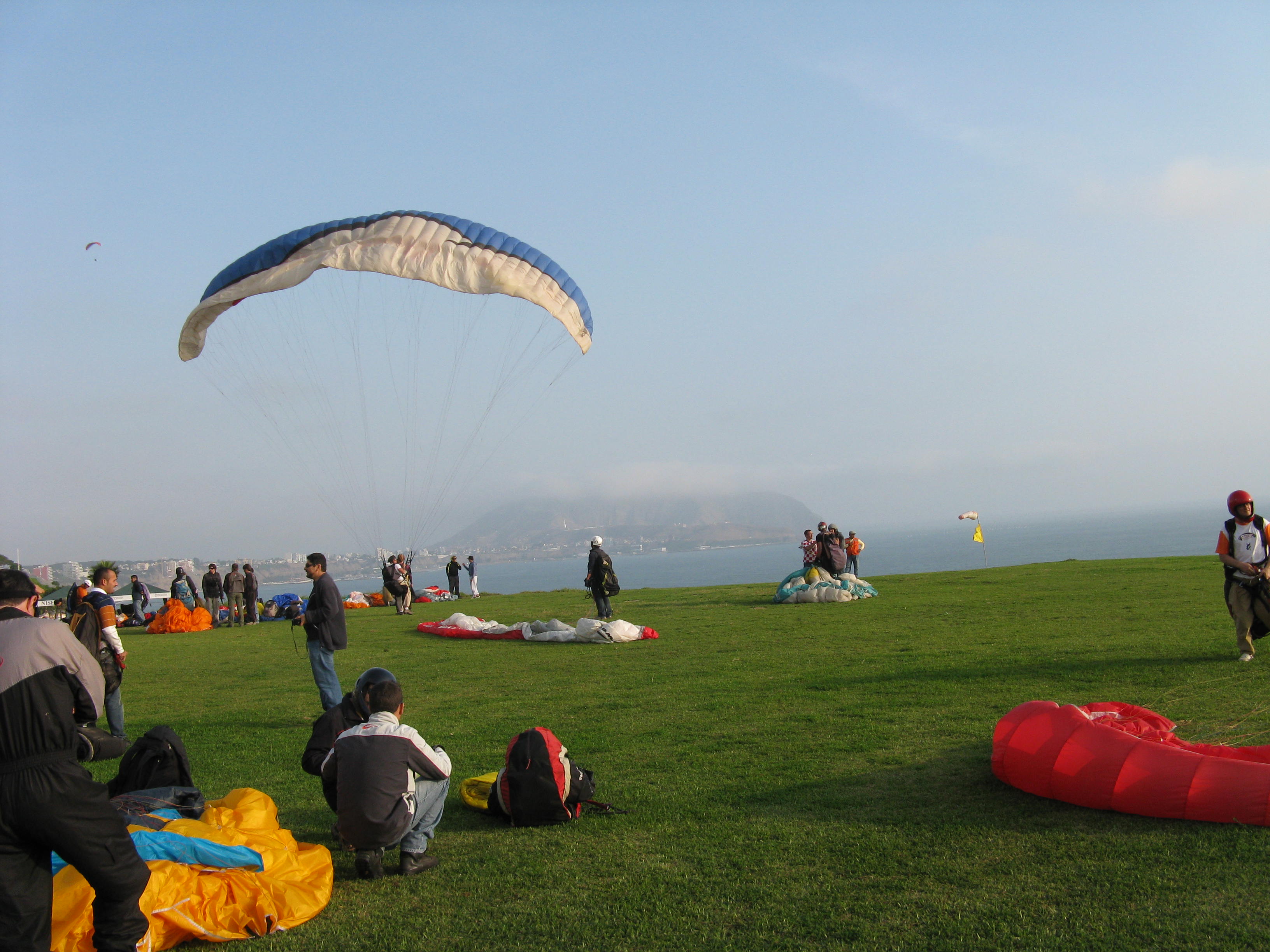
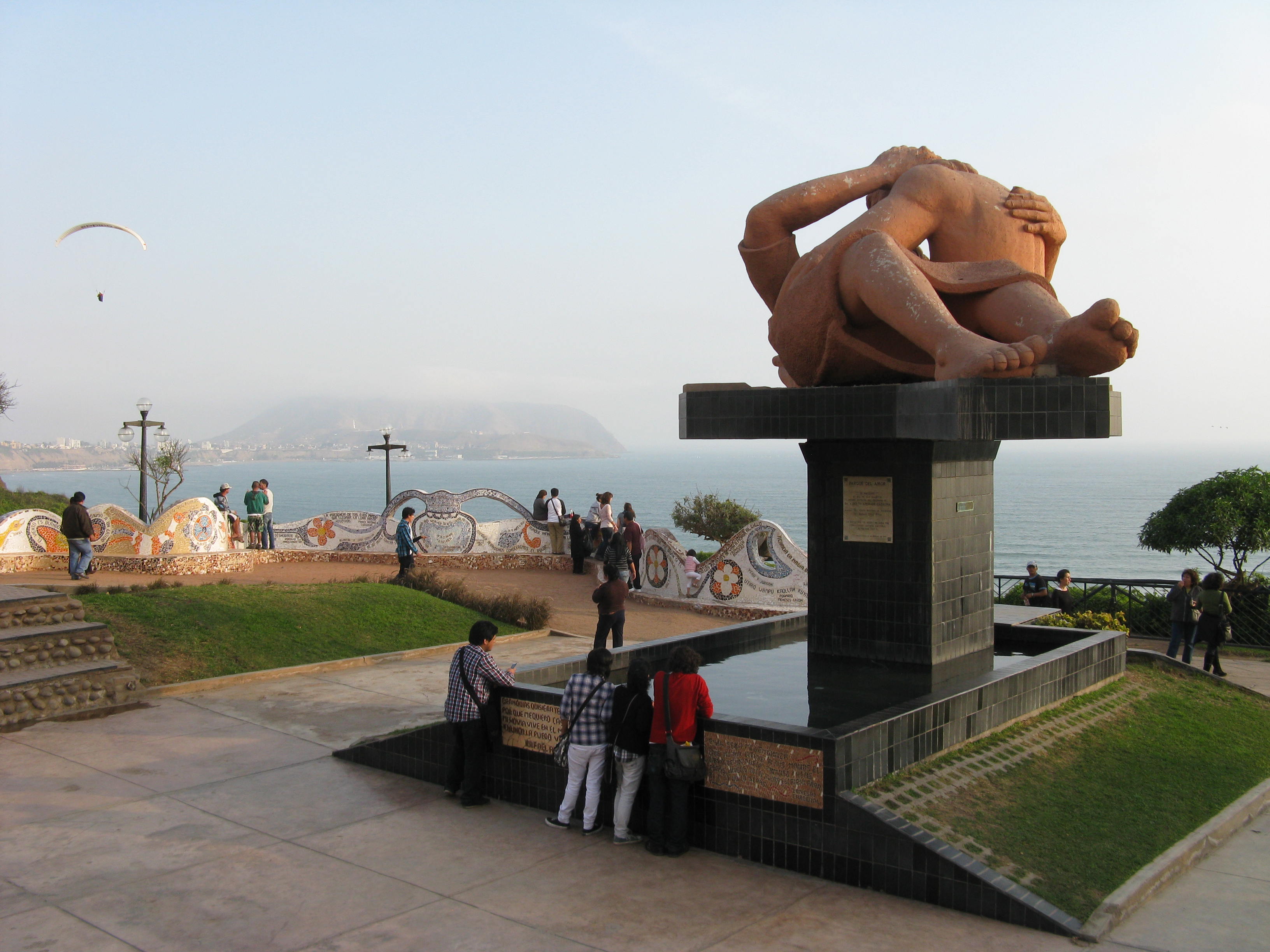
 And also had a very enjoyable stroll around Miraflores, which is upmarket and delightful – and a great coastline. You don’t tend to think of the sea when it comes to Peru, but it’s not to be missed.
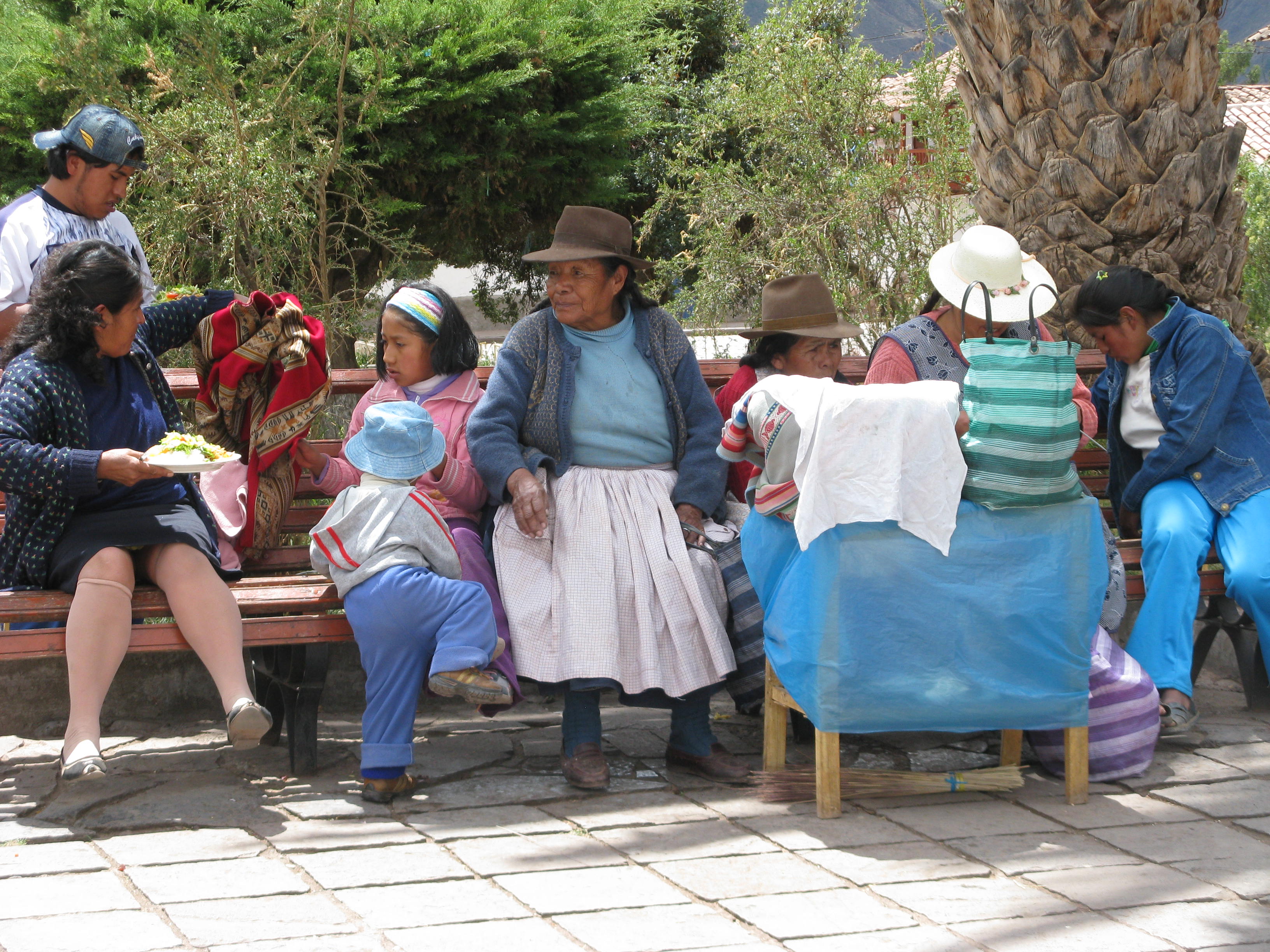
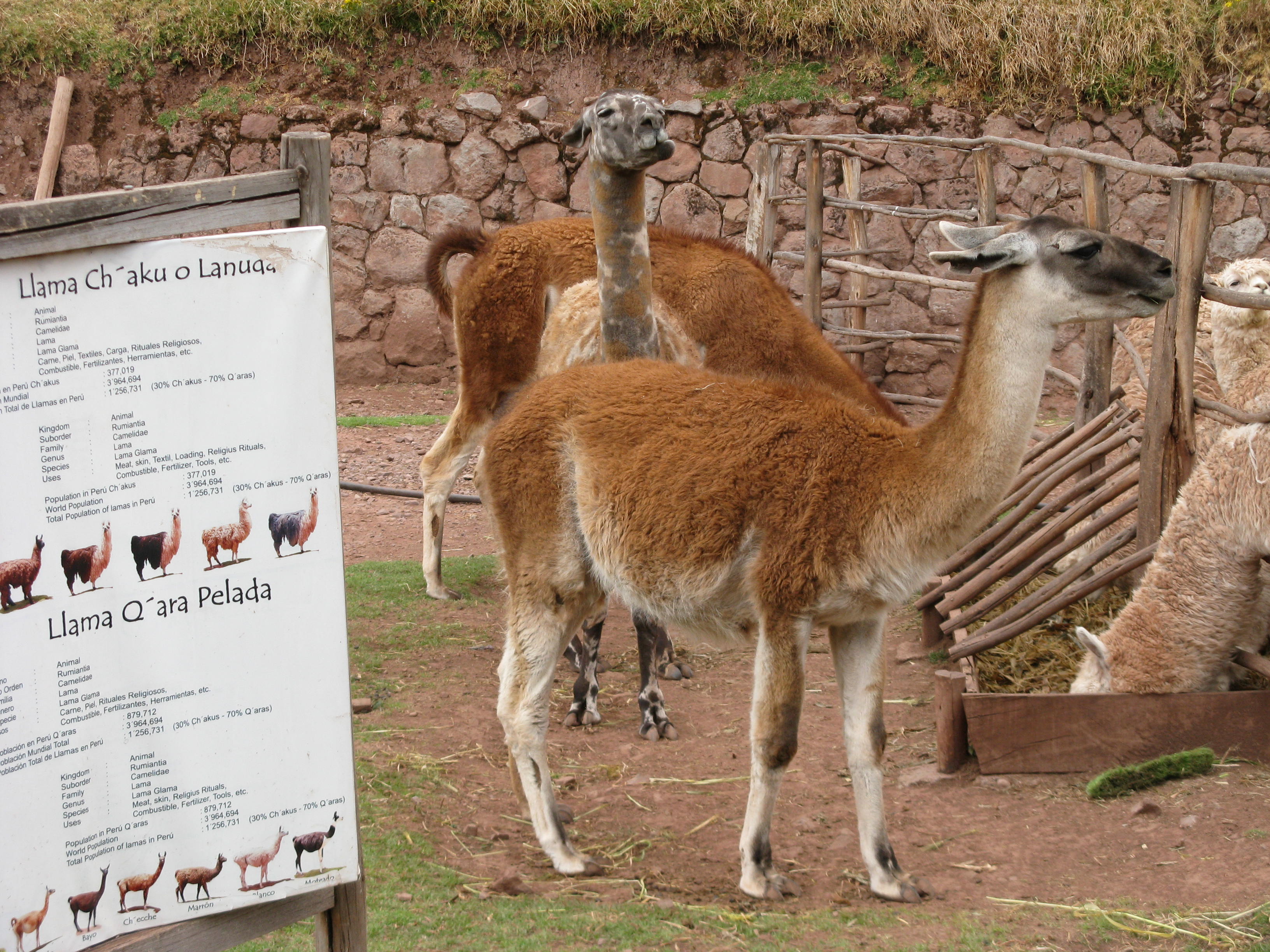
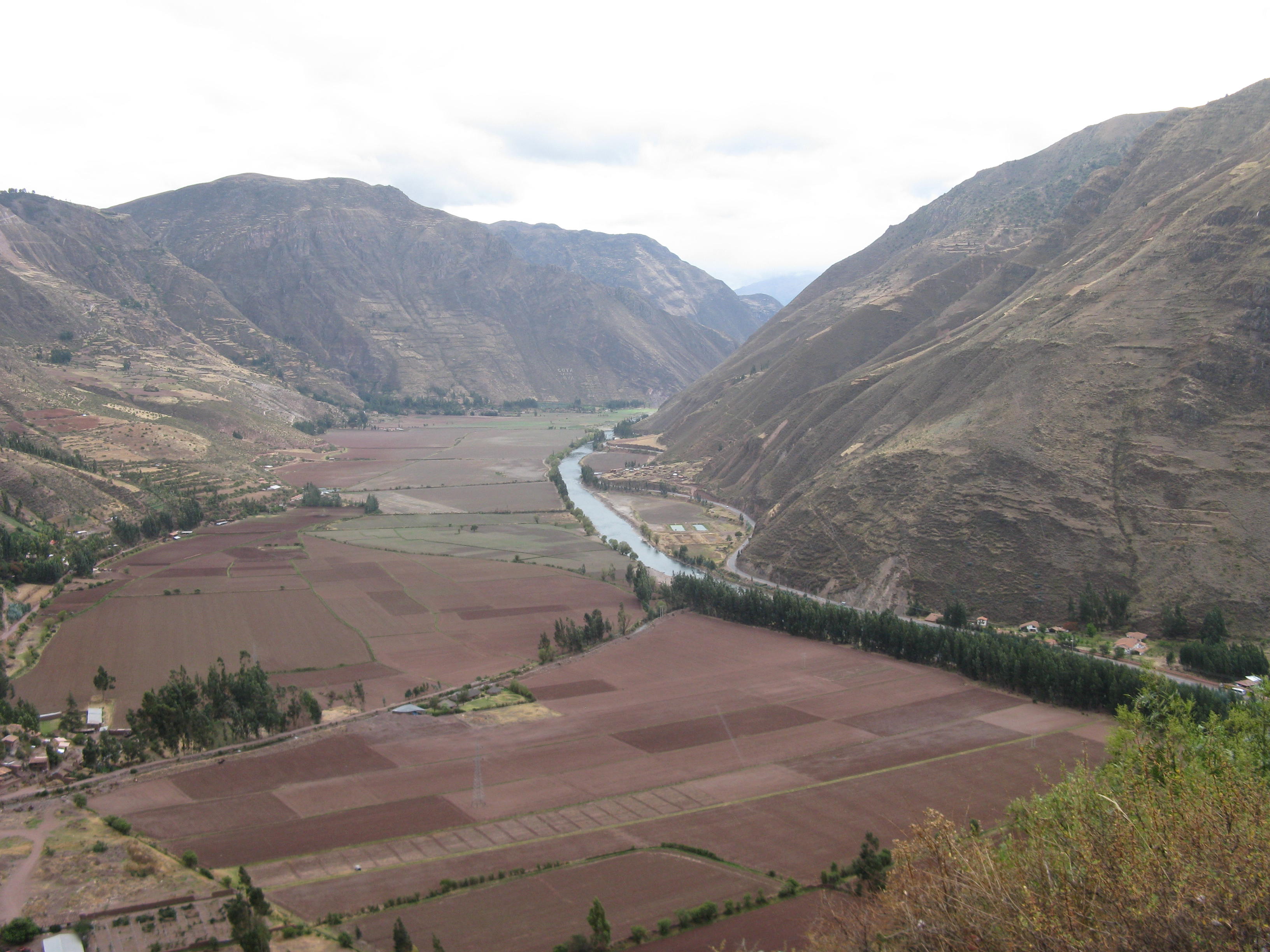
 From Lima we flew to Cuzco, and, in order to acclimatise to the altitude, immediately headed for the Sacred Valley, which is at a much lower level – then you slowly begin to climb during the next few days. The Sacred Valley is quite touristy, so you see plenty of these:
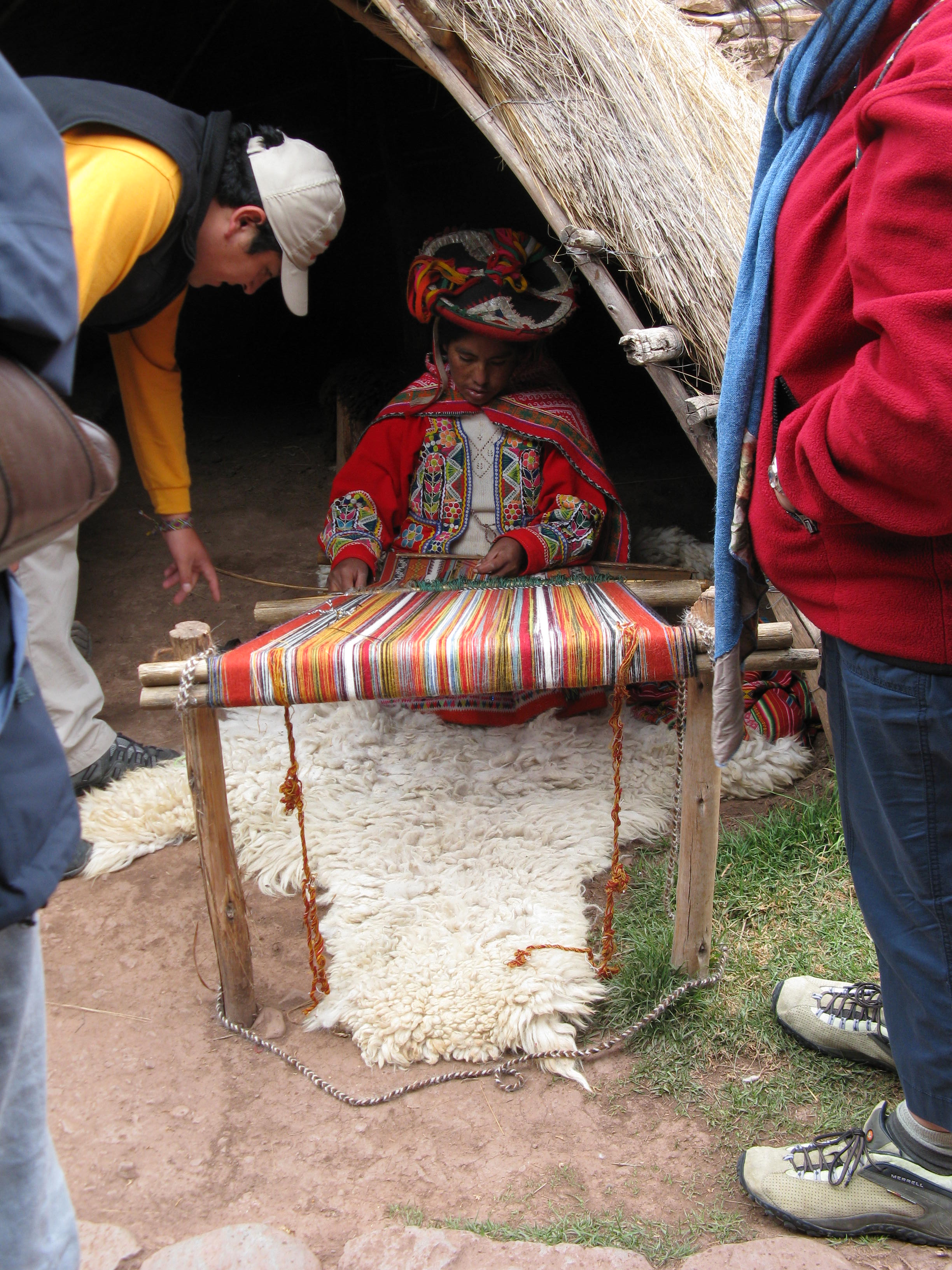
 And these
 And these
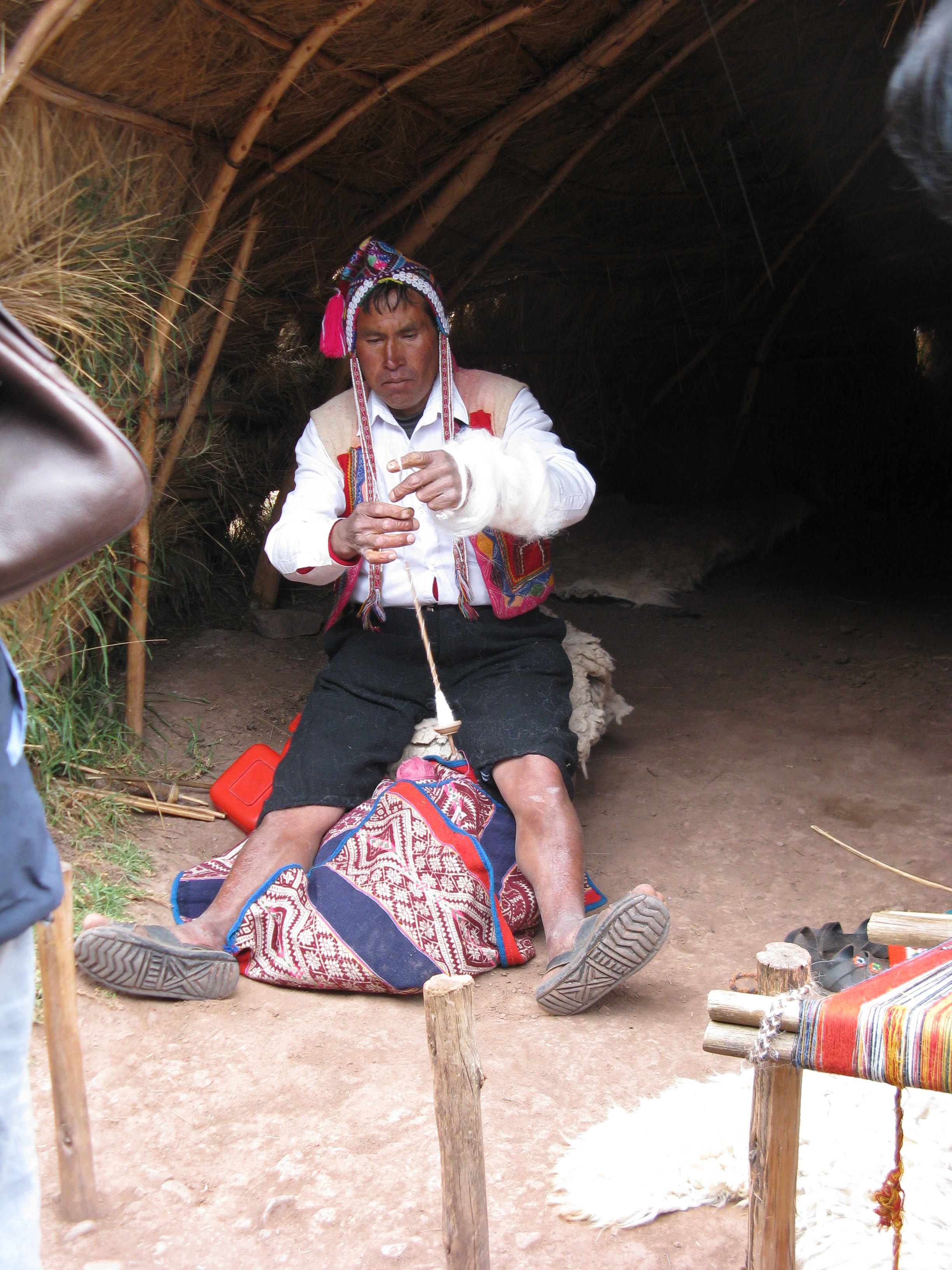
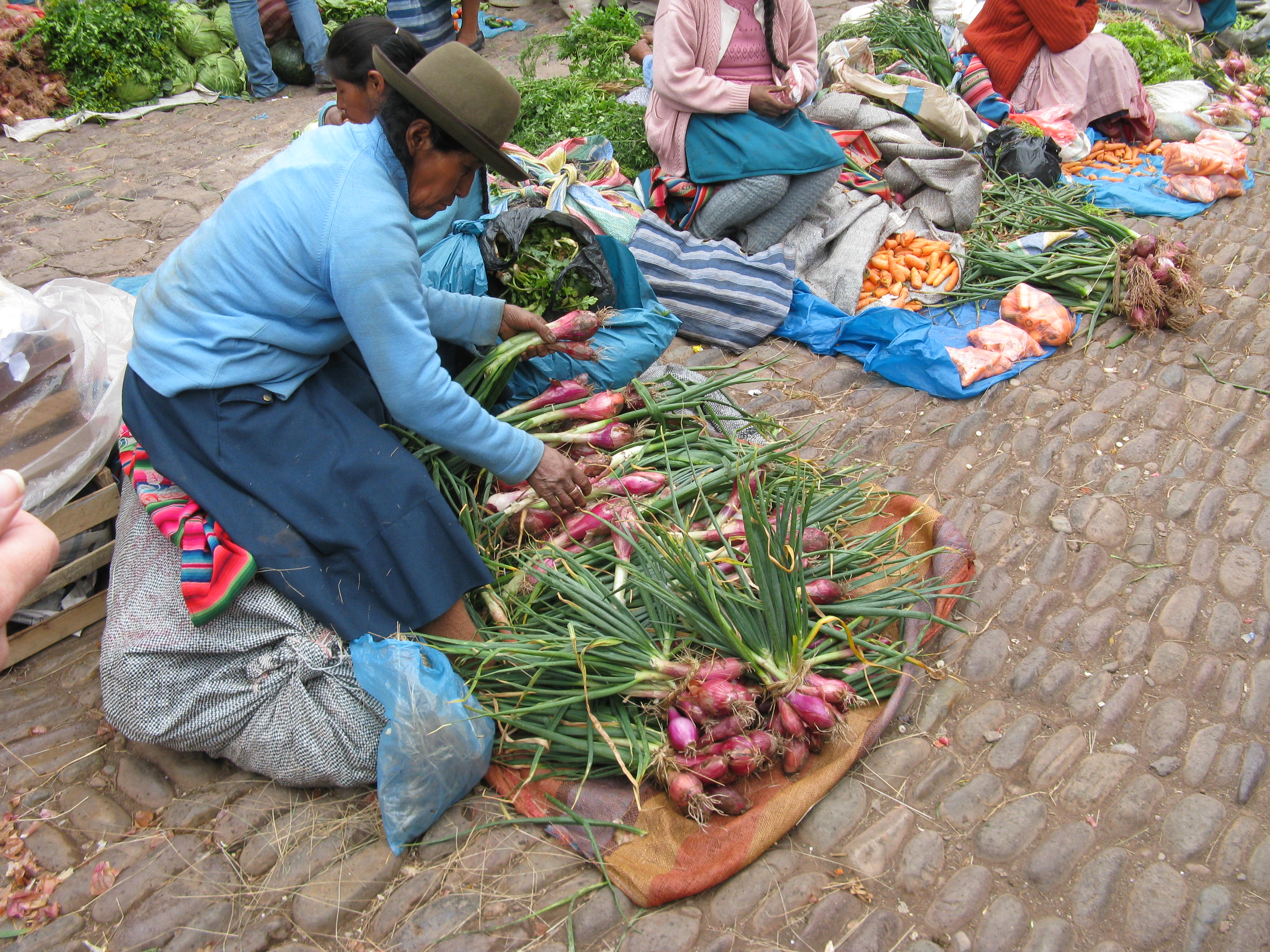
 This gentleman shows us the traditional art of spinning. So much more refined when you do it without an exercise bike. In Pisac, we visited another market
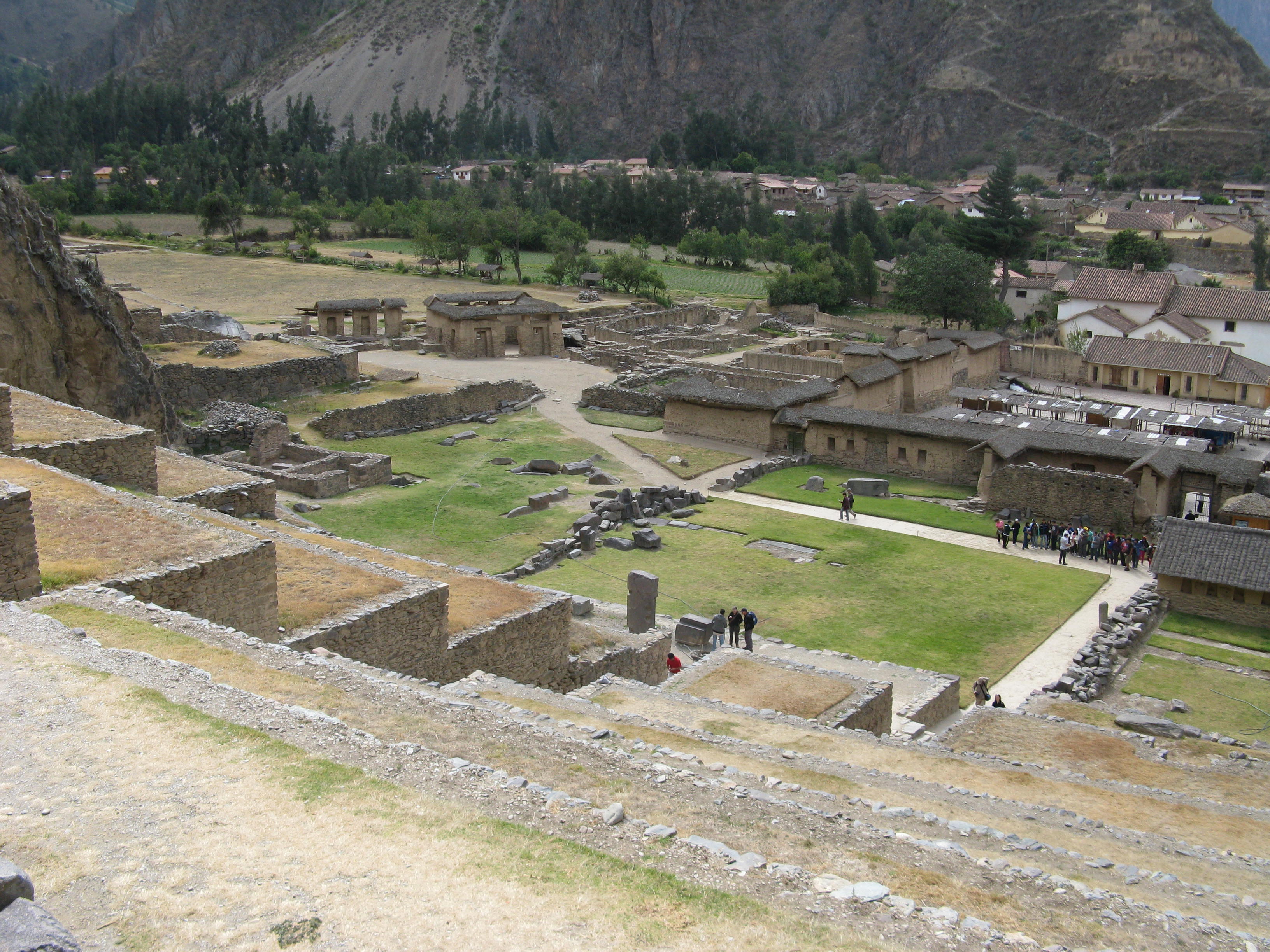
 But the highlight of the Sacred Valley is Ollantaytambo, famous for its Inca ruins, as it was once the royal estate of Emperor Pachacuti.


 A picturesque journey – we reckoned these people were doing the Inca Trail.

 Until it finally reaches Aguas Calientes.


 We got up early the next morning to see dawn rise over the site
 A misty experience!
 From there we walked up Waynu Picchu, which is the mountain opposite Machu Picchu, to get the great view. Wow, what an experience!
 It’s high. It’s tiring. But so worth it! And what comes up, must go down….
 And it’s quite a challenge! Reaching Machu Picchu again gave us a chance for another walk around.


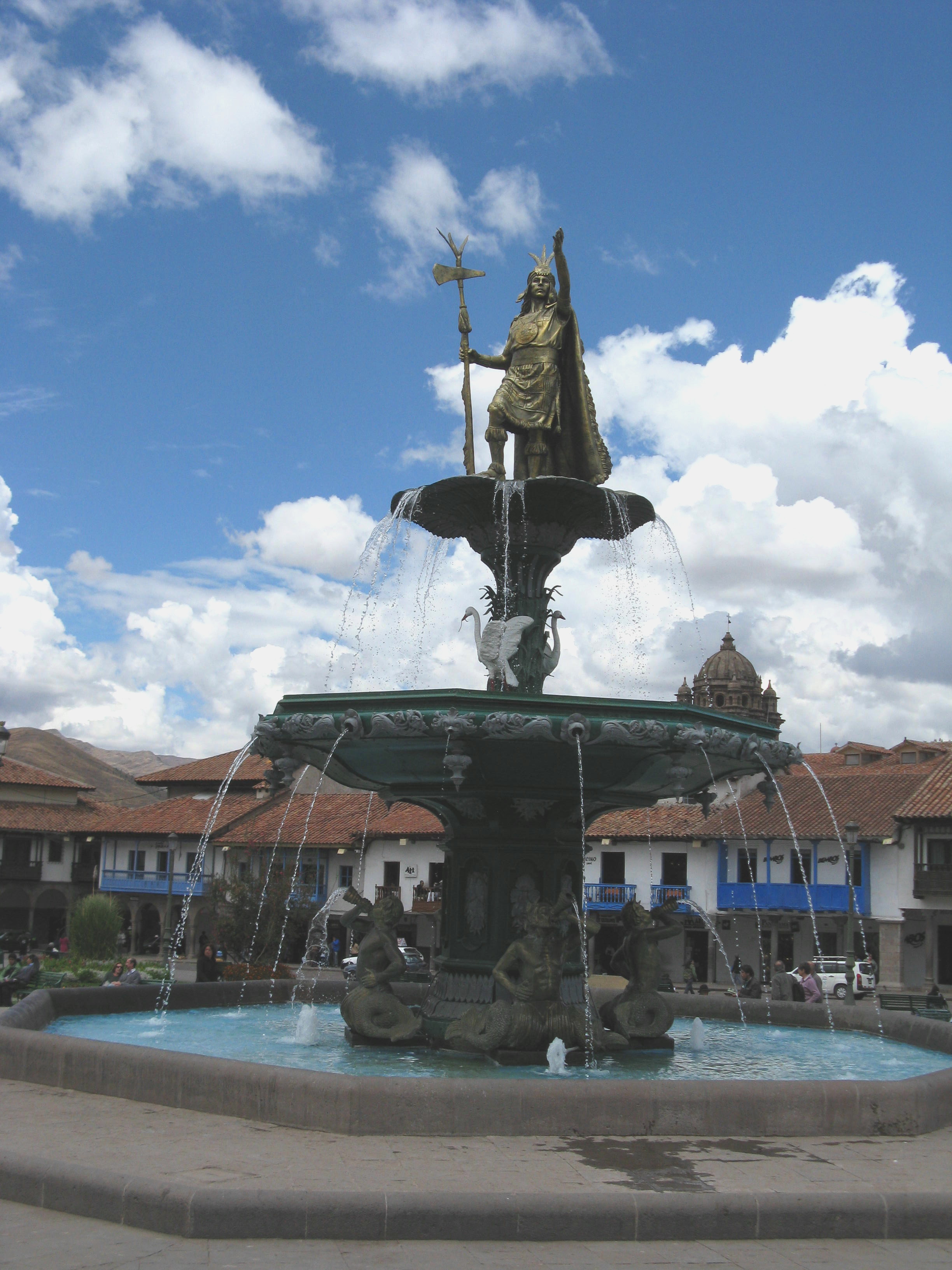
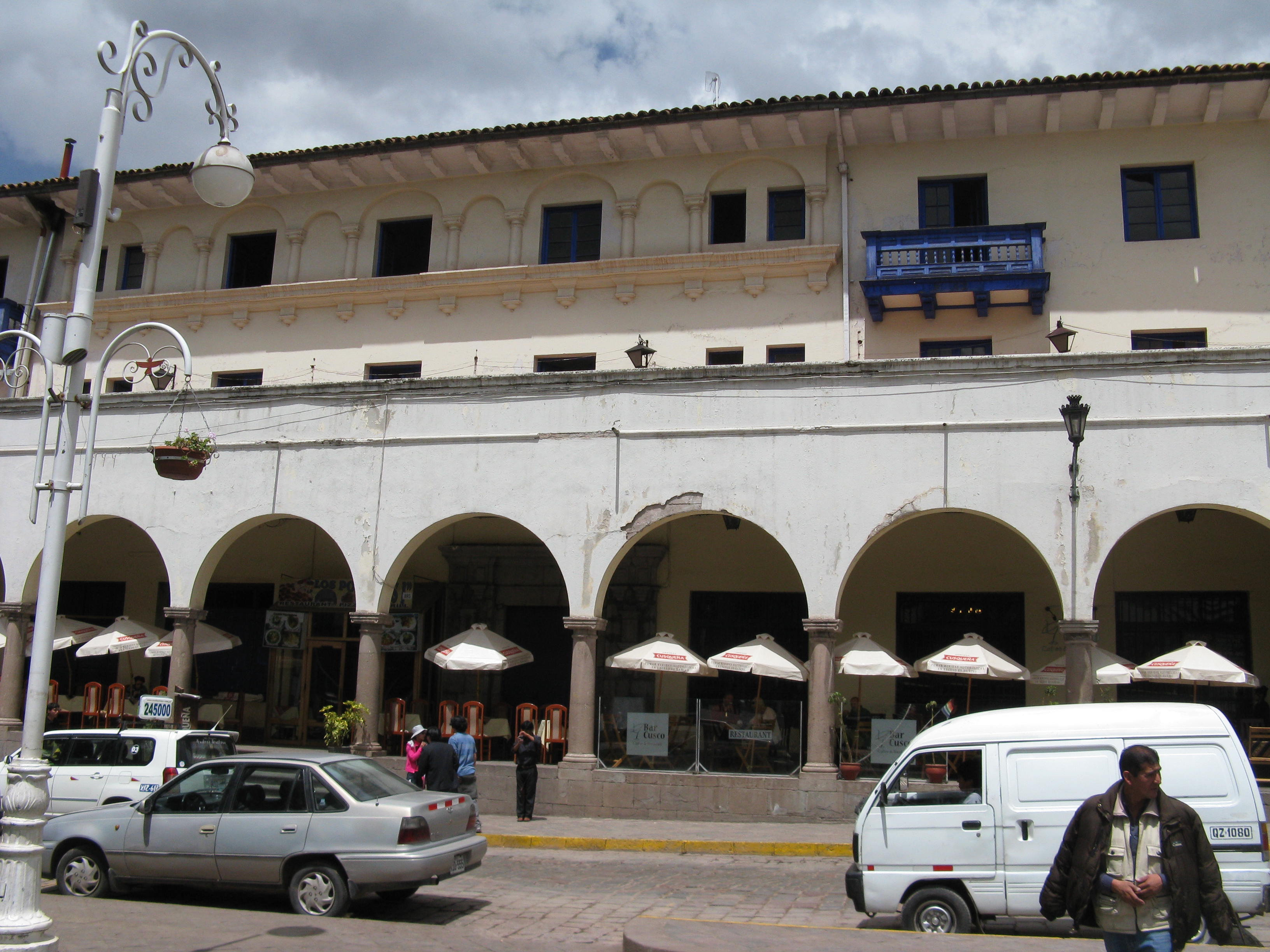
 The Plaza de Armas is the focus of the city centre, an expansive and beautiful town square.
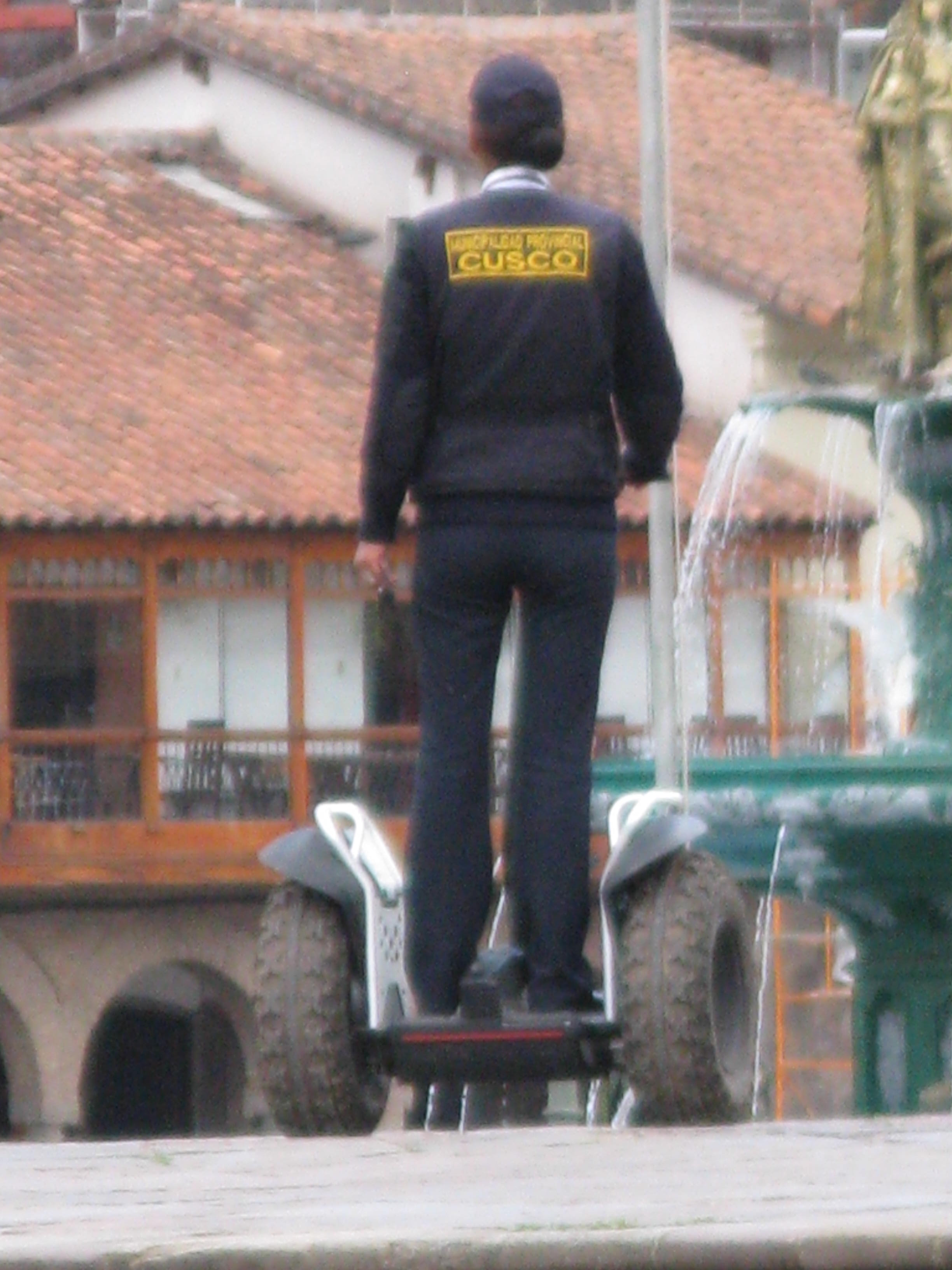
 and, surprise, surprise….

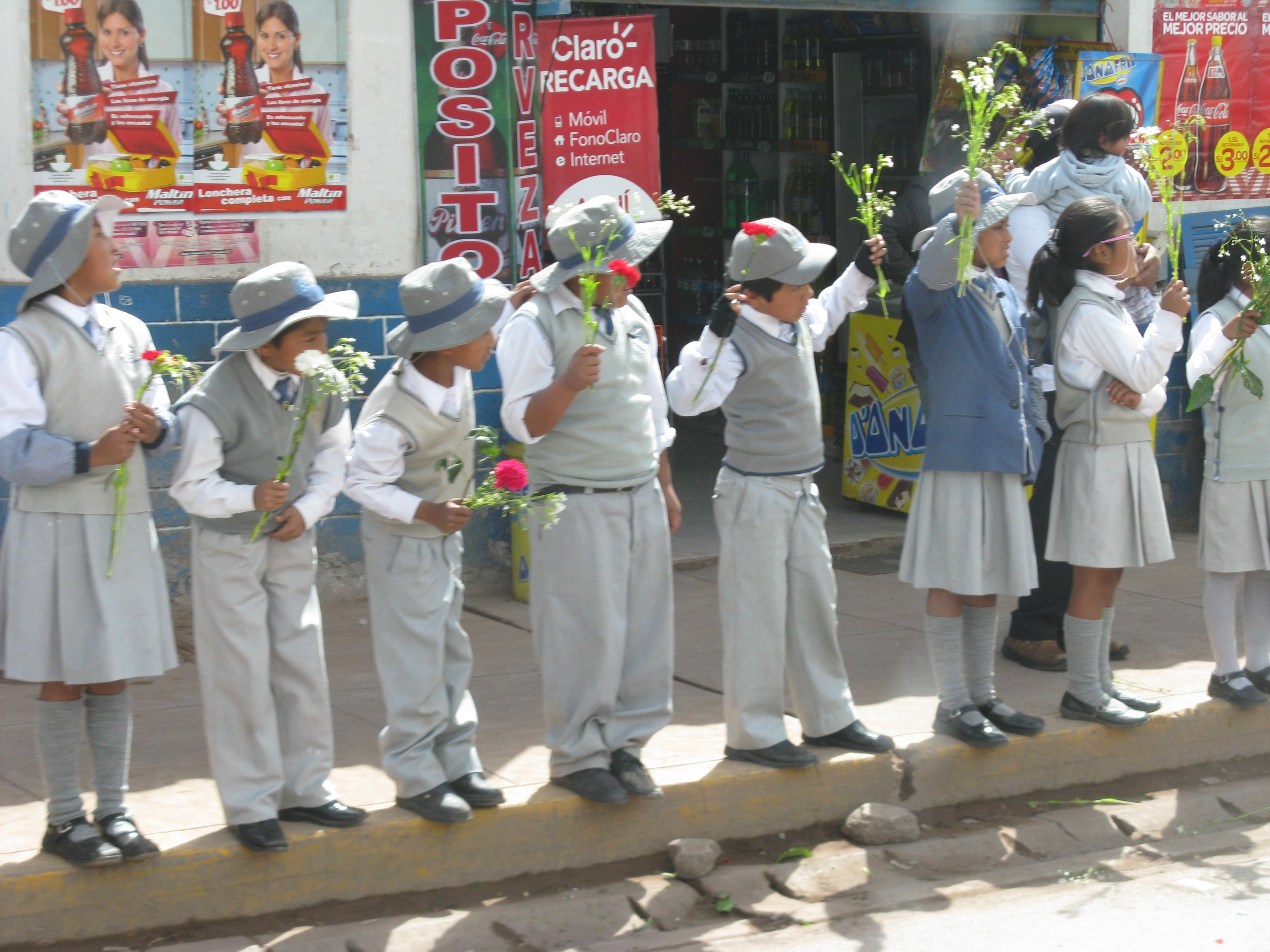
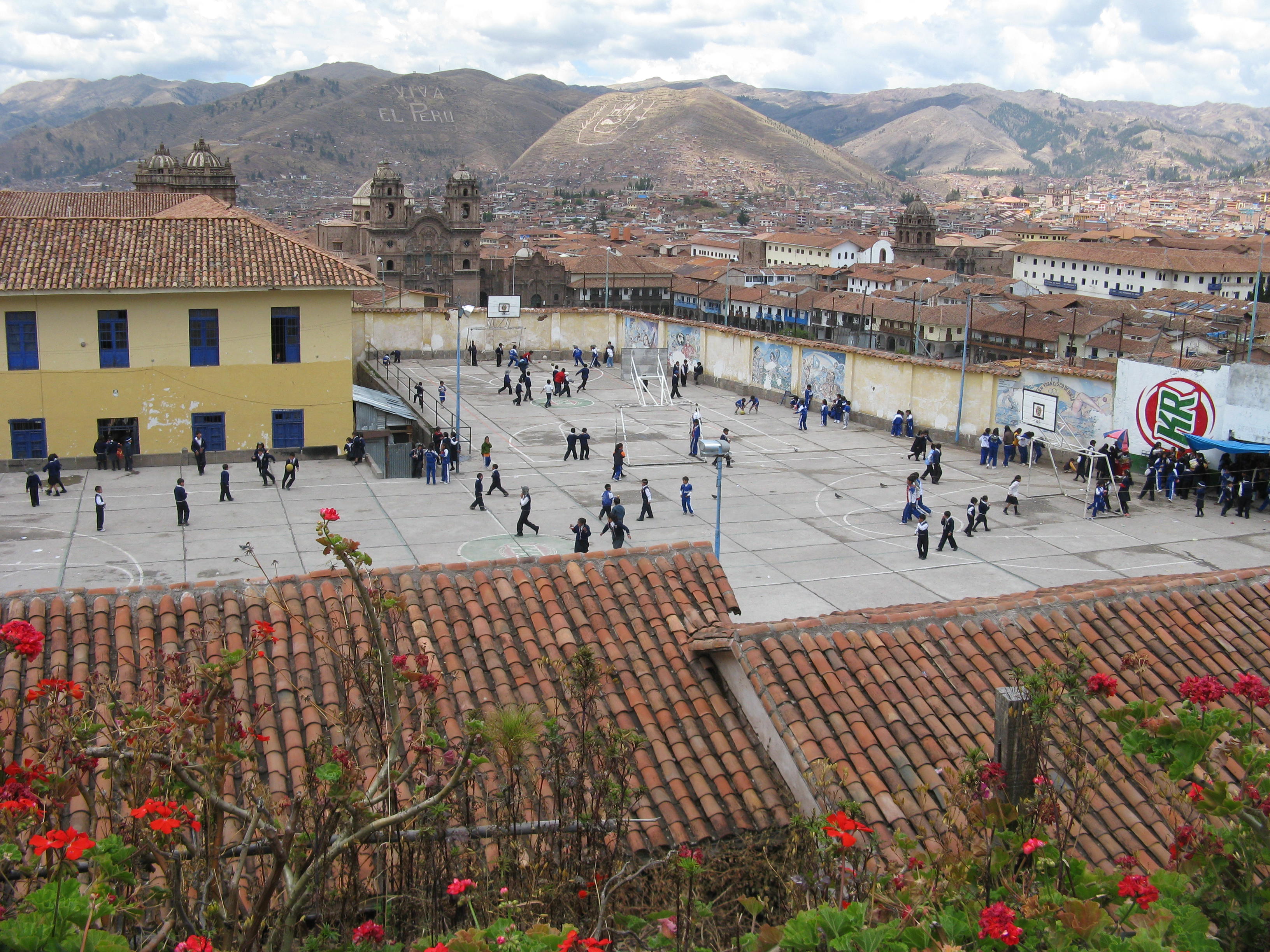
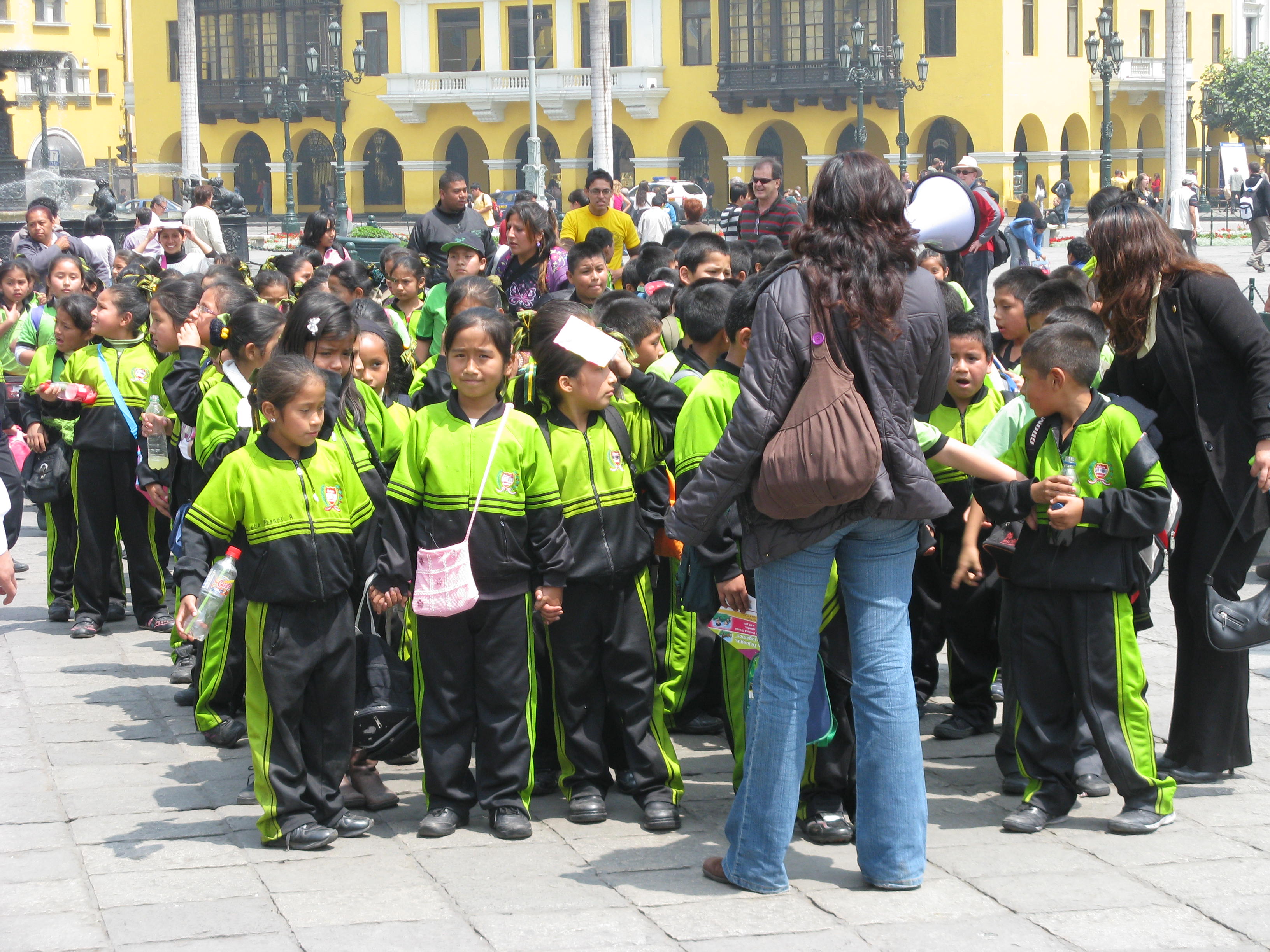
 And a local school
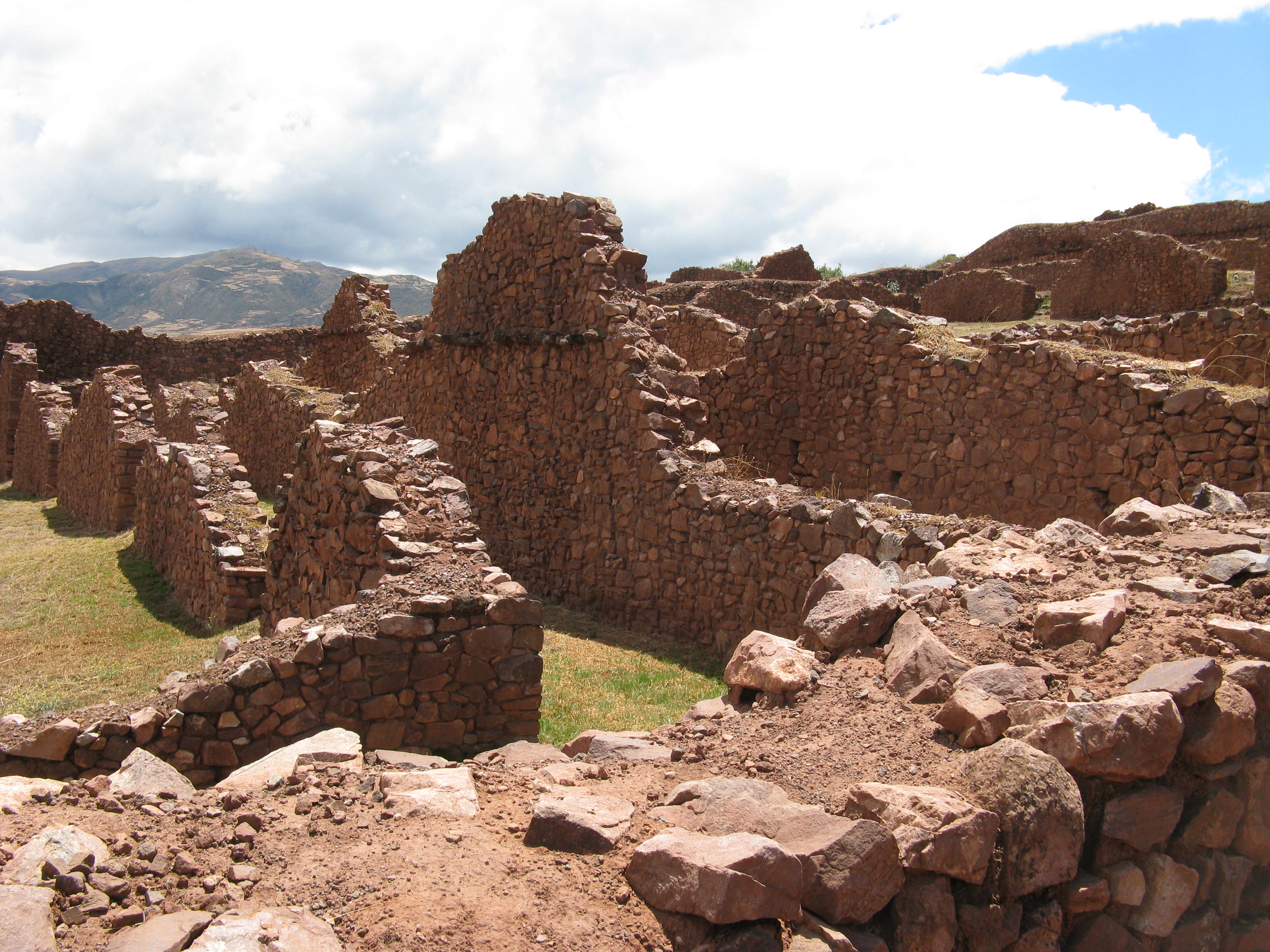
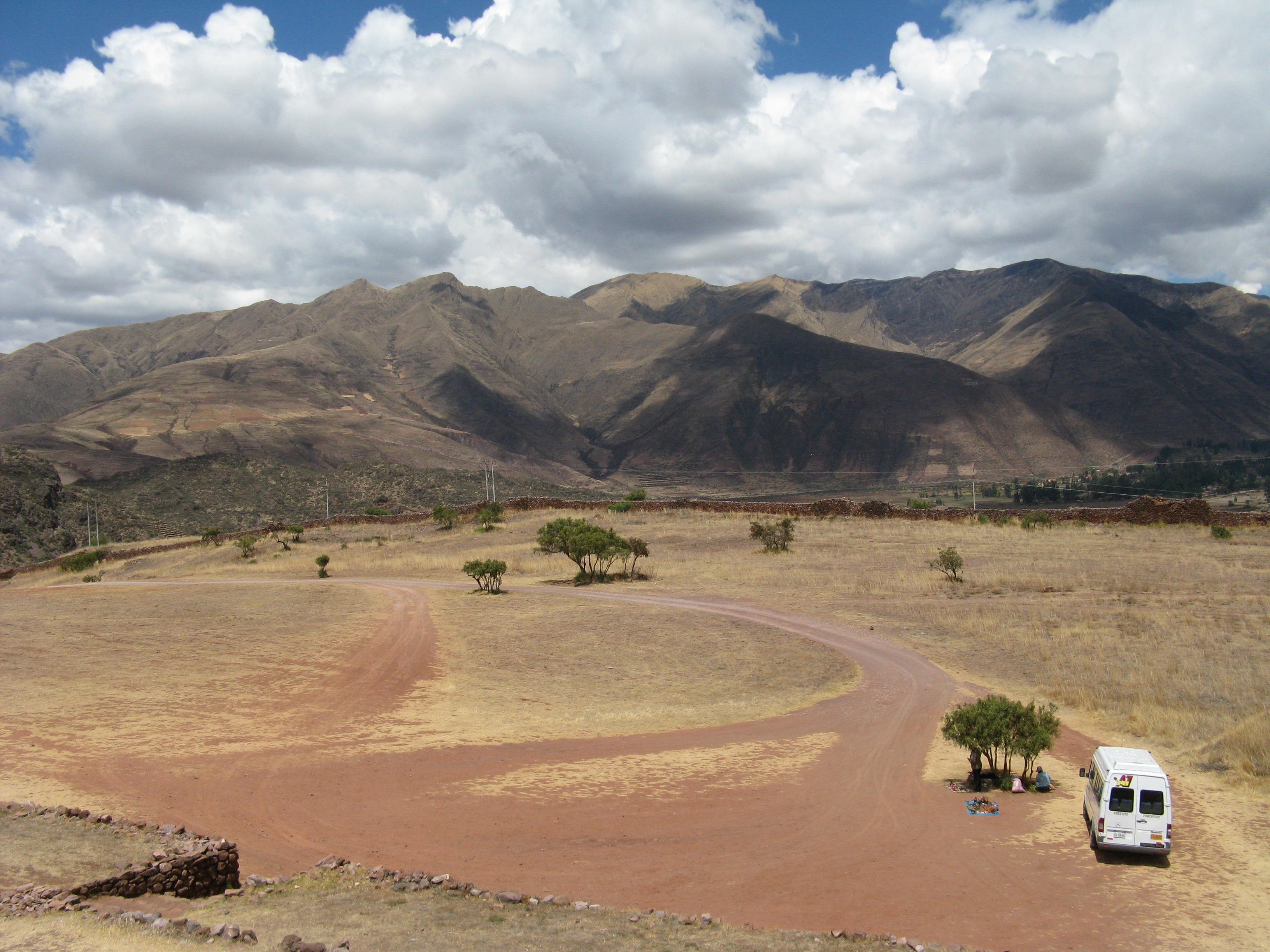
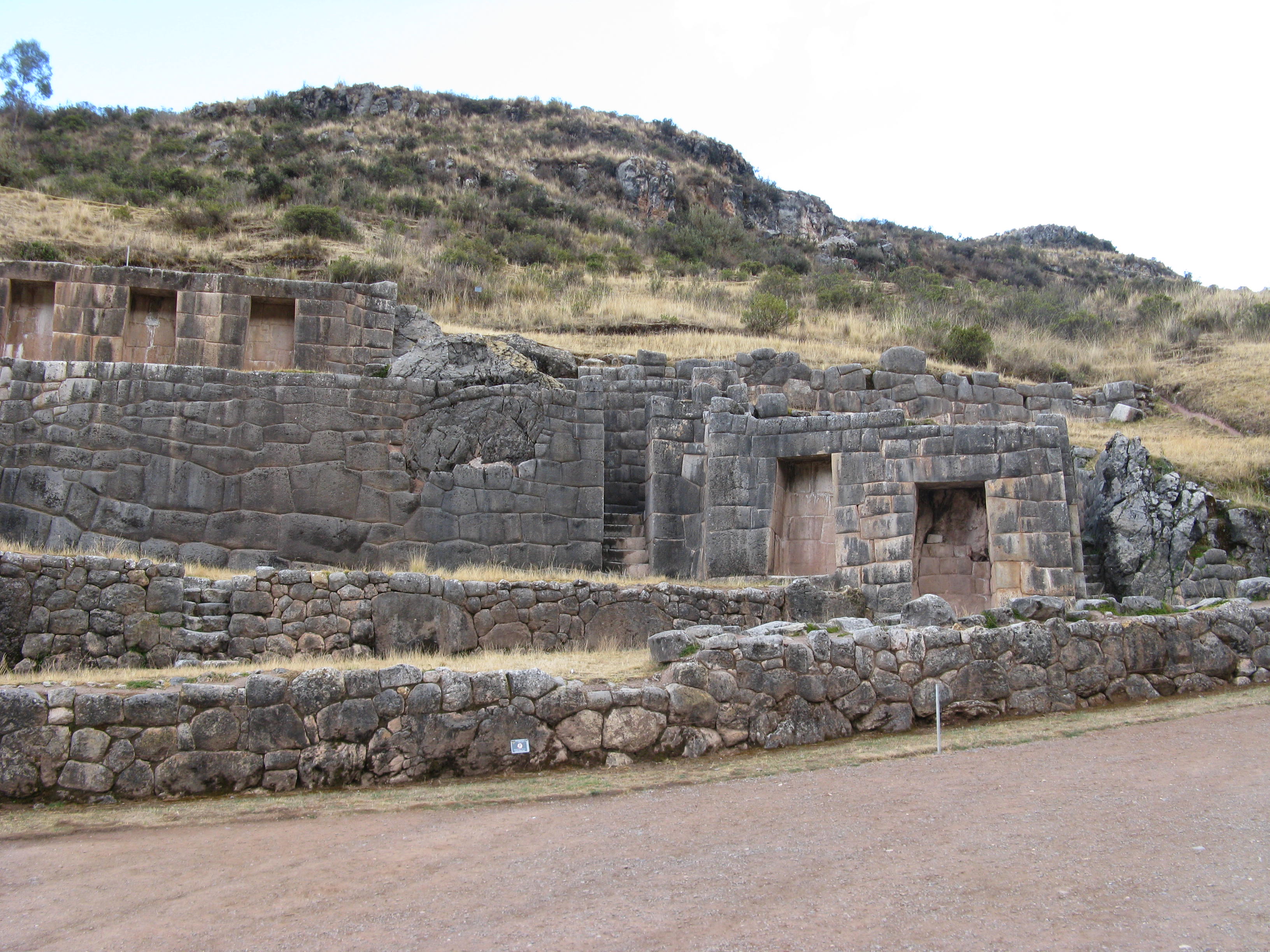
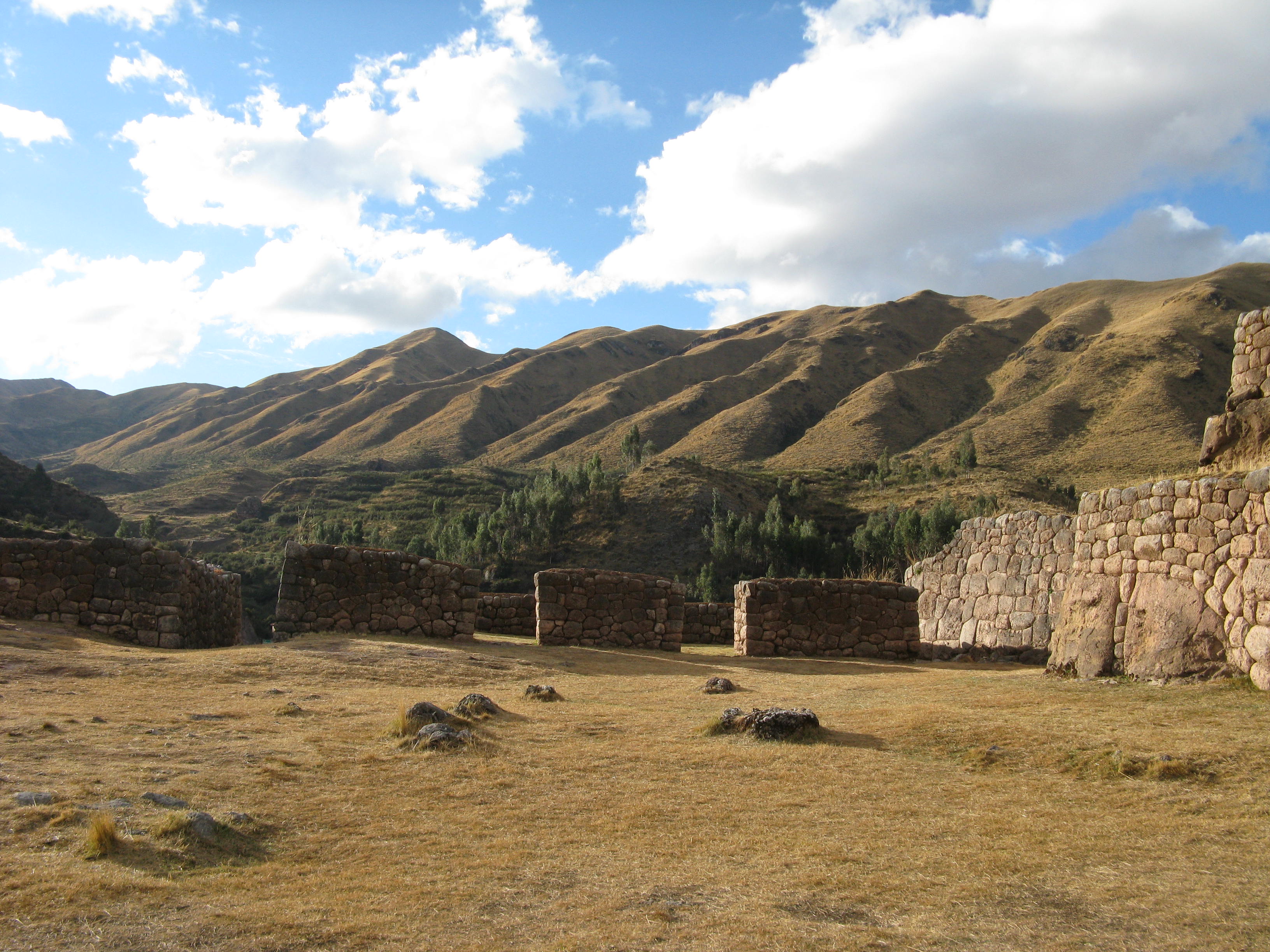
 The next day we took a tour to Pikillacta and Sacsayhuaman. At Pikillacta, you see an archaelogical site of the Wari people
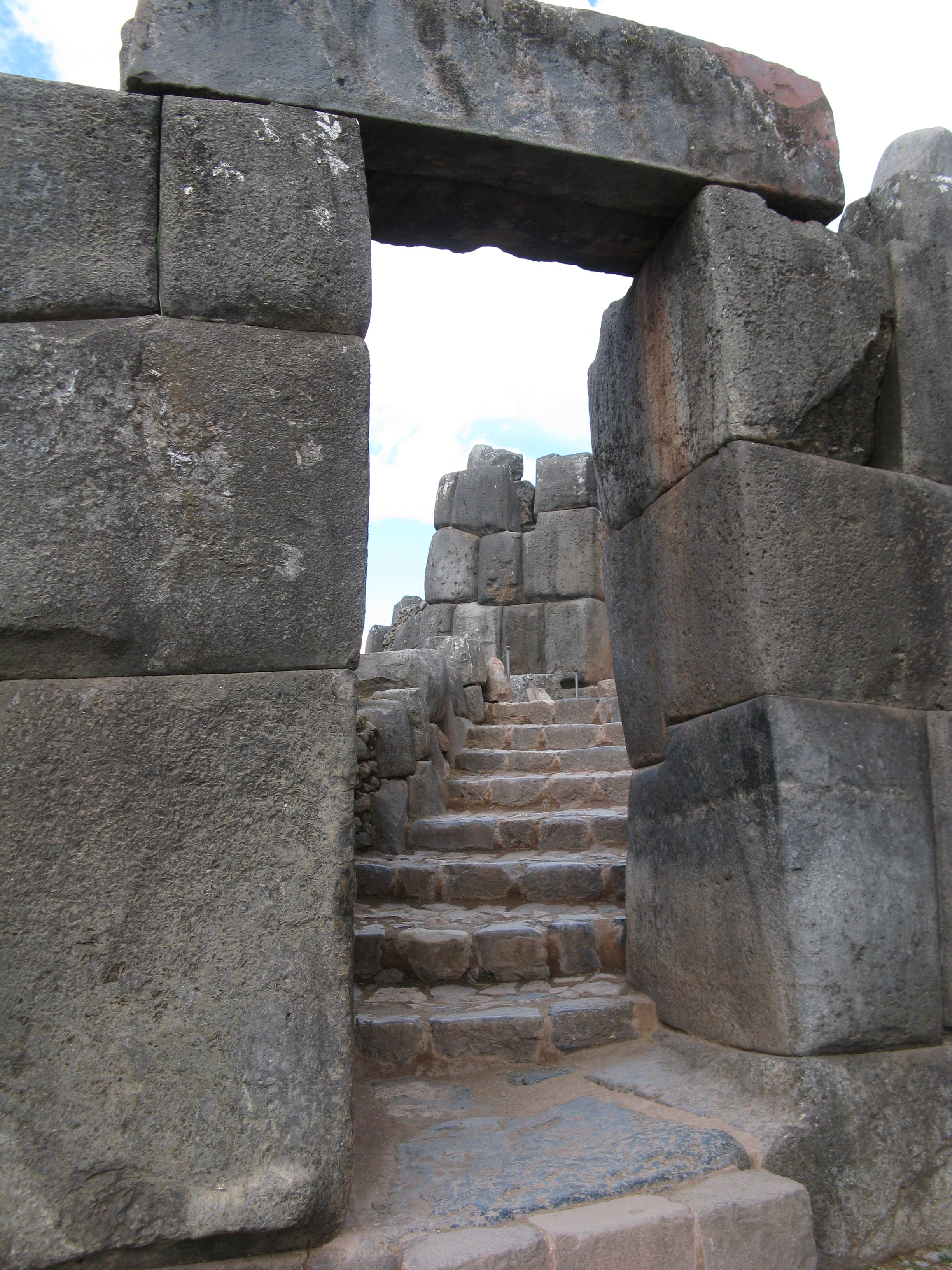
 But it was Sacsayhuaman that I was really interested to see.
 The construction is amazing, as there is no mortar between those stones
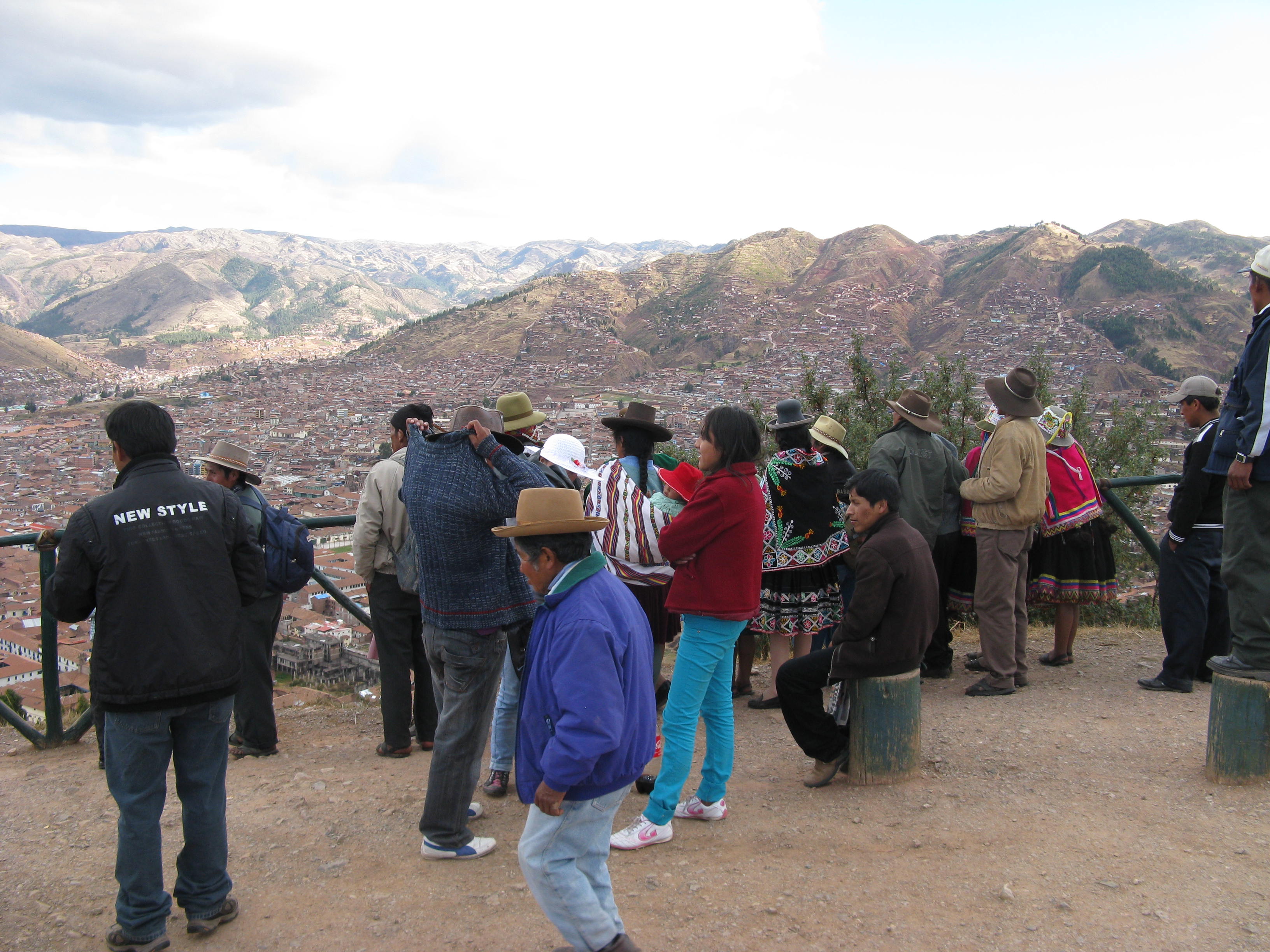
 From the top you get a great view of Cusco
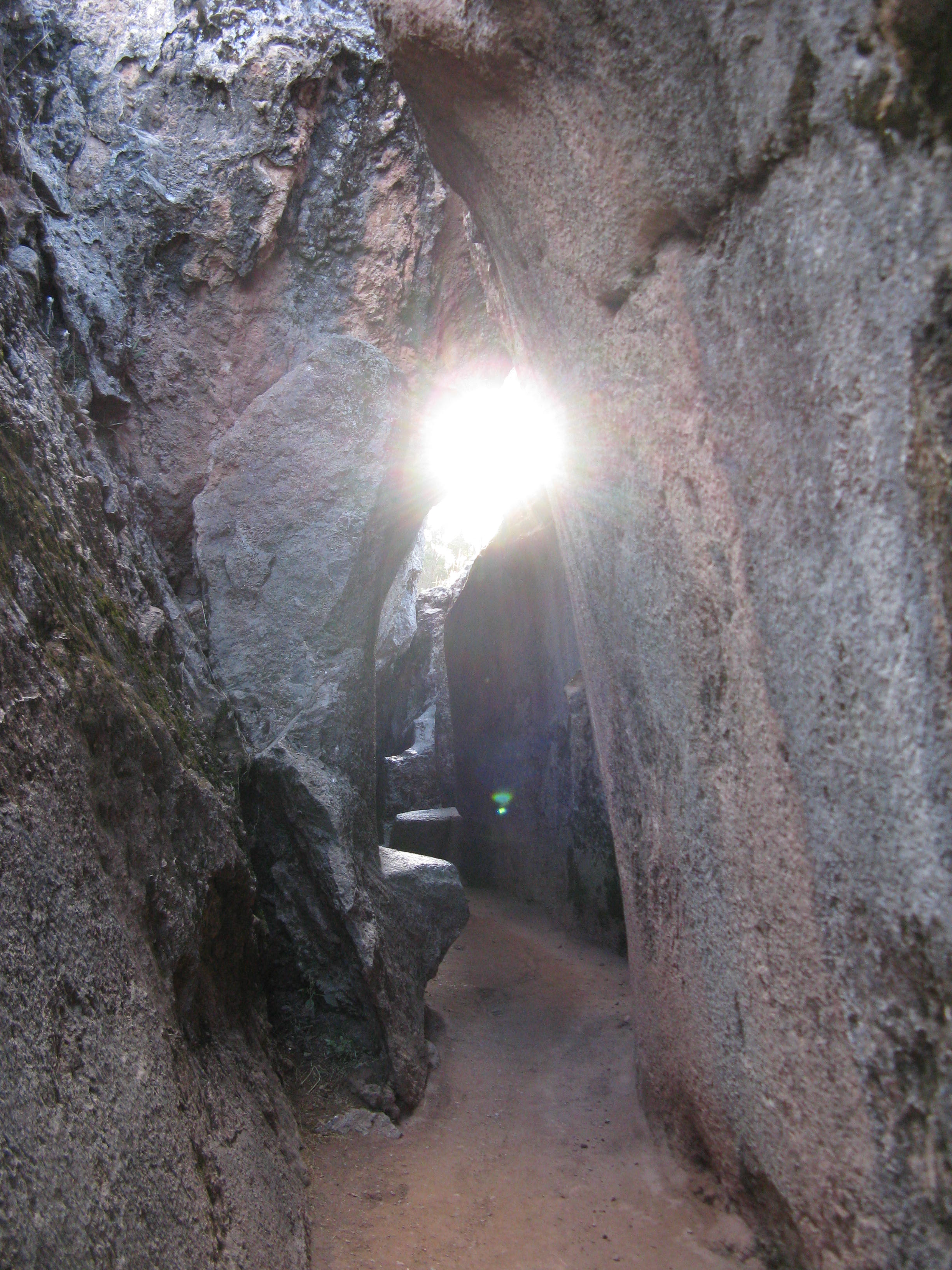
 We also visited the amazing holy site of Qenko.
 And I spent the next day in bed with Altitude Sickness! After Cusco, it was time to get on another train
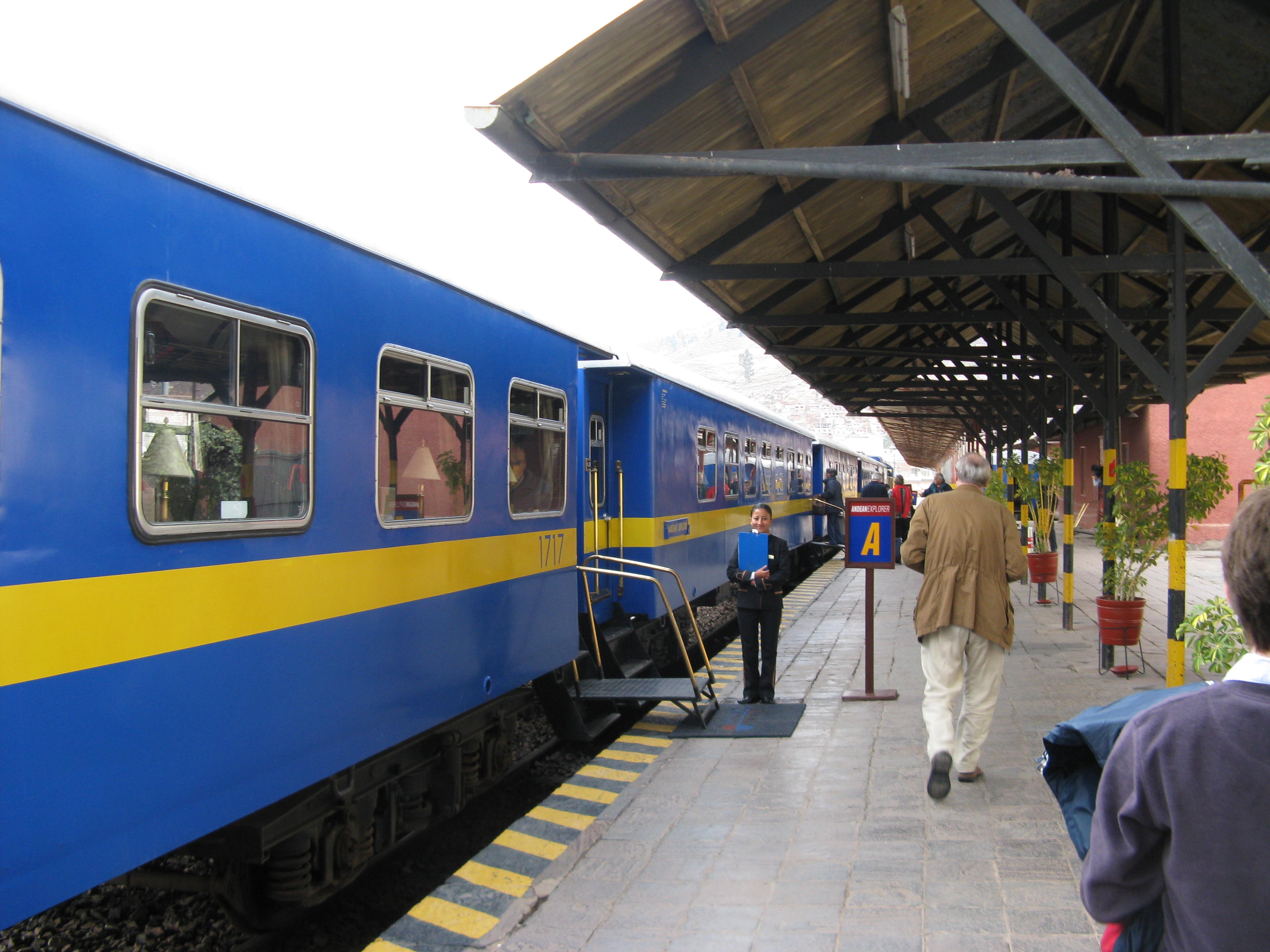
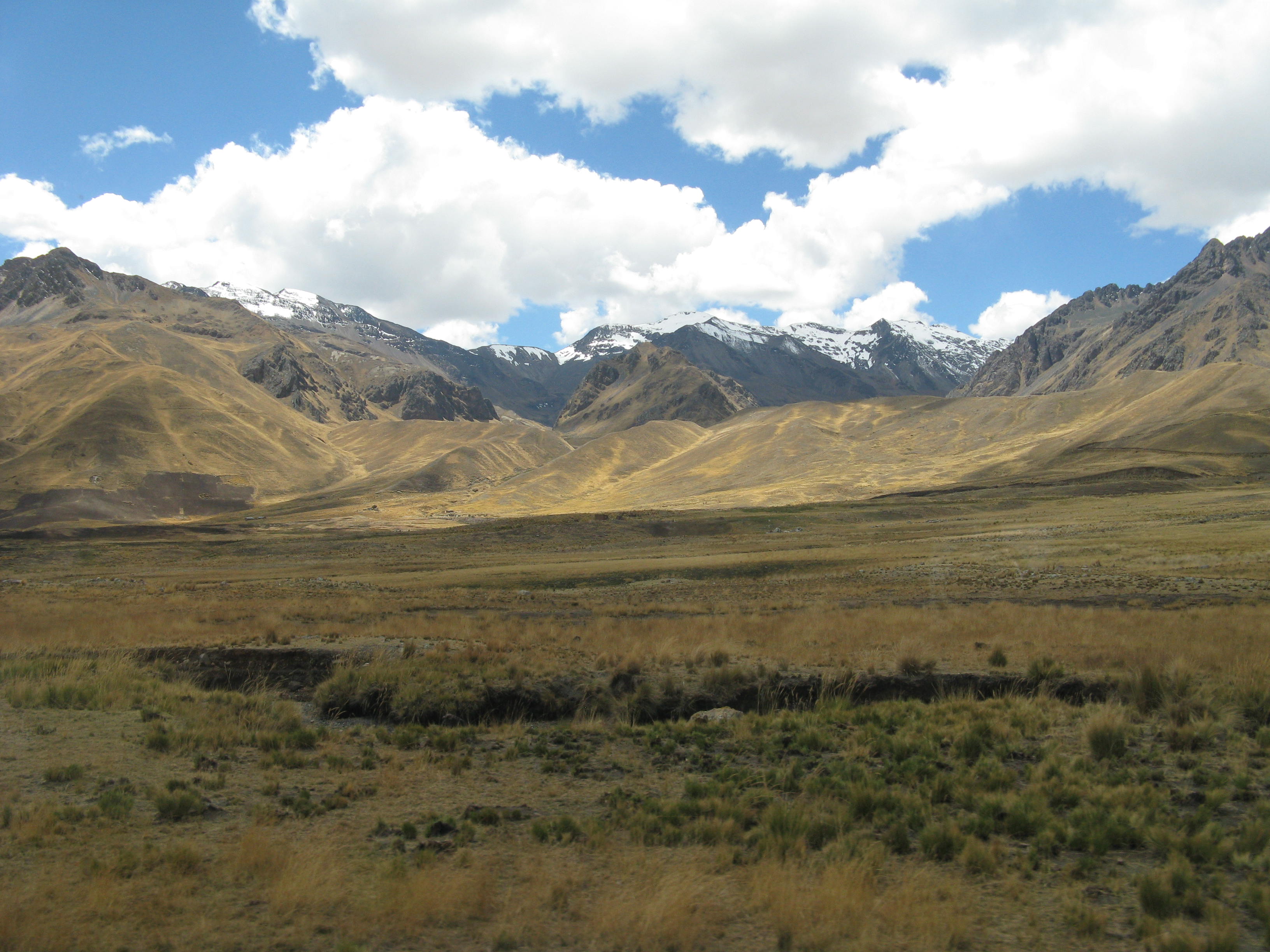
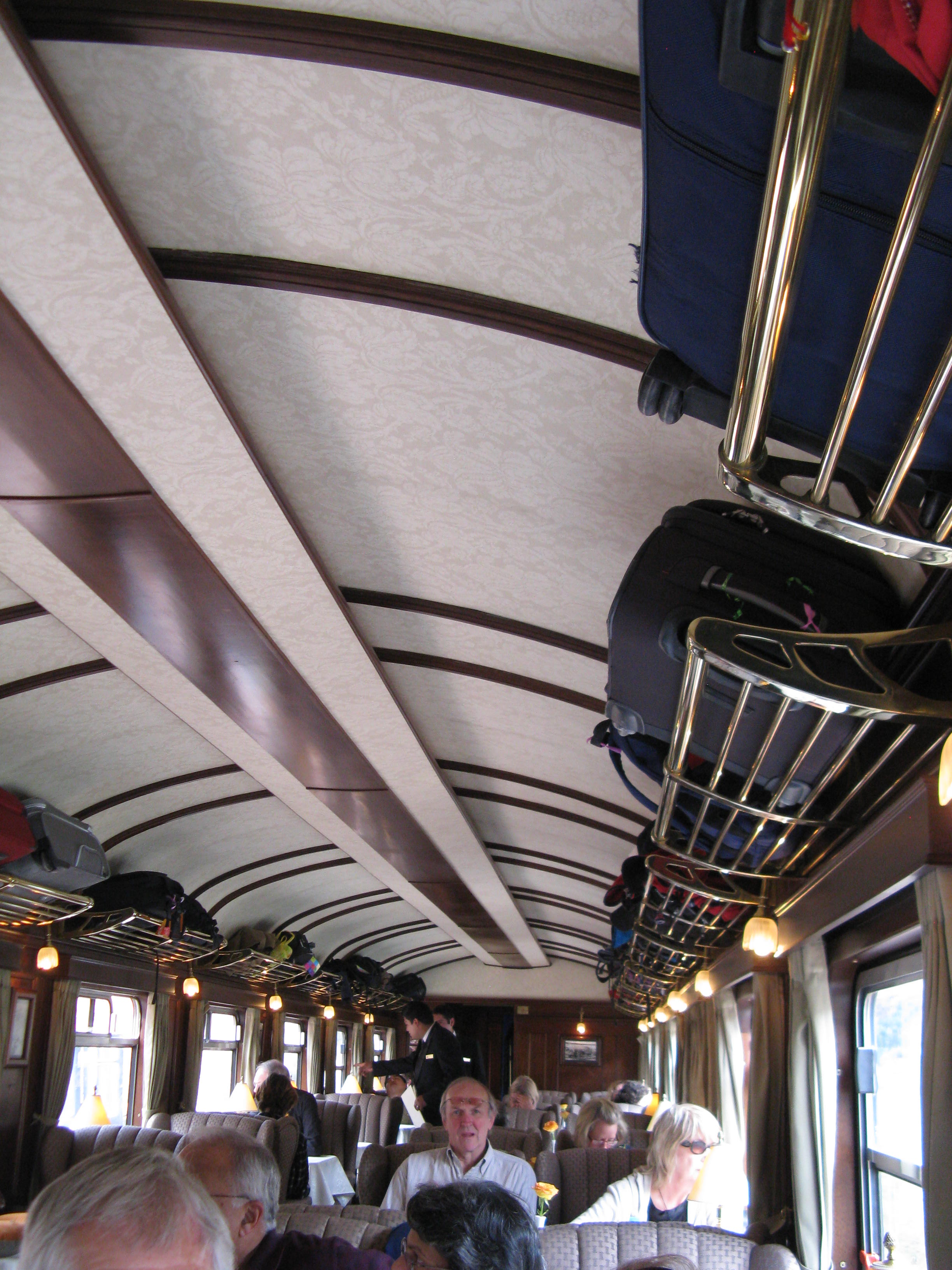
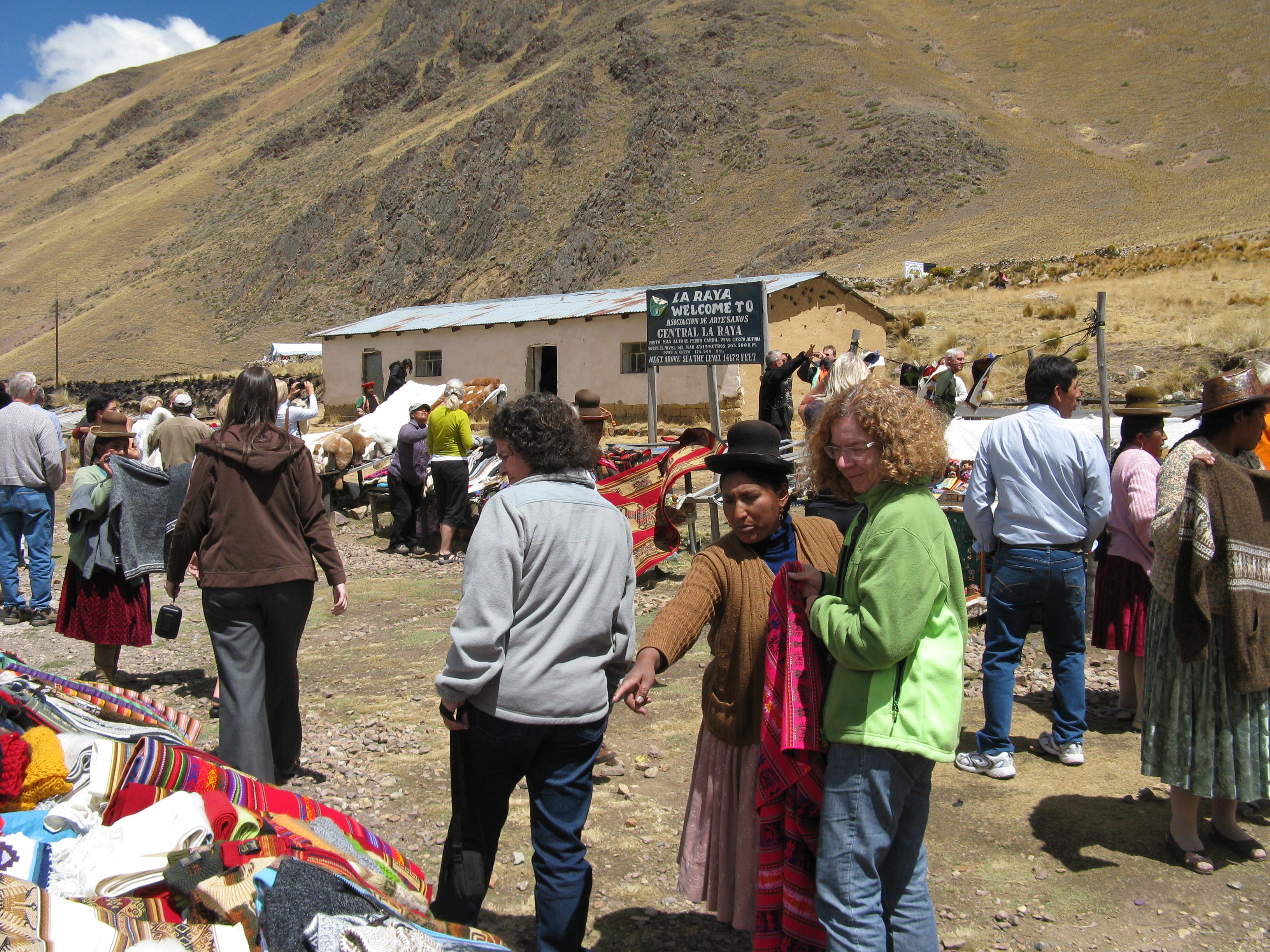
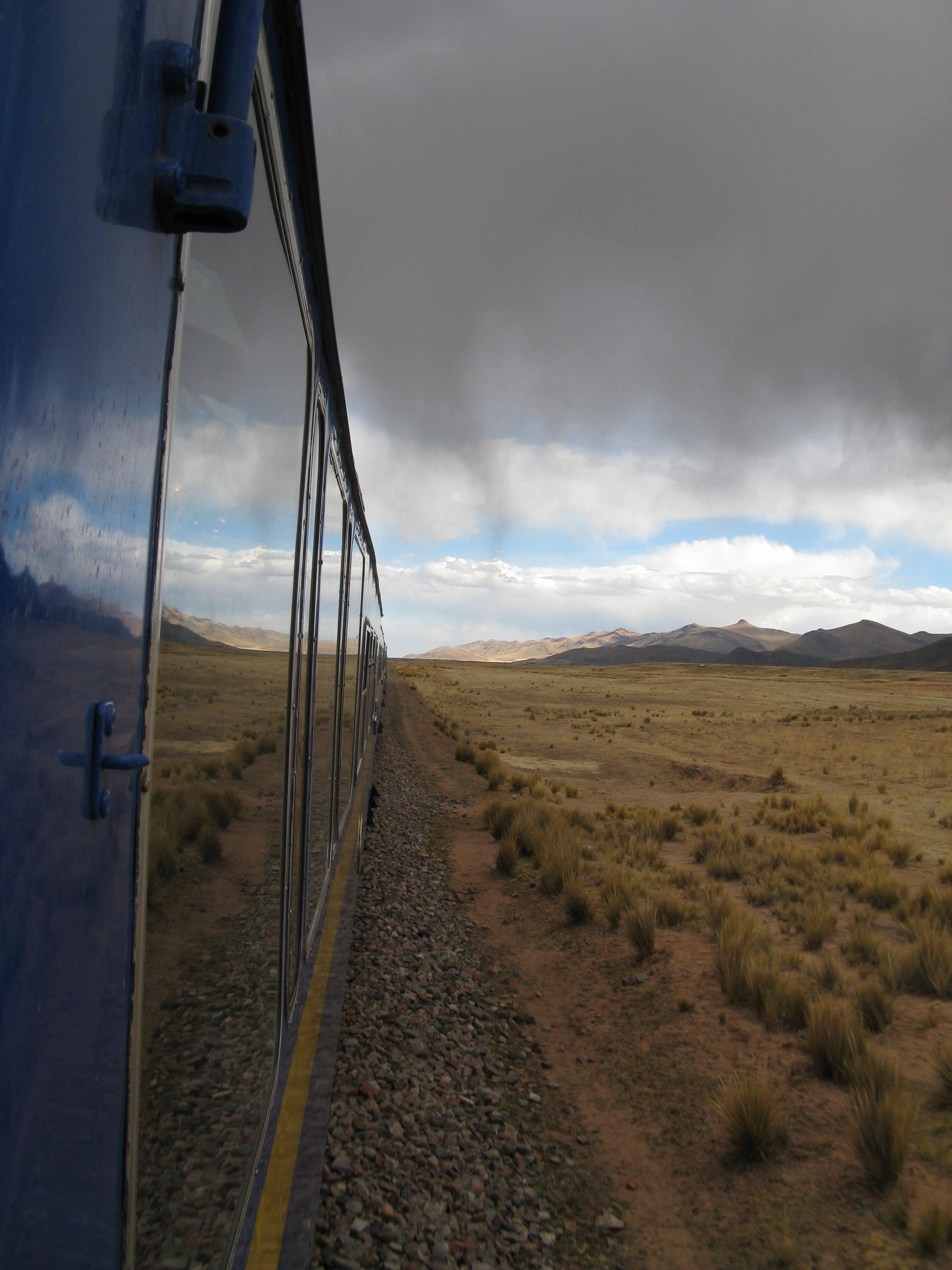
 The Andean Explorer, which would take us to the border city of Puno, travelling through beautiful but totally empty scenery.
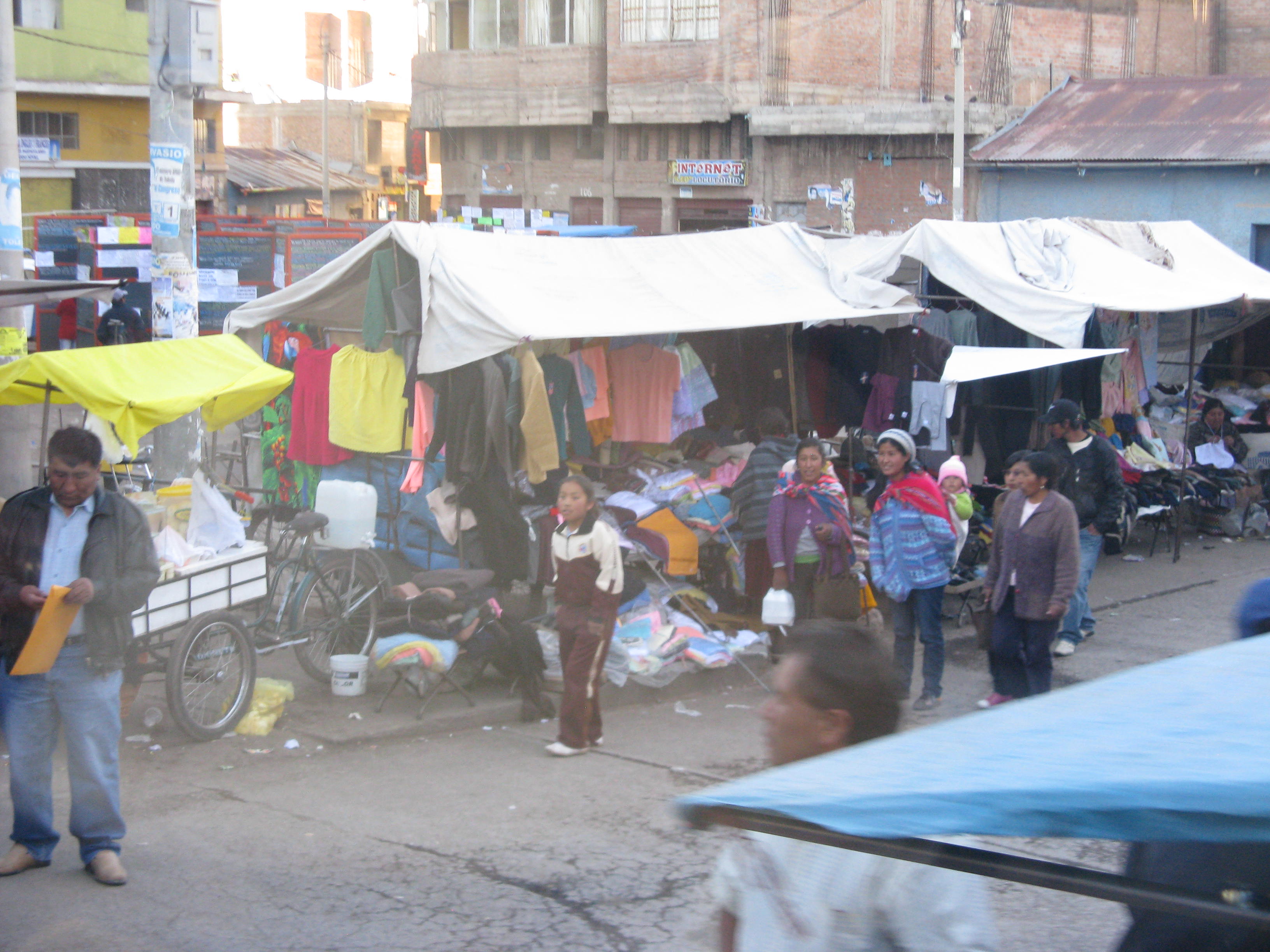
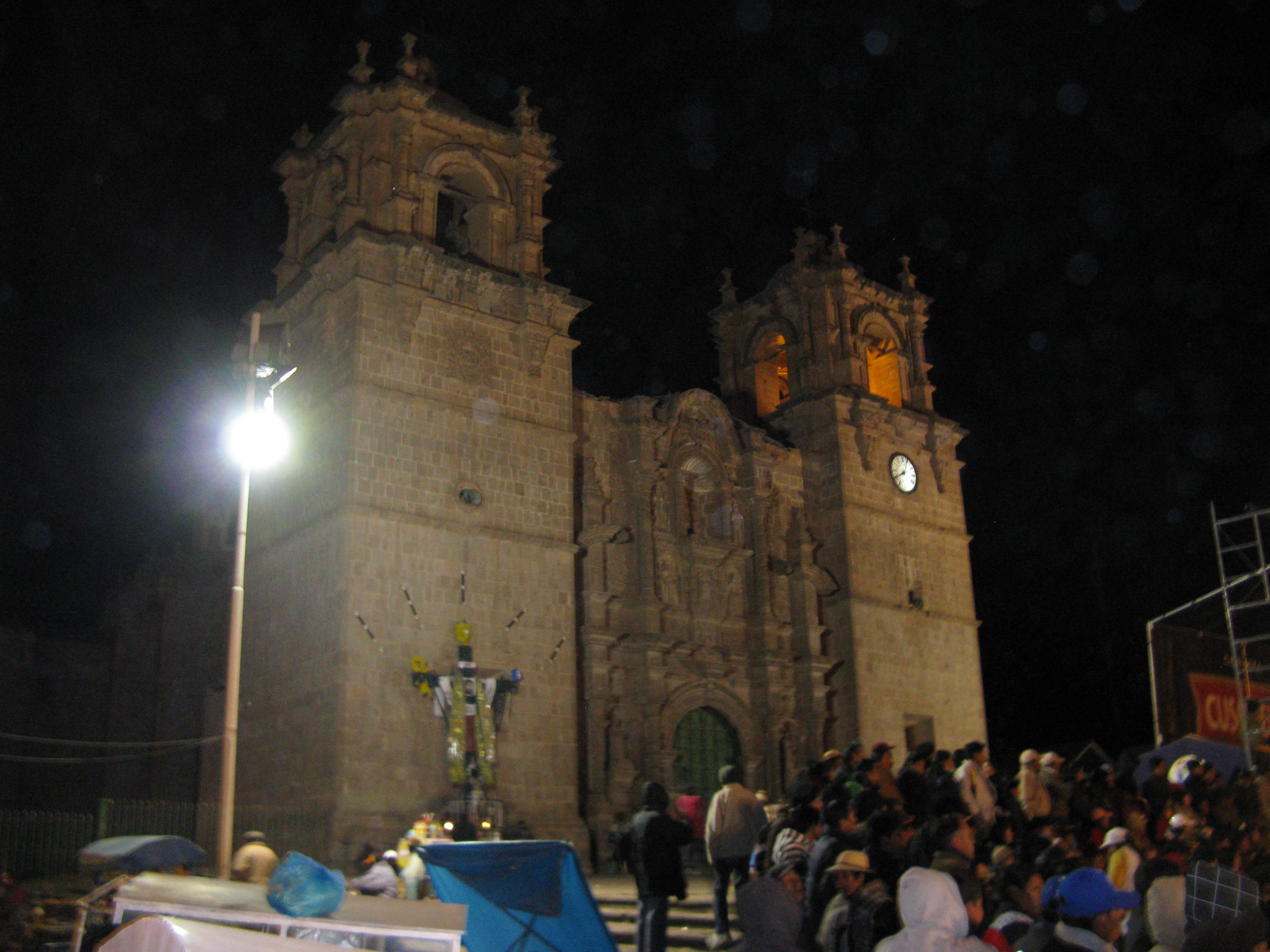
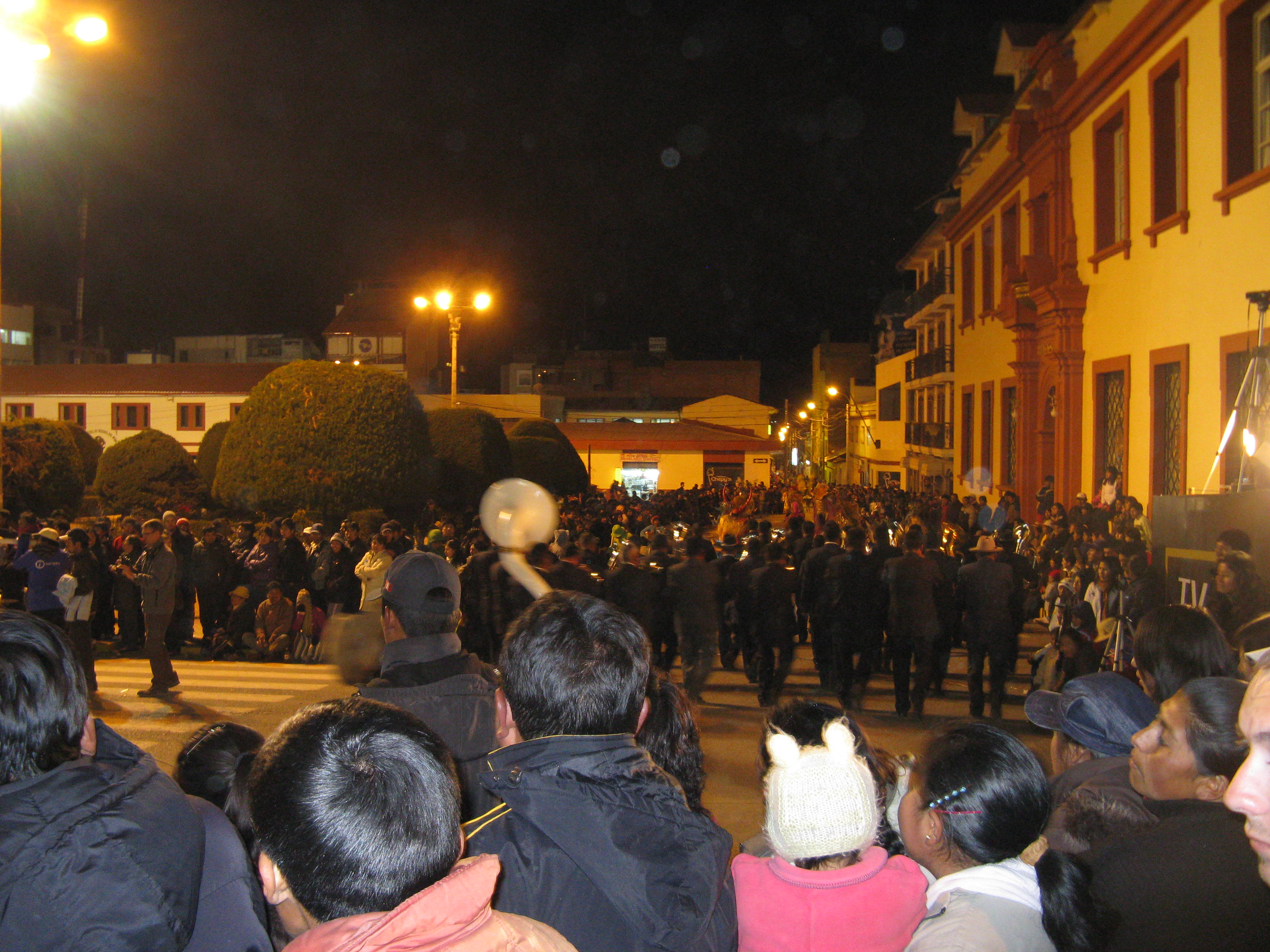
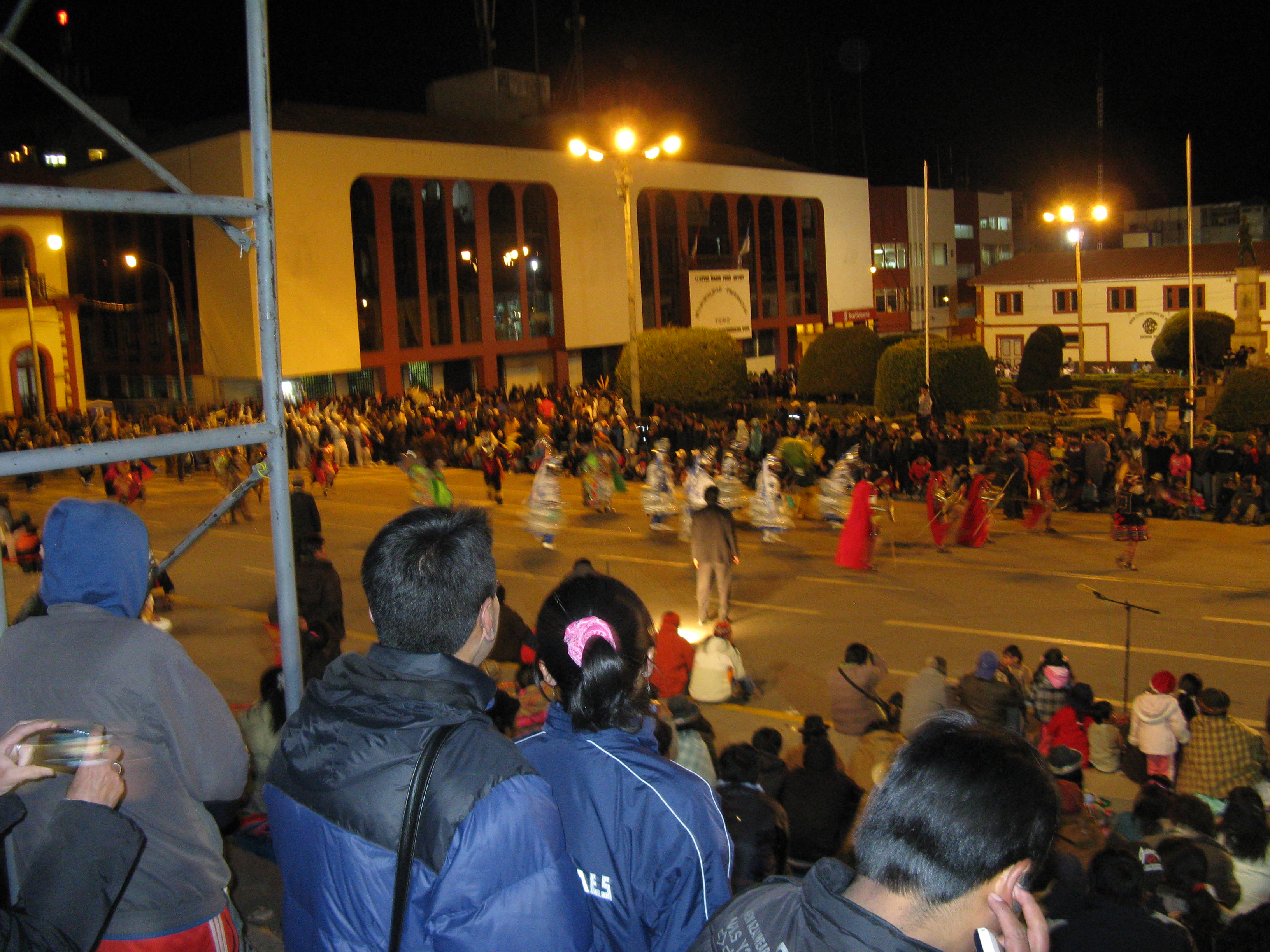
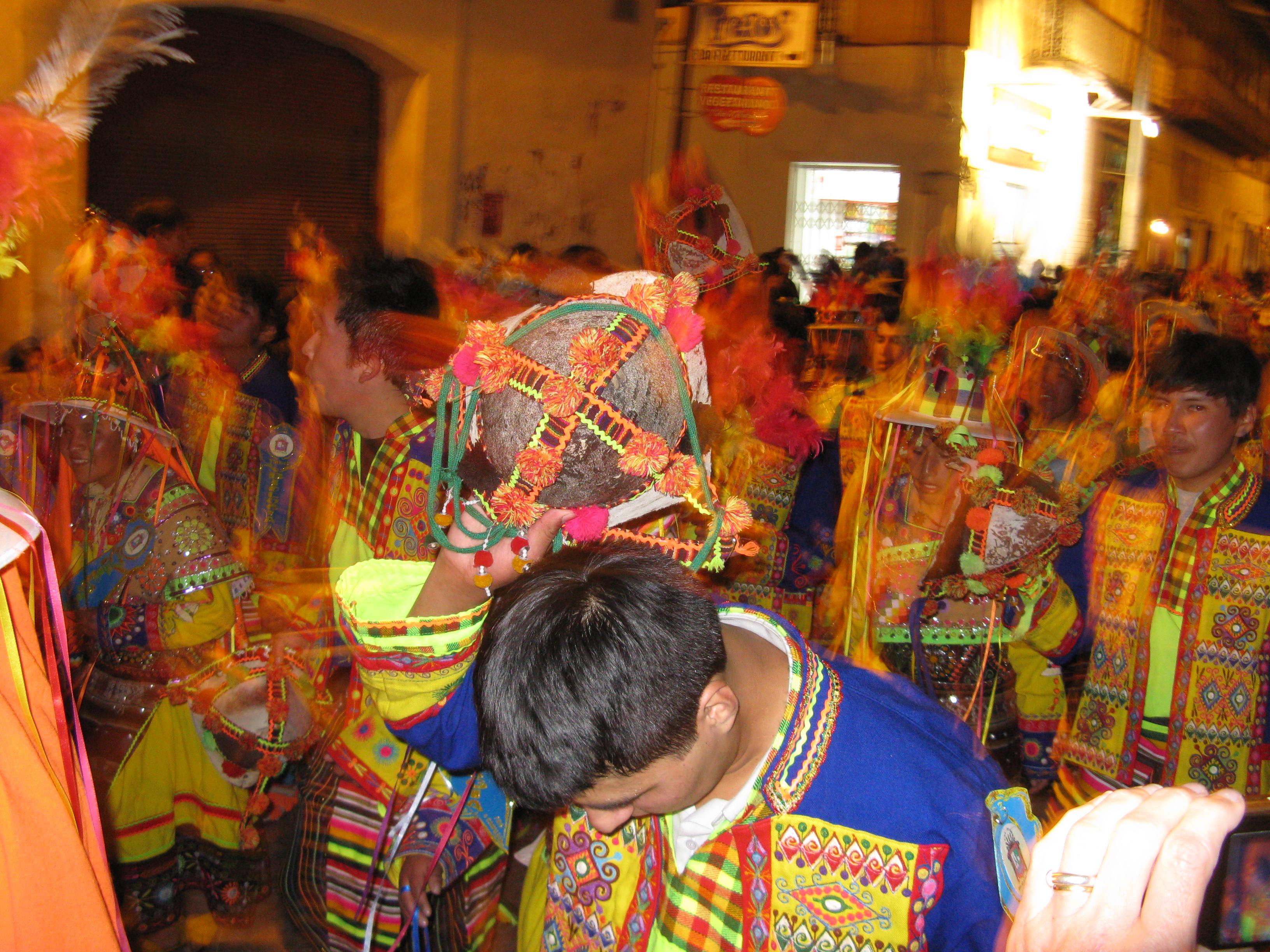
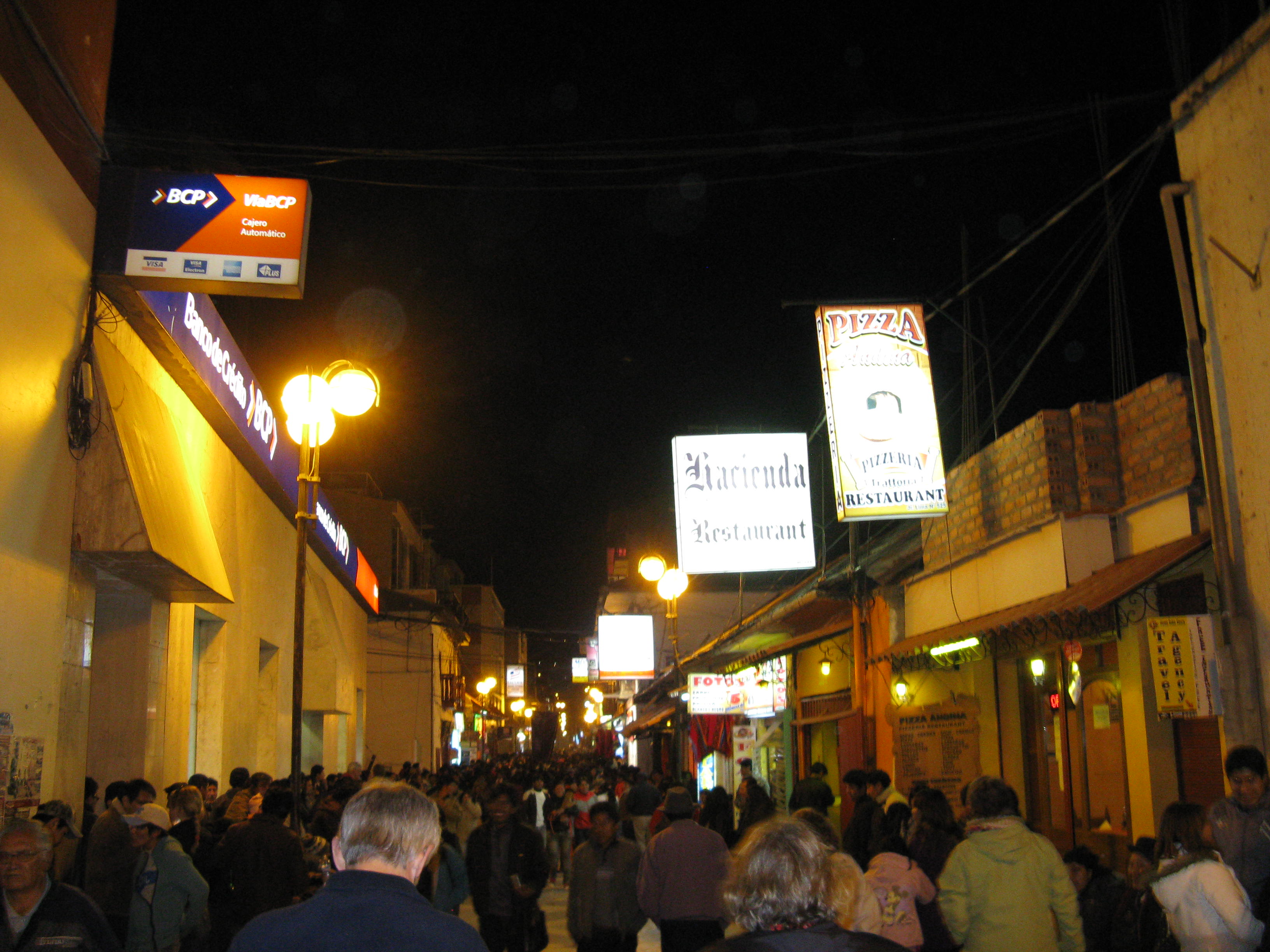
 Puno is a city with many thousands of students, and they were having an evening parade. We were warned not to go into Puno at night, because it wasn’t safe. But we couldn’t resist.